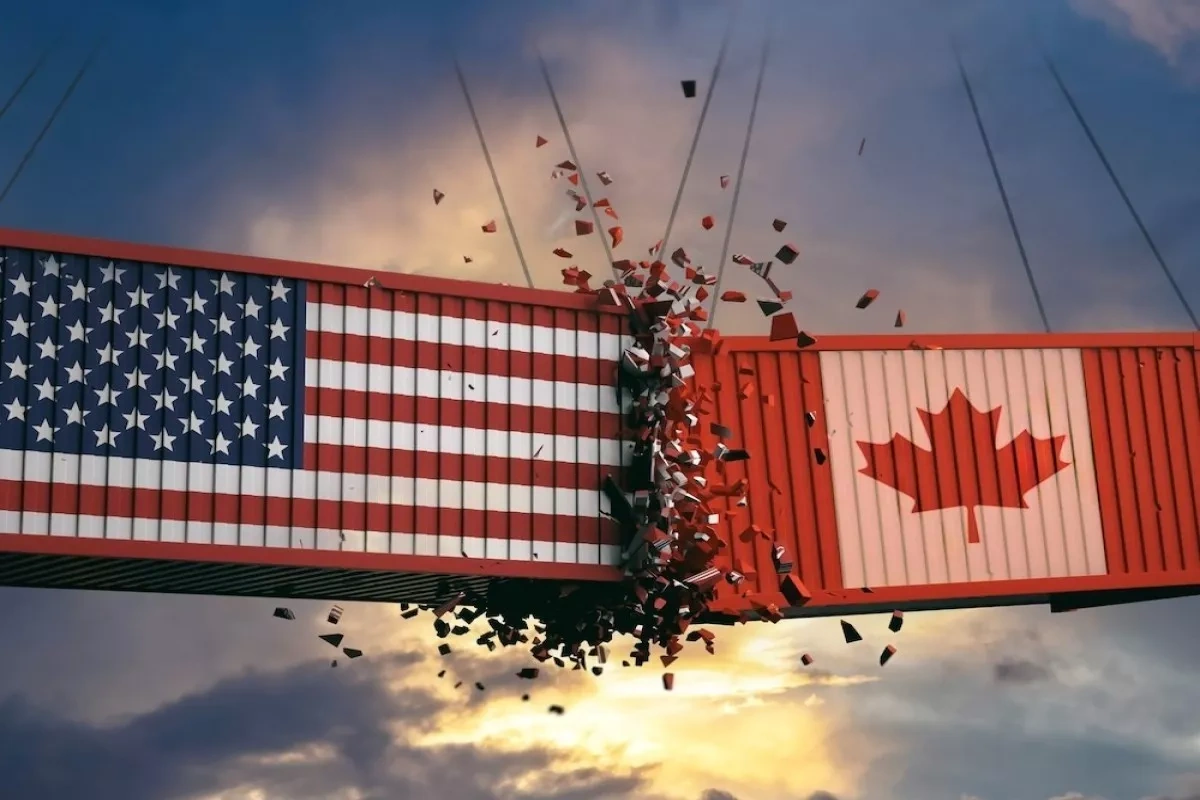
Canada is preparing for the possibility of a prolonged trade war with the United States, with Prime Minister Mark Carney’s government seeing little chance of renewed negotiations with President Donald Trump before the US midterm elections.
The assessment follows the collapse of trade talks on August 21, after which Trump imposed new tariffs, and Carney announced plans for retaliatory measures, Caliber.Az reports, citing the Bloomberg.
The Canadian government is also preparing a domestic support package for businesses affected by US tariffs. Officials are considering measures that could remain in place for the rest of Trump’s term if the dispute continues, according to people familiar with the discussions.
“We will support these businesses for as long as it takes, in other words, beyond the life of this US administration,” Carney told reporters. “So there’s various mechanisms that we’ve worked up. We’ll give all the details in a few days.”
Carney’s government says there is currently little indication that negotiations will resume soon, although officials have stressed that the situation could change and that Washington has not ruled out restarting talks.
Canada’s ambassador to Washington, Mark Wiseman, said the decision to introduce retaliatory measures on 8 September should not be interpreted as an expectation of a last-minute return to negotiations.
“I don’t think it should be viewed that way,” he said.
The US has also indicated that there are currently no new talks scheduled.
“It’s hard to say. We don’t have new talks planned with the Canadians. We’re moving forward with measures that respond to Canadian retaliation,” US Trade Representative Jamieson Greer told Fox News.
Wiseman said communication between the two countries remained ongoing despite the breakdown in trade negotiations.
“We talk to the Americans every day,” he said. “We will continue to talk to all kinds of members of the US administration because we have to because we’re neighbors, we’re friends, we’re allies, and that’s the way we’ve always operated.”
The dispute has created uncertainty across the closely integrated US and Canadian economies. Carney has announced counter-tariffs but has yet to provide details, leaving questions over the scale of Canada’s response.
The Canadian prime minister’s approach has received broad political support at home. A poll conducted after the collapse of the talks found that about three-quarters of Canadians backed his decision to walk away from negotiations, although many respondents also expressed concern about the economic consequences.
The scope of the proposed support package remains unclear, as does the extent to which the tariff dispute could escalate. A US official has said President Trump would be given options for further escalation if Canada proceeds with its planned tariffs.
With negotiations stalled and both sides preparing further measures, Canada is now planning for the possibility that the trade conflict could continue well beyond the November midterm elections and potentially through the remainder of the Trump administration.
By Aghakazim Guliyev