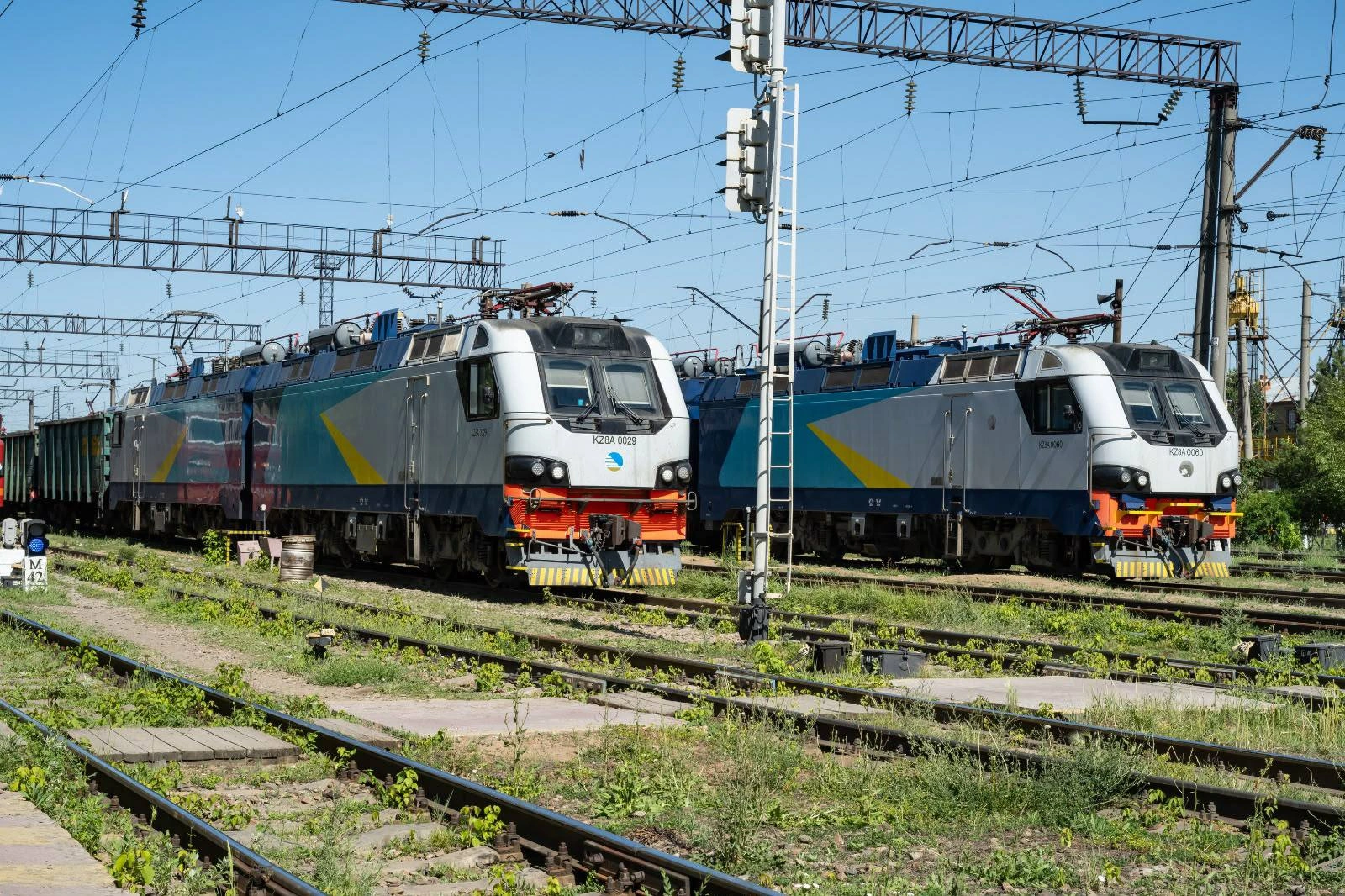
BAKU, Azerbaijan, August 24. The volume of
freight transportation across the network of Kazakhstan's
Kazakhstan Temir Zholy (KTZ) JSC reached 184.4 million tons in
January-July 2026, increasing by 3.2% compared to the same period
of 2025, the company's press service said.
"Domestic transportation reached 97.2 million tons, while the
volume of export transportation increased by 6.5% compared to the
same period of last year, reaching 53.4 million tons," the company
said.
During the reporting period, 60.4 million tons of hard coal were
transported across the KTZ network, up 3.5% compared to
January-July 2025. Of the total volume, 40.9 million tons were
delivered to Kazakh consumers, 3% more than a year earlier. Coal
exports amounted to 18.8 million tons, increasing by 3.1%.
Positive dynamics were also recorded in grain transportation. In
the first seven months of 2026, 8.1 million tons of grain were
transported, 10% more than in the same period of 2025. Grain
exports increased by 10.4% to 6.3 million tons, while 1.8 million
tons were transported within Kazakhstan, up 8.6% year-on-year.
The volume of transportation of milling products in export
traffic amounted to 1.3 million tons, increasing by 14%.
KTZ also reported that 12.5 million tons of non-ferrous ores and
11.3 million tons of construction materials were transported across
its network in January-July 2026.
Growth was recorded across several key cargo categories. Iron
ore transportation amounted to 13.8 million tons, up 16.6%;
petroleum products - 15.2 million tons, up 1.5%; crude oil - 1.2
million tons, up 3%; and other cargoes - 36.9 million tons, up
4.2%.
The growth in rail freight transportation comes amid the
continued expansion of Kazakhstan's role in regional transit and
logistics, particularly along the Trans-Caspian International
Transport Route, also known as the Middle Corridor.
Kazakhstan's Vice Minister of Trade and Integration Aset Nusupov
told Trend that the route has become one of the country's key
strategic assets over the past decade.
"The figures speak for themselves. Over three years, from 2022
to 2025, the volume of transportation along the route increased
more than fivefold. By the end of 2025, total cargo traffic reached
4.5–4.7 million tonnes, of which container transportation accounted
for 76,900 TEUs, 36% more than a year earlier," Nusupov said.