BAKU, Azerbaijan, August 22. Kyrgyzstan sees
sharp decline in number of social benefit recipients.
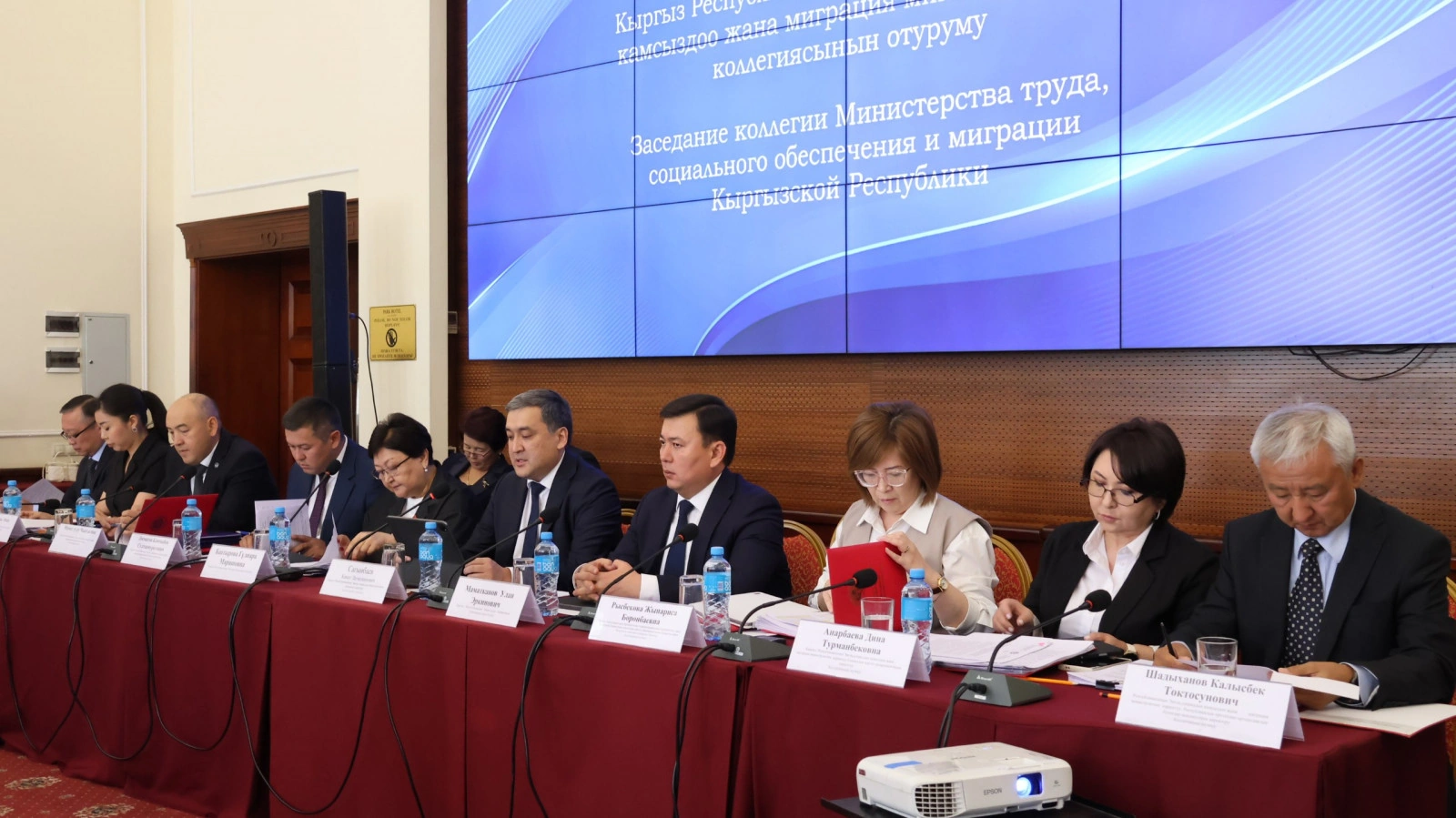
According to the Cabinet of Ministers of Kyrgyzstan, this was
presented at a meetingof the board of Kyrgyzstan’s Ministry of
Labor, Social Security and Migration reviewing the ministry’s
performance in the first half of 2026.
"At the board meeting, it was noted that, according to the
National Statistical Committee, as of January 1, 2026, the number
of benefit recipients decreased from 392,000 at the beginning of
2024 to 274,000 at the beginning of 2026," the board announced.
Deputy Chairman of the Cabinet of Ministers Ulan Mamatkanov, who
attended the meeting, said the government needs to strengthen
efforts to address poverty, unemployment, social assistance and
labor migration.
At the same time, the government is expanding the social
contract program, launched in 2022 on the initiative of President
Sadyr Japarov. More than 48,000 families participated in the
program between 2022 and 2025, while another 13,334 families are
expected to join this year.
The ministry’s budget has also increased significantly, from 12
billion soms in 2021 to 25.4 billion soms in 2026.
Mamatkanov also highlighted ongoing reforms in the medical and
social disability assessment system. The number of documents
previously required for disability assessment has been reduced from
six to two, while the system has been integrated with the Tunduk
digital platform.
As a result, disability certificates and individual
rehabilitation programs can now be obtained online.
He called for a comprehensive review of corruption risks across
medical and social expert commissions and instructed officials to
analyze complaints received in the regions over the past three
years.
Mamatkanov also called for comprehensive inspections of all
psycho-neurological and social residential institutions and
stressed the need for state social service employees to treat
citizens seeking assistance with respect and attention.
Meanwhile, in July 2026, the Bala Yrysy allowance was granted to
191,796 children, with 83% of payments processed electronically
through a mobile application.
The meeting identified further priorities for the ministry,
including improving social protection, employment support, labor
rights protection and the efficiency of public services.