BAKU, Azerbaijan, August 21. Uzbekistan and
Azerbaijan have significant potential to deepen economic
cooperation, while closer integration of their logistics networks
could enhance the Middle Corridor’s appeal as a transit route.
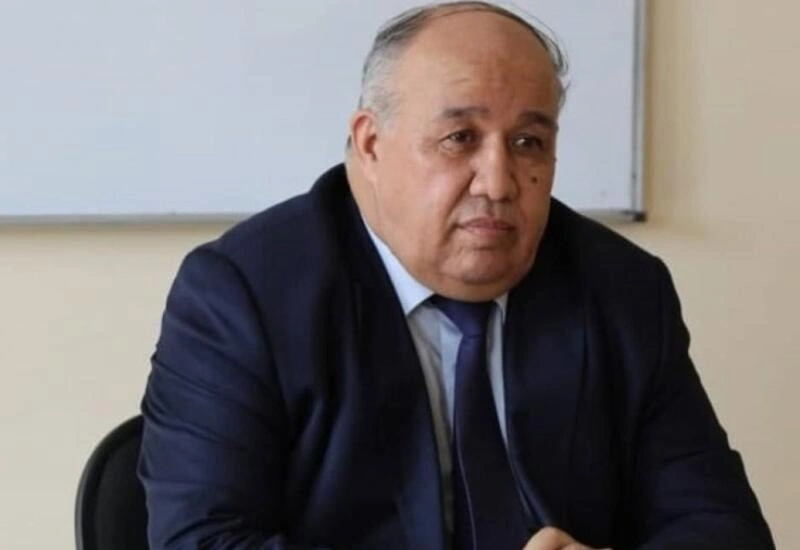
This was stated by Uzbek political scientist and Doctor of
Political Sciences Saifiddin Juraev in an interview with Trend.
According to the expert, Uzbek-Azerbaijani relations have
entered a qualitatively new stage of development, with their
potential extending far beyond bilateral trade. “Since the second
half of 2016, following Shavkat Mirziyoyev’s election as President
of Uzbekistan, bilateral cooperation has undergone a genuine
breakthrough. Today, our relations have reached their highest level
— that of an alliance — and have taken on an entirely new
significance,” Juraev said.
He noted that deeper economic ties should be built around
industrial cooperation, energy, the automotive industry,
agriculture and investment, while transport connectivity has become
the key element linking these sectors. “Trade turnover between the
two countries more than tripled in 2025, reaching $795 million. The
task for the coming years is to significantly expand economic
cooperation,” the expert said.
According to him, one of the most promising directions is moving
beyond trade in raw materials and finished goods toward the
creation of integrated manufacturing value chains.
He identified energy and petrochemicals as sectors that could
become the backbone of this cooperation. “A solid institutional
foundation has already been established. This includes the
Neftgaztekhnologiya joint venture, operating since 2016, and Turan
Energetika APESCO, created by SOCAR and Uzbekneftegaz in 2024,
which exports high-pressure polyethylene to Uzbekistan. The new
trend is shifting from raw-material trade to joint production of
polyethylene, polymers and other gas-chemical products,” Juraev
said.
He emphasized that combining the two countries’ industrial
strengths creates the basis for export-oriented production
networks. “Uzbekistan has growing domestic demand and major
gas-chemical facilities, including Shurtan, MTO and GTL projects,
while Azerbaijan offers SOCAR’s resource base and access to
European markets. Joint petrochemical value chains provide benefits
that simple trade cannot — localized value creation, technology
transfer and export opportunities in third markets,” he said.
Juraev also highlighted renewable energy as another area with
transformative potential, noting that the Green Corridor being
developed by Azerbaijan, Kazakhstan and Uzbekistan could elevate
energy cooperation to a transregional level. “The Green Corridor
project, aimed at exporting renewable electricity across the
Caspian Sea, goes far beyond the bilateral agenda. It is linked to
European demand for decarbonized electricity and the development of
subsea cable infrastructure across the Caspian and onward through
the Black Sea. It is a capital-intensive, long-term project, but
these are precisely the kinds of initiatives capable of attracting
significantly larger volumes of external financing and transforming
energy cooperation from bilateral into transregional,” he said.
The expert believes the automotive sector offers similar
opportunities. “Chevrolet and Isuzu bus production currently relies
largely on semi-knocked-down assembly. The next stage is moving
toward component manufacturing and joint exports to third markets,
including the Middle East, CIS countries and Iran, using Caspian
logistics,” Juraev noted.
He added that Uzbekistan brings a large industrial base and
UzAuto’s manufacturing expertise, while Azerbaijan can serve both
as a market and as a gateway to international markets.
In agriculture, he said cooperation could expand into food
processing, cold-chain logistics, seed production, crop breeding
and water-saving technologies. “Both countries are agricultural
economies facing similar challenges related to arid farming and
water scarcity. In this area, cooperation is complementary rather
than competitive,” he said.
According to Juraev, scaling up all of these initiatives
ultimately depends on stronger transport infrastructure,
particularly the Middle Corridor. “The Middle Corridor’s challenge
is not geography but fragmentation: multiple border crossings,
Caspian transshipment, different tariff systems, customs procedures
and disconnected digital documentation. Transit volumes of 1.4
million tons in 2025, followed by 12.2% growth in the first half of
2026, reflect an upward trend but remain modest by global
standards. Turning geography into real transport capacity requires
both bilateral and multilateral coordination,” he said.
He argued that the defining concept for the corridor’s next
phase should be “synchronization” — aligning tariffs, train
schedules, customs procedures and digital documentation along the
entire route. “We need through tariffs, one-stop-shop customs
mechanisms, coordinated schedules and full digitalization of the
corridor. Integrating the logistics systems of Azerbaijan and
Uzbekistan systematically enhances the corridor’s attractiveness by
making it more predictable in terms of transit times and costs,
while giving Central Asian countries more efficient access to
global markets,” Juraev said.
He also noted that the Middle Corridor’s growing importance
reflects not only its geographic advantages but also the broader
diversification of Eurasian logistics. “The rise of the Middle
Corridor after 2022 has largely been driven by efforts to reduce
dependence on a single Eurasian transport route. Azerbaijan and
Uzbekistan are capitalizing on this shift. But the corridor’s
long-term resilience will depend not on external circumstances, but
on whether it becomes competitive in cost, speed and reliability,”
he said.
Juraev identified the China-Kyrgyzstan-Uzbekistan railway as
another project capable of reshaping Central Asia’s transport
landscape. “Integrating the China-Kyrgyzstan-Uzbekistan railway
with the Middle Corridor turns Uzbekistan into a potential
consolidation hub. Cargo from China will be able to reach Europe
via a shorter southern route through the Caspian Sea, Azerbaijan
and other parts of the corridor. For Uzbekistan, which is doubly
landlocked, this is strategically significant: Azerbaijan becomes
its indispensable western gateway,” he said.
He added that the route through Nakhchivan and Türkiye under the
TRIPP framework and the Zangezur direction could become another
important component of this system. “Reopening transport links
through Nakhchivan to Türkiye would reduce the corridor’s
dependence on the single Georgian route and create an alternative
overland connection to Europe. Together with the
China-Kyrgyzstan-Uzbekistan railway, this could fundamentally
reshape the Middle Corridor and strengthen its resilience,” the
expert said.
According to Juraev, the development of the corridor is
simultaneously laying the groundwork for broader economic
integration within the Organization of Turkic States (OTS). “The
Middle Corridor is the physical backbone of OTS economic
integration, while the Green Corridor represents its energy
dimension. Together, the Azerbaijani-Uzbek tandem gives Turkic
integration practical substance through transport, energy, trade
facilitation and, ultimately, harmonized customs regimes,” he
said.
He also pointed to Azerbaijan’s participation in the
Consultative Meetings of Central Asian heads of state as another
factor creating new opportunities for linking the economies of the
two regions. “In effect, a more connected space is emerging —
stretching from western China to Anatolia. In this context,
Azerbaijan and Uzbekistan can become architects of a new regional
framework where transport and energy projects are reinforced by
investment and industrial cooperation,” Juraev said.
He added that expanding investment cooperation could further
accelerate this process. “The Azerbaijan-Uzbekistan Investment
Company, with capital of $500 million, together with the arrival of
major investment players, creates a mechanism that reduces risks
for private capital. More than 130 companies with Uzbek investment
operating in Azerbaijan demonstrate that two-way business
engagement is already underway. The next step is to launch
large-scale anchor projects capable of connecting investment,
manufacturing and logistics,” he said.
In his view, this combination could transform the Middle
Corridor into far more than a transport route. “If transport
infrastructure moves goods, industrial cooperation and investment
ensure that those goods are produced and that value is created.
Integrating the Middle Corridor with industrial, energy and
investment projects can therefore create not just a transport
route, but a fully fledged economic ecosystem linking Central Asia,
the Caspian region, the South Caucasus, Türkiye and European
markets,” the expert concluded.