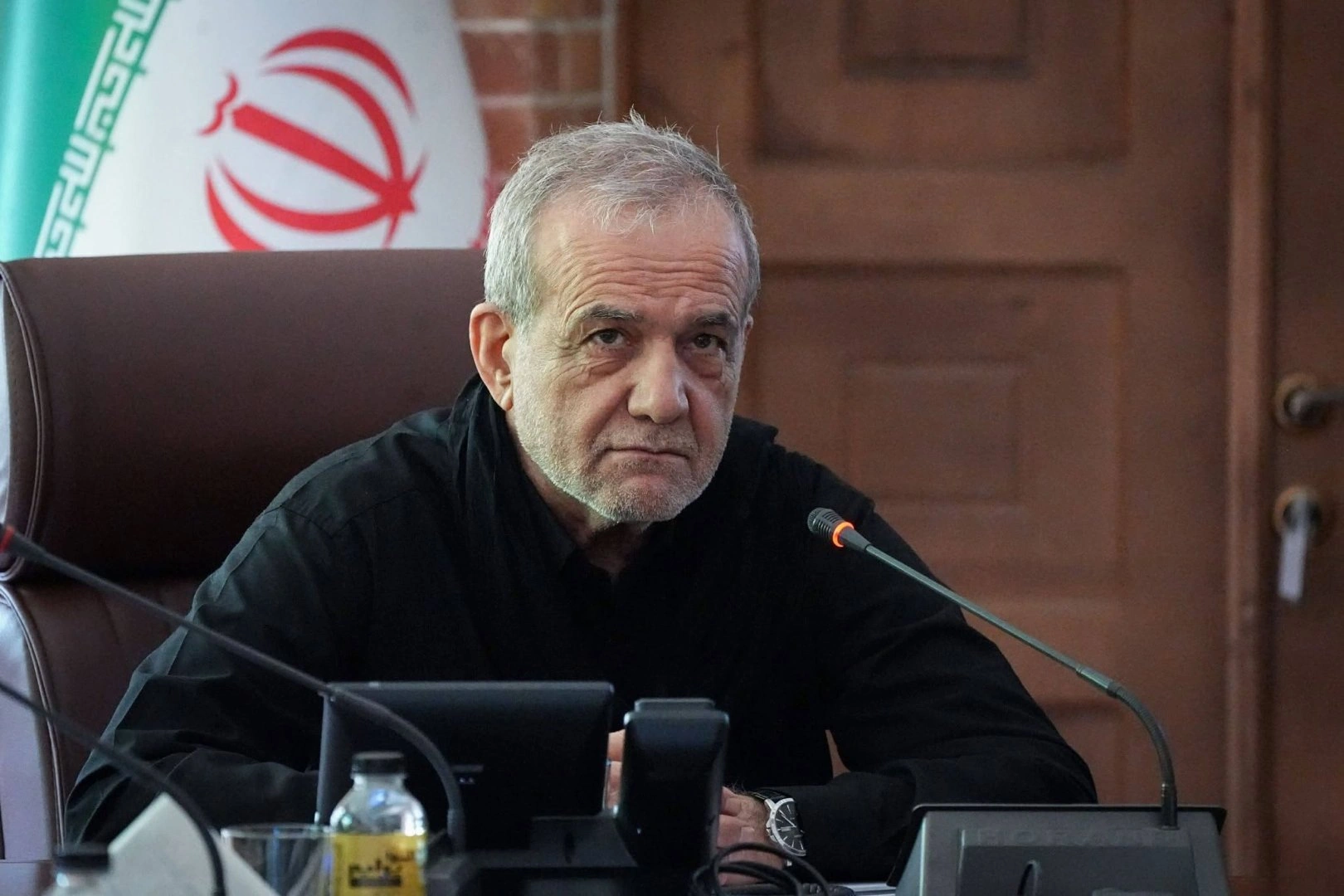
BAKU, Azerbaijan, August 21. Iranian President
Masoud Pezeshkian on Friday called for an end to the war with the
United States while Tehran remains in a position of strength.
Speaking at a meeting with doctors in Tehran on Aug. 21,
Pezeshkian said the war should be brought to an end while Iran had
the upper hand.
"War must end at some point. It is better to end the war now,
when we have power and prestige and the whole world recognizes our
victory," Pezeshkian said.
He said the international community recognized Iran's "victory"
and had noted that the United States had attacked Iranian schools,
hospitals and infrastructure in violation of international
norms.
Pezeshkian stressed that an agreement would not amount to
surrender.
"We will never bow our heads in the face of tyranny. We will
resist it until our last breath and deliver a crushing response,"
he said.
Pezeshkian described the agreement reached with Pakistan's
mediation and signed on June 17-18, 2026, known as the Islamabad
Memorandum of Understanding, as "honorable and valuable."
He said the document contained no provisions indicating Iran's
surrender and that the main obligations had been assigned to the
other side. He also described the memorandum as a major achievement
approved by Iran's Supreme National Security Council.
The conflict began on Feb. 28, when the United States and Israel
launched air strikes on Iran amid a dispute over the lack of
progress in negotiations on Tehran's nuclear program. Iran
responded with missile and drone attacks on Israeli and U.S.
targets in the region. A ceasefire agreement was reached through
Pakistan's mediation on April 7.
On June 18, Iran and the United States signed the Islamabad
memorandum on ending the conflict. The agreement entered into force
on June 19.
The memorandum provided for an immediate and permanent end to
military operations and called for the two sides to negotiate a
final agreement within 60 days. Pakistan said the deal was intended
to establish a framework for a lasting end to the conflict.
Tensions between Washington and Tehran later escalated
again.
On July 8, U.S. forces carried out several rounds of strikes on
Iranian territory, their first such attacks since the memorandum
was signed, citing a response to an attack on a commercial vessel
in the Strait of Hormuz. U.S. President Donald Trump announced the
same day that the ceasefire with Iran had been canceled.
Iran subsequently launched attacks on U.S. targets in Bahrain,
Jordan, Qatar, Kuwait, the United Arab Emirates and Oman.
The renewed conflict has since been accompanied by growing
economic pressure on Iran, with Washington threatening additional
sanctions. Reuters reported on Aug. 20 that the United States was
preparing what it described as its toughest sanctions yet against
Iran.