BAKU, Azerbaijan, August 18. Kyrgyzstan and
China discussed joint projects in oil and gas exploration and
development, refinery construction, and logistics infrastructure at
border crossings.
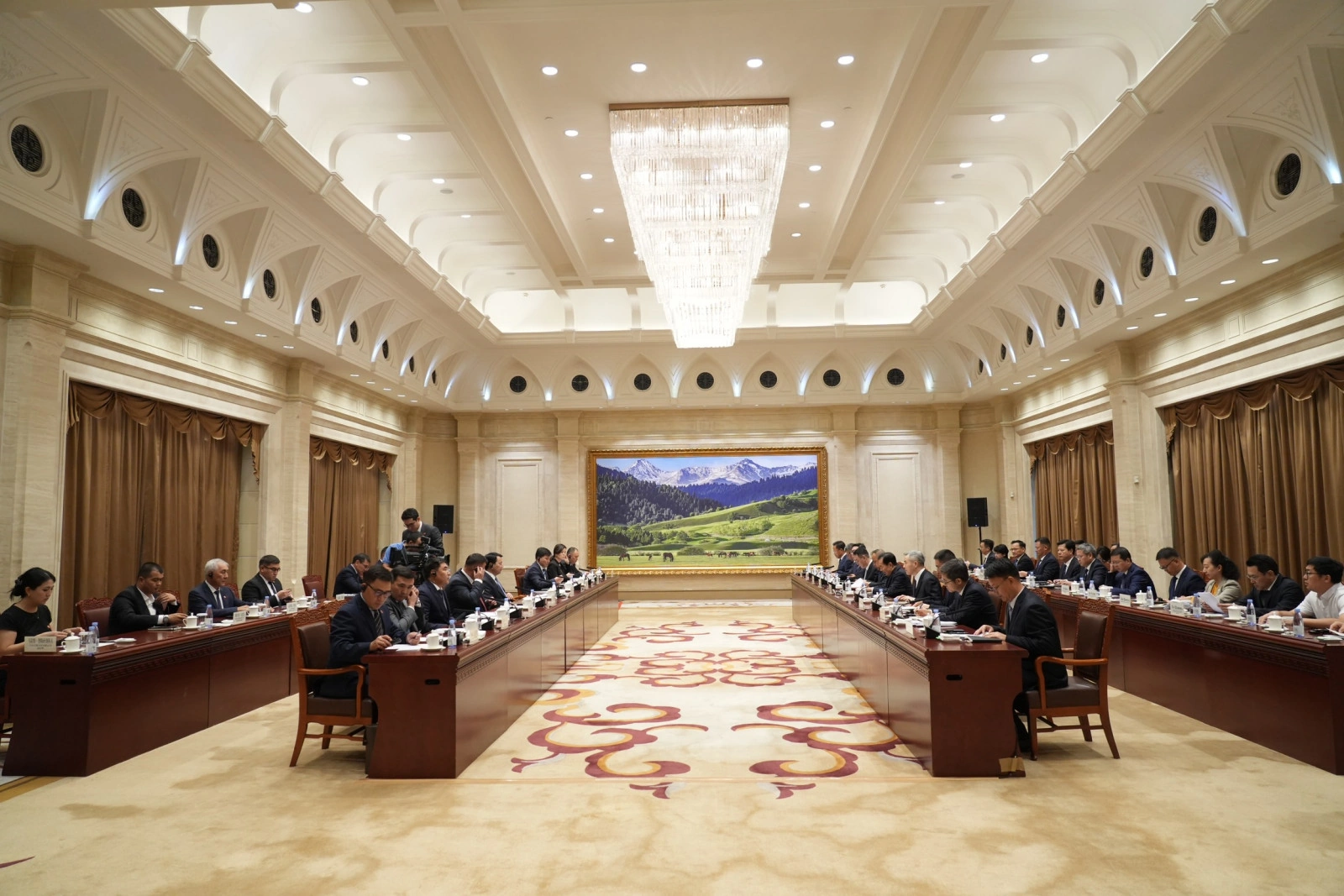
The plans were discussed during a meeting between Deputy
Chairman of the Cabinet of Ministers of Kyrgyzstan Erlist Akunbekov
and Secretary of the Communist Party of China Committee of Xinjiang
Chen Xiaojian, according to the Kyrgyz government.
The sides discussed projects covering the exploration and
development of oil and gas fields in Kyrgyzstan, as well as the
construction of oil refineries.
The talks also covered the creation of infrastructure for the
storage, transit and transshipment of cargo at border
checkpoints.
Chen Xiaojian expressed readiness to support all projects of
mutual interest and highlighted China's interest in further
developing trade with Kyrgyzstan through Xinjiang.
The Chinese side also expressed readiness to work actively on
new areas of cooperation with Kyrgyzstan.
Meanwhile, Chinese companies already have a significant presence
in Kyrgyzstan's oil and gas sector. China Petroleum Company Junda
operates the oil refinery in Kara-Balta, where a major
modernization project is underway. The plant has a processing
capacity of 800,000 tons of oil per year, while the investment in
its modernization was increased to $193.8 million. The project is
being implemented with the participation of China's Shaanxi Coal
and Chemical Corporation and is aimed at increasing the depth of
oil processing and strengthening Kyrgyzstan's energy security.
Chinese companies are also involved in upstream activities in
Kyrgyzstan. China Huarong Energy operates six oil and gas fields in
the Fergana Basin, holding a 60% operated stake in the assets.
More recently, Kyrgyzstan signed an investment agreement in July
2026 for the construction of a new oil refinery in Kochkor-Ata,
with planned investment of $25 million and a design capacity of
450,000 tons of petroleum products annually. Construction has
already begun, with the first phase expected to be commissioned by
the end of 2026.