BAKU, Azerbaijan, August 14. Tehran has no
right to claim 50% of the Caspian Sea.
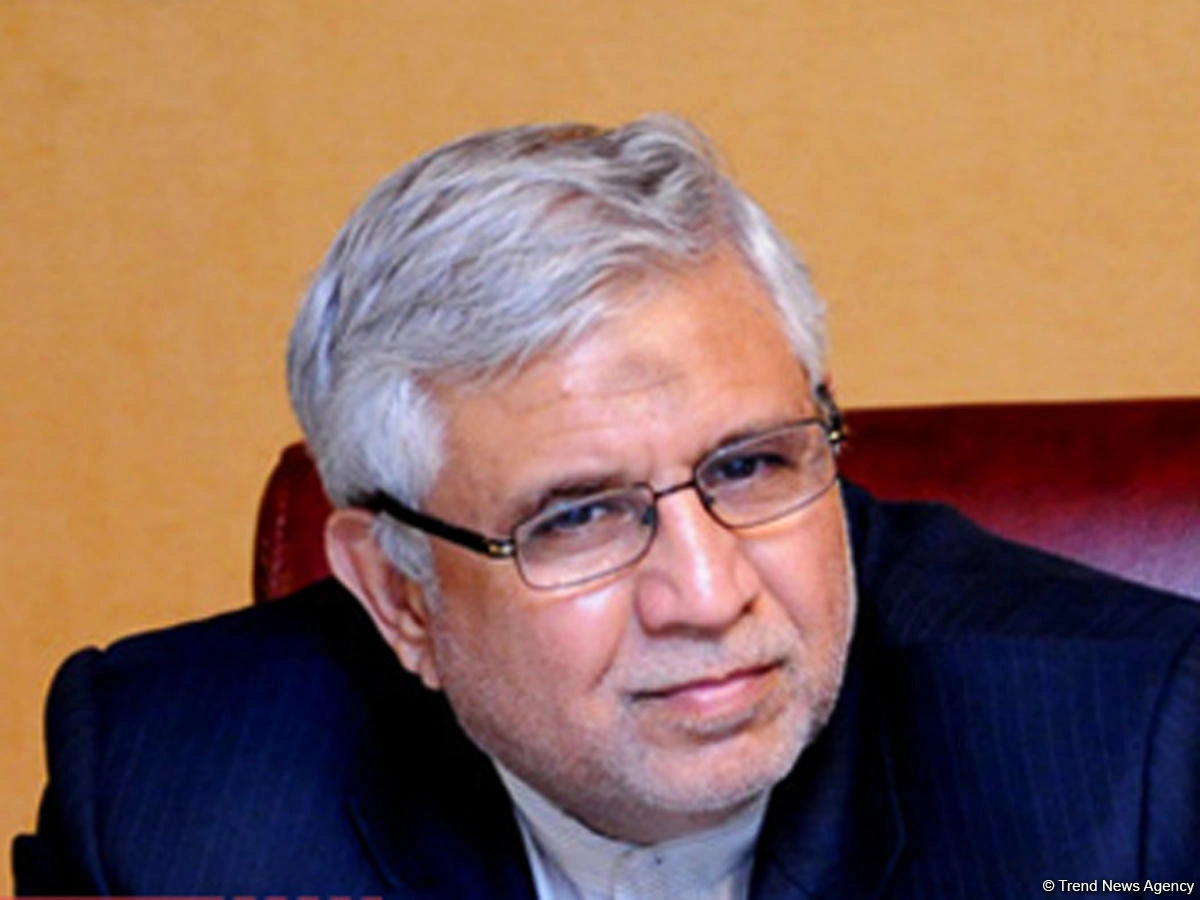
This was announced by former Iranian Ambassador to Azerbaijan
Mohsen Pakayin.
According to him, some people in Iran still have the
misconception that Iran's share in the Caspian Sea should be 50%.
However, there was no agreement or law in any historical period,
not even during the Soviet era, that would have set Iran's share at
50%.
"During the USSR, its coast was about 7 times larger than Iran's
coast. Of course, there was no talk of a 50% share at that time. In
addition, the USSR, as a superpower, didn't allow Iran to engage in
shipping or fishing even within its designated 10-mile zone and
created many obstacles," he said.
Pakayin noted that based on this, neither the claim to a 50%
share nor the reference to the Astara-Huseyngulu line has a legal
and realistic basis. Even one of the decisions of the Convention on
the Legal Status of the Caspian Sea states that the lines assumed
during the USSR period have no validity.
The former ambassador noted that the provisions of this
convention on ensuring the security of the Caspian Sea, keeping
this sea in a non-military form, shipping, fishing, environmental
protection, combating terrorism, and organized crime are in the
interests of the countries.
"The issue of disagreement among the 5 littoral states is the
determination of the starting line and the share of each country in
the seabed and watershed. Some countries consider the Caspian Sea
to be free and want the 1982 Convention on the Legal Status of the
Sea to be applied, while Iran considers the Caspian to be a closed
sea," he pointed out.
Pakayin added that due to this serious disagreement, these
issues were not included in the said convention. All five countries
agreed to leave aside the issues of disagreement and to reach an
understanding on the cases where agreements were reached.
Accordingly, this convention is based only on principles that are
the common opinion of all countries and have a legal basis. The
starting line and the share of each country are aimed at reaching
bilateral or multilateral agreements between the countries
concerned. For example, Iran and Azerbaijan have signed cooperation
agreements in joint areas such as the Alborz oil field, and Iran is
continuing bilateral discussions with Azerbaijan and
Turkmenistan.
"Of course, the Iranian parliament should also carefully and
thoroughly examine this convention, and the decision made by the
parliament will be implemented by officials. As an expert, I
believe that if this document is ratified soon, it will create more
conditions for Iran to legally use the Caspian Sea. Four countries
have ratified this Caspian Sea convention in their parliaments.
However, if Iran doesn't ratify, it won't have the necessary legal
means to defend itself in the event of incidents such as missile
and UAV attacks on merchant ships or problems in the field of
transit and cargo transportation," he said.
Pakayin said that in the current situation, when Iran is facing
international pressure and naval blockade in the Persian Gulf, the
Gulf of Oman, and international waters, the Caspian Sea is
considered a profitable potential for Iran's economic exchanges and
transit revenues. Failure to ratify this document weakens Iran's
legal power. It's expected that the Iranian Foreign Ministry and
Parliament will make a decision in the direction of national
interest in close cooperation.