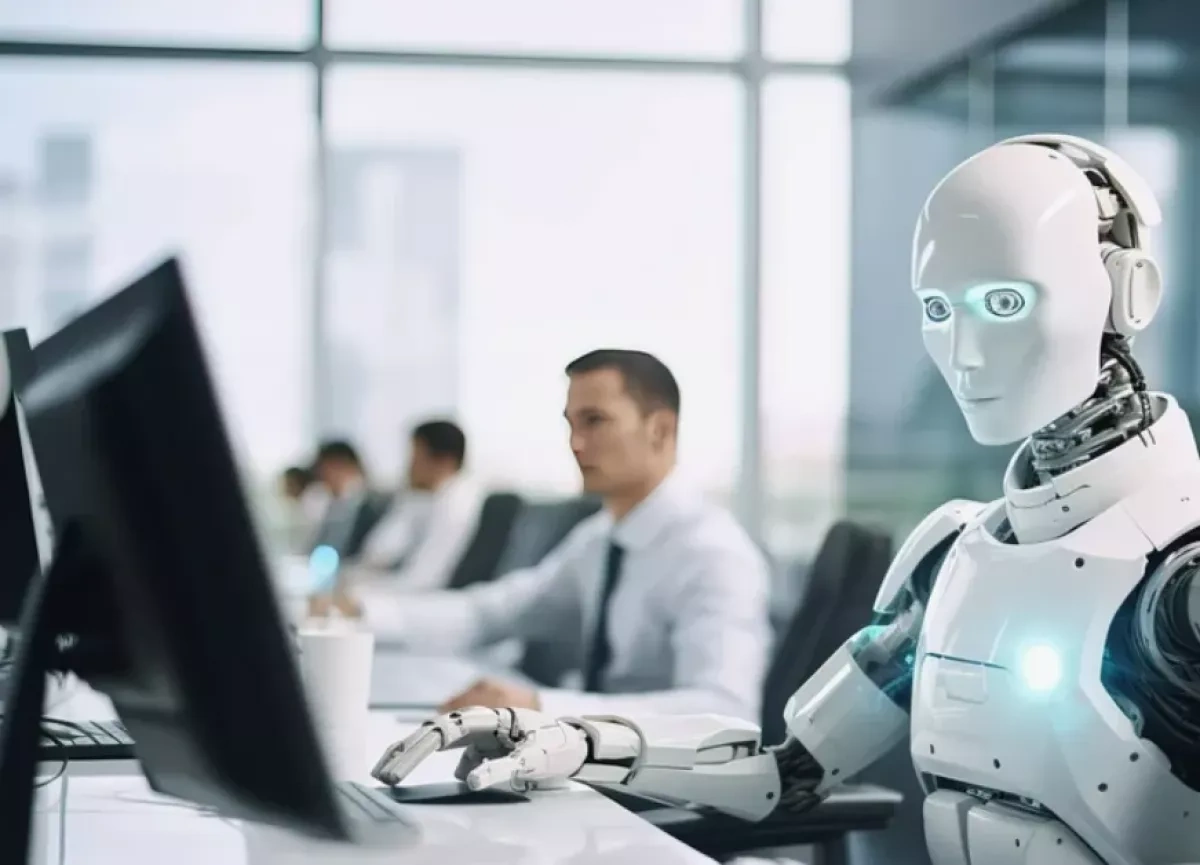
Japan’s Nippon Electric Company (NEC) has launched a new department staffed entirely by AI agents, with the system taking on roles ranging from employees and managers to department heads as the company expands the use of artificial intelligence in its operations.
The Corporate AI & Workforce Division began operating on August 1 and consists of 17 AI agents, each assigned a specific role, Caliber.Az reports, citing Electronics Weekly.
The department is designed to perform and oversee tasks, including developing optimised AI agents to handle automation requests from other parts of the company.
Among its initial responsibilities are preparing management analysis, simulations and early risk assessments for board and executive meetings, as well as analysing financial data, return on investment and cost trends to support strategic decisions.
The division is also expected to expand into customer data analysis to help develop sales strategies and identify potential problems or areas of interest.
Other departments, including sales and human resources, can submit requests for tasks they want to automate. The AI division then generates and assigns new AI “employees” tailored to those tasks and oversees their execution.
The agents are designed to continuously learn new skills and update their capabilities. They can also determine which issues they are able to resolve independently and which require human intervention, escalating the latter to human employees.
All activity is recorded in real time through a digital “management cockpit,” effectively creating a digital twin that allows human staff to monitor and audit the AI workforce.
The division operates under an AI-only hierarchy consisting of department heads, a board, managers and employees. AI managers can create new AI employees when required, while each agent is onboarded with NEC’s code of conduct and internal rules before beginning work.
Humans remain responsible for final assessments, major decisions and overall governance, while AI agents handle the operational workflow.
Managerial AI agents monitor the performance and quality of other agents, while the work of lower-level agents is checked by multiple other AI systems to reduce the risk of errors.
At the top of the hierarchy, a senior AI agent reports to human managers, who remain involved in discussions and final decision-making.
By Bakhtiyar Abbasov