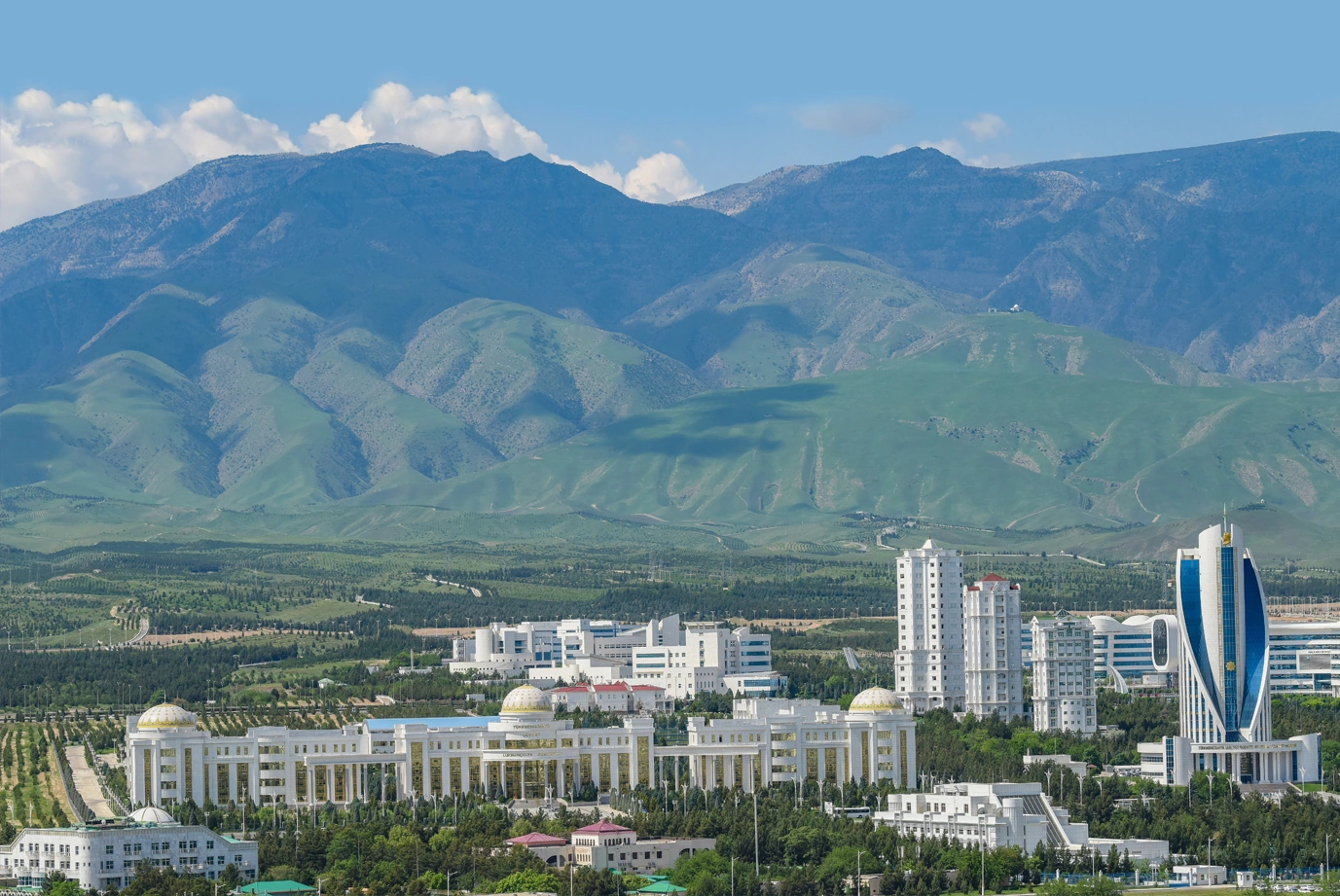
BAKU, Azerbaijan, August 7. Turkmenistan's
gross domestic product (GDP) grew by 6.3% in the first seven months
of 2026, driven by strong growth in transport, trade and
services.
This was reflected in a statement published by the press service
of the Turkmen government following a Cabinet of Ministers meeting
chaired by President Serdar Berdimuhamedov.
"The GDP growth rate for the first seven months of the year
reached 6.3 percent," the statement said.
According to the statement, the transport and communications
sector posted the fastest growth at 10.3% during the January-July
period. Trade expanded by 8.5%, the services sector by 8.4%,
construction by 6.7%, agriculture by 4.1% and industry by 2.6%.
Although Turkmenistan remains one of the world's largest natural
gas exporters, hydrocarbons are no longer the only driver of its
economic strategy. In recent years, Ashgabat has increasingly
invested in transport infrastructure, logistics, petrochemicals,
manufacturing and trade in an effort to diversify sources of
economic growth. Large-scale public investment has also supported
expansion in construction and services, while agriculture continues
to play an important role in employment and domestic food
production.
The continued outperformance of the transport and communications
sector reflects Turkmenistan's broader ambition to strengthen its
role as a regional transit hub. The growing importance of the
Middle Corridor, or the Trans-Caspian International Transport
Route, has further increased the economic significance of
Turkmenistan's transport sector.
Against this backdrop, the International Transport Forum (ITF)
told Trend in an exclusive interview that the Middle
Corridor would retain its strategic importance as a diversified
Asia-Europe route, while Turkmenistan could benefit from Caspian
transit routes toward Azerbaijan.
"The Middle Corridor would nevertheless retain strategic value
as a diversified Asia–Europe route that avoids both Russia and
Iran. It will continue to benefit from strong political and
investment support for Eurasian connectivity," ITF said.