BAKU, Azerbaijan, August 6. Kyrgyzstan is
seeking to expand trade, investment and technological cooperation
with Russia through new joint projects, Chairman of the Cabinet of
Ministers Adylbek Kasymaliev said.
This was reflected in a statement published by the Kyrgyz
government's press service.
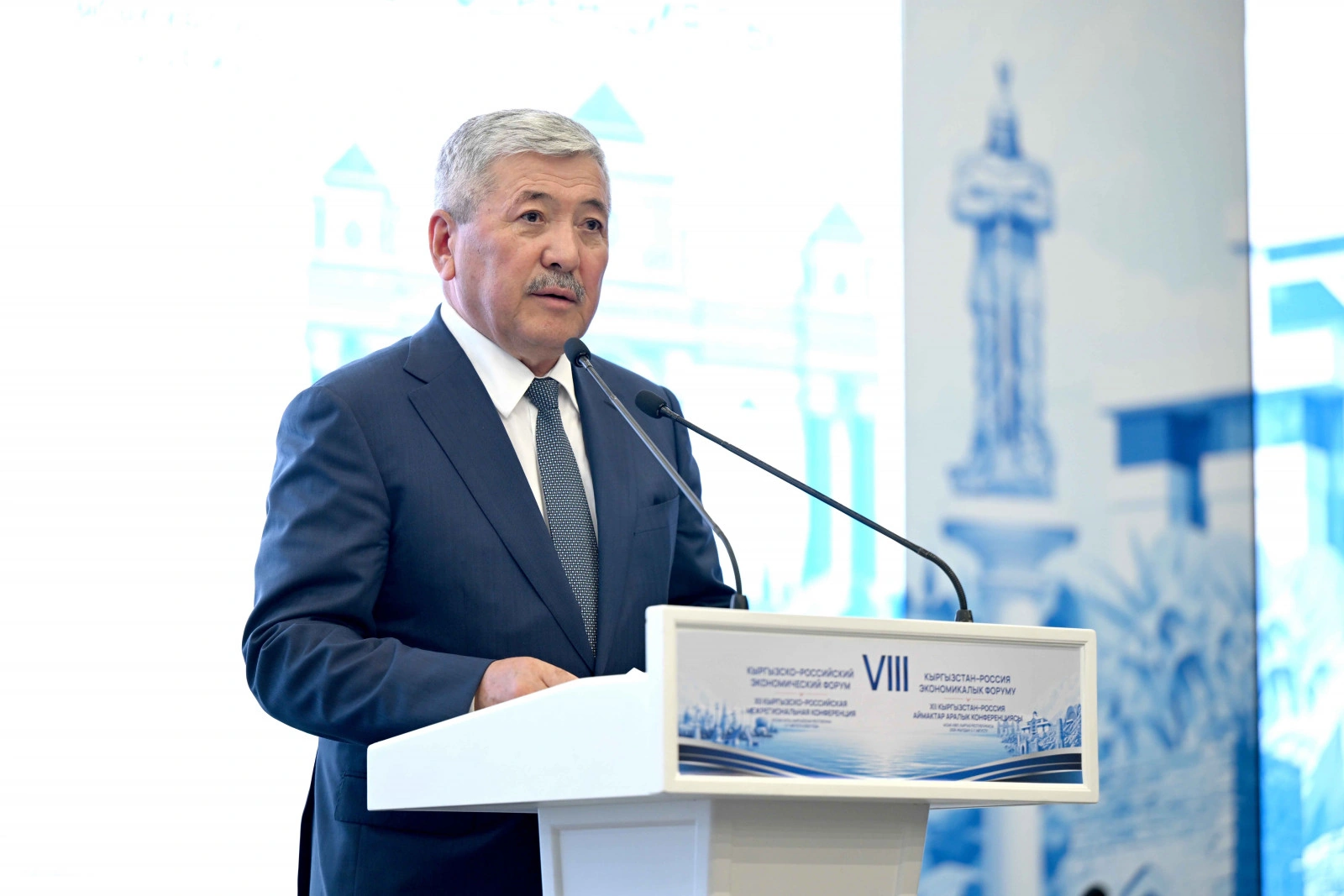
"This forum and the interregional conference are not merely a
platform for exchanging views - they are a space where concrete
decisions are made, joint projects are launched, and direct ties
between businesses and regions of our countries are strengthened,"
Kasymaliev said.
He made the remarks during the opening ceremony of the eighth
Kyrgyz-Russian Economic Forum and the twelfth Kyrgyz-Russian
Interregional Conference in Cholpon-Ata, held ahead of the Eurasian
Intergovernmental Council meeting on August 6-7.
According to Kasymaliev, the Kyrgyz government continues to
modernize the economy, improve the investment climate and develop
industry, energy, transport and tourism infrastructure, while
remaining open to broader cooperation with Russian partners.
He also emphasized the role of direct interregional contacts in
accelerating the implementation of agreements and creating new
opportunities for businesses in both countries.
For reference, the Kyrgyz-Russian Economic Forum has become one
of the main bilateral platforms for advancing investment,
industrial and regional cooperation between the two countries. In
recent years, the meetings have resulted in agreements covering
energy, logistics, digital technologies, manufacturing and
agriculture, while regional administrations have increasingly taken
a more active role in developing direct economic partnerships.
Russia remains Kyrgyzstan's largest trading partner and one of
its biggest sources of foreign investment. The two countries are
also closely integrated through the Eurasian Economic Union, where
Russia is Kyrgyzstan's principal export destination within the
bloc. The forum traditionally precedes high-level Eurasian
meetings, allowing governments and businesses to coordinate
bilateral initiatives alongside the broader regional integration
agenda.