At least 16 people have died amid record-breaking heat in South Korea, as authorities issued the first-ever severe heat warning for the capital, Seoul.
The alert came into force at 11:00 a.m. local time on August 4, covering the city of more than nine million people, a day after similar warnings were introduced in parts of Seoul and surrounding Gyeonggi Province. Temperatures in the capital were forecast to reach 38°C on Tuesday and remain at around 37°C for the following three days.
More than 2,000 people have been treated for heat-related illnesses since May, according to the Korea Disease Control and Prevention Agency, cited by foreign media. Two elderly men died on Sunday while working outdoors — one in a greenhouse near Seoul and another in the southern port city of Busan.
President Lee Jae Myung urged officials to safeguard lives and inspect the power system as electricity demand rises. “We need to make efforts for a fundamental overhaul of the national crisis system, since this extreme weather is becoming normal,” he said during a cabinet meeting.
The most intense heat has been recorded in the southeast. Yangsan reached 42.5°C on Sunday, the highest temperature in 122 years of observations, while Goryeong recorded 41.2°C on Monday. Several locations exceeded 41°C, and one district of Seoul hit 39°C.
By Monday, 217 of the country’s 235 land-based warning zones—around 92%—were under heat alerts. The conditions are attributed to overlapping high-pressure systems over the peninsula, compounded in the southeast by a foehn effect as air crosses the Taebaek Mountains and Sobaek Mountains.
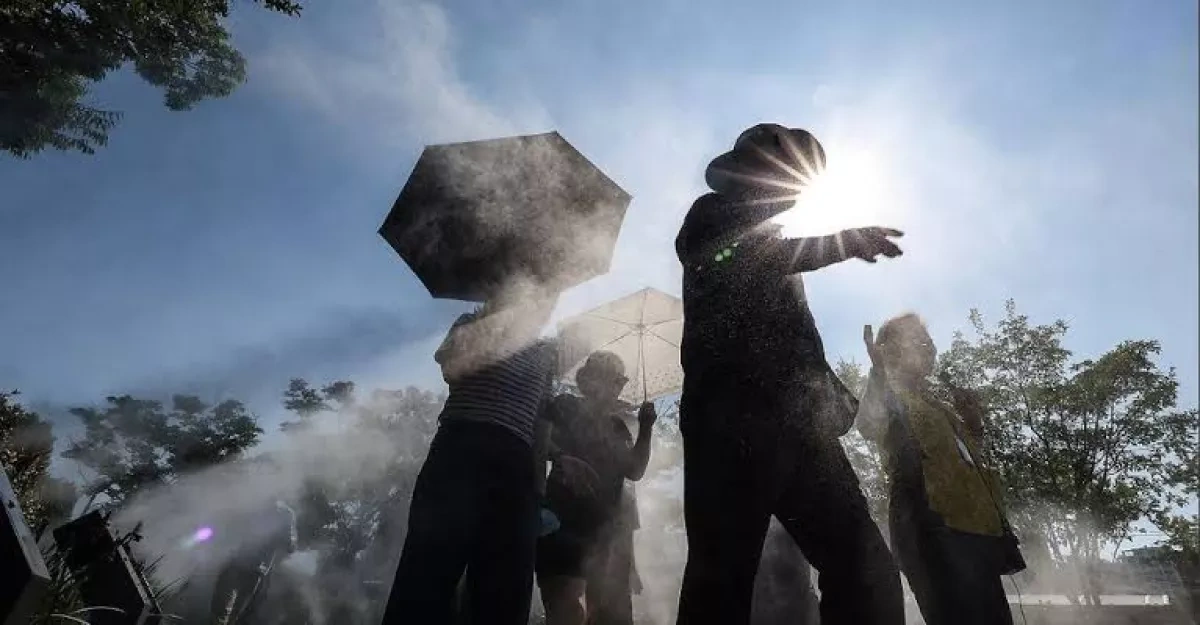
Authorities have deployed emergency measures, including welfare checks on 63,000 vulnerable residents, water-spraying trucks covering nearly 2,000 km of roads, and misting systems across Seoul. In North Gyeongsang Province, drones equipped with loudspeakers and thermal cameras are broadcasting safety warnings in crowded areas.
The heatwave has intensified concerns for residents in substandard housing, including “jjokbang” units—small, poorly ventilated rooms often lacking air conditioning.
The extreme conditions extend across East Asia. Japan recently recorded temperatures above 40°C, prompting new terminology to describe dangerous heat. Forecasters say Typhoon Dolphin, approaching the region, could either worsen humidity or bring temporary relief depending on its
Heatwaves in South Korea are becoming more frequent and severe, with the annual number of days exceeding 33°C rising to 19 in recent years, compared with eight in the 1970s.
By Tamilla Hasanova