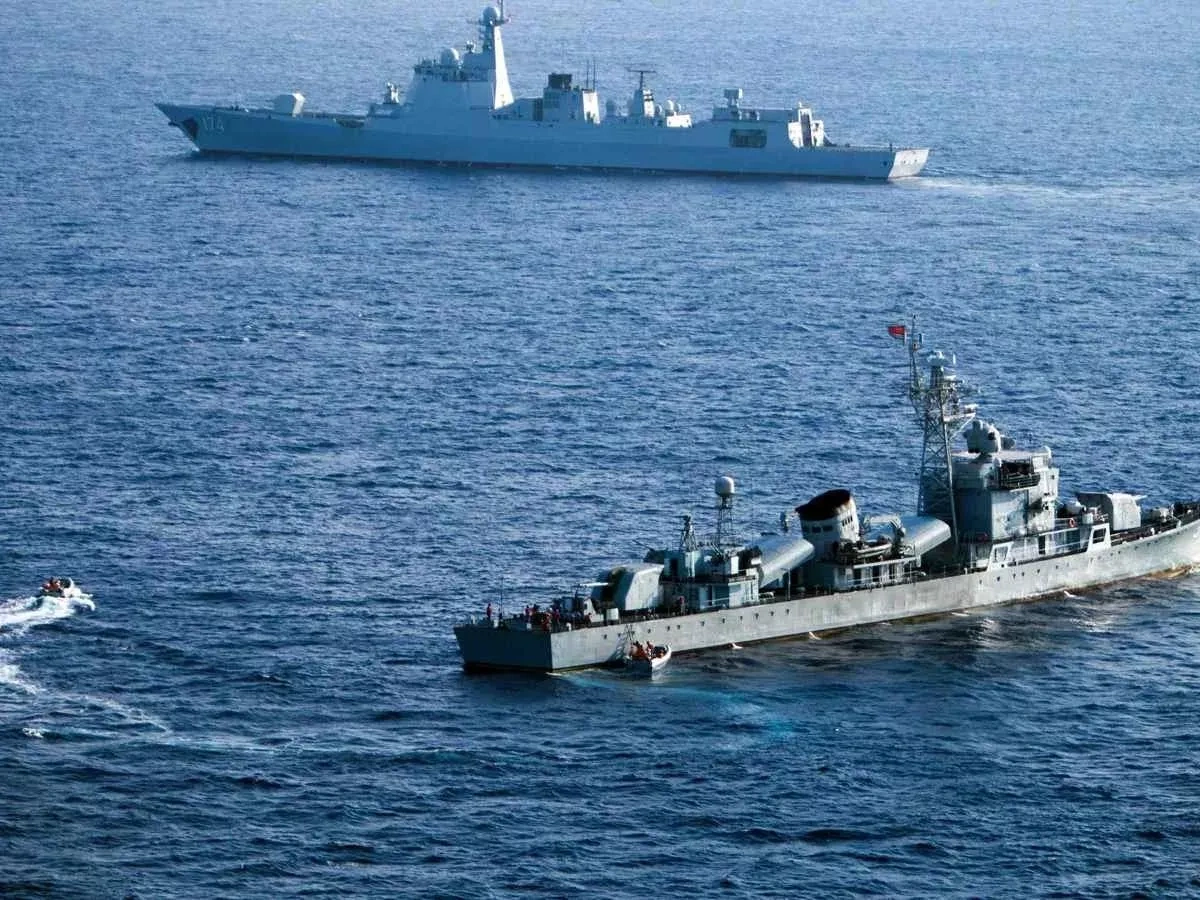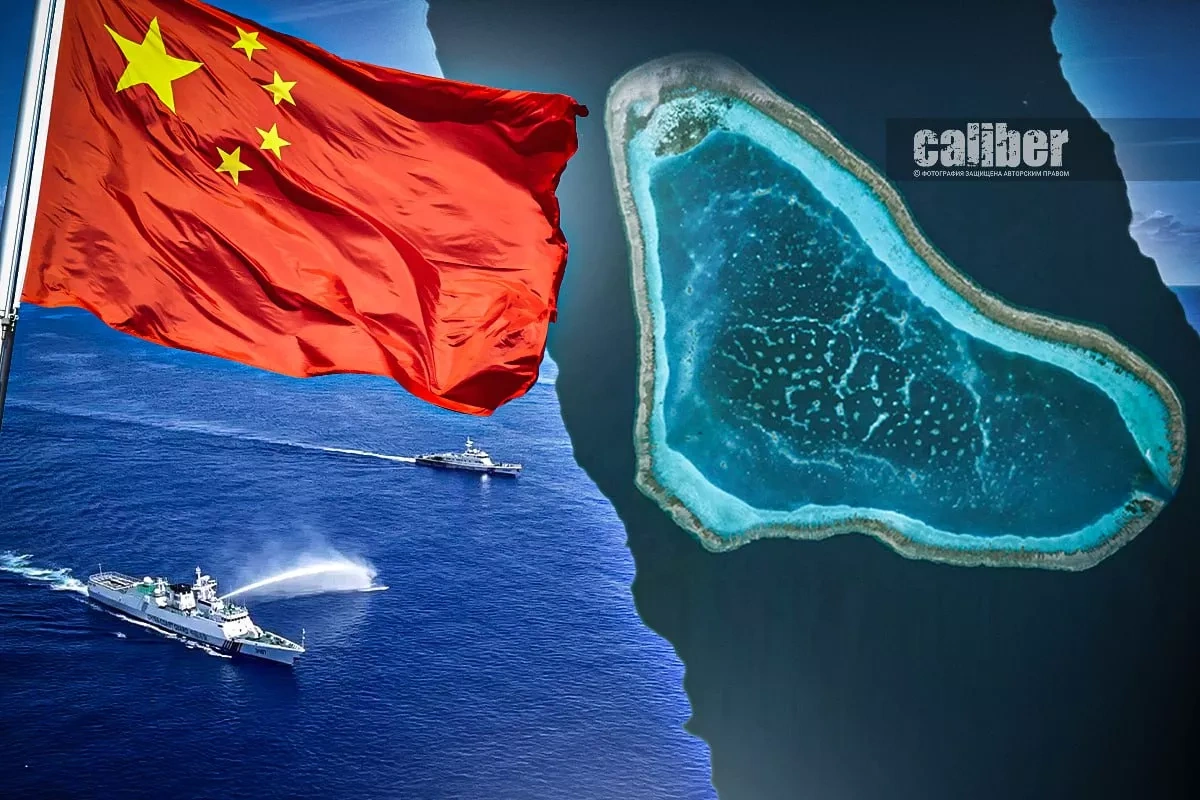
Tensions have flared once again in the South China Sea. The Chinese People's Liberation Army (PLA) carried out joint naval and air force exercises near Scarborough Shoal (known in China as Huangyan Dao), a disputed feature also claimed by the Philippines, saying the drills were a response to actions by countries that undermine regional stability.
At the same time, Beijing approved new regulations governing the national nature reserve established in the area, while the China Coast Guard announced that it would step up its permanent patrols of the surrounding waters.
These developments came shortly after the Philippines submitted its claim to extend its continental shelf to the United Nations, along with an official maritime map covering the Scarborough Shoal area. Chinese authorities denounced Manila's move as illegal and warned that they were prepared to defend China's territorial and maritime rights.
At the same time, the latest military exercises also appear to be a logical continuation of the policy Beijing has pursued in the South China Sea for several years.
China has steadily strengthened its presence in the Yellow Sea, the East China Sea, and the South China Sea while avoiding the prospect of direct military confrontation. Its primary instruments have been the coast guard, maritime law enforcement agencies, fishing fleets, administrative measures, and the legal codification of its territorial claims.
Last year, Beijing declared the waters around Scarborough Shoal a national nature reserve, later established its own maritime baselines, subsequently expanded permanent patrols in the area, and in recent months began using floating barriers and fishing vessels to control access to the lagoon. The latest military exercises represent the next step in this broader strategy, underscoring Beijing's determination to defend what it considers its national interests.
This approach is consistent with China's "grey-zone" strategy, under which political, legal, and coercive pressure is applied gradually over an extended period. Each move appears limited in scope and does not, by itself, warrant an immediate and forceful response from other states. Taken together, however, these incremental actions steadily alter the facts on the ground—or, in this case, the facts at sea.
In a broader sense, these developments are part of the broader struggle for control of the western Pacific. Beijing views the South China Sea, Taiwan, and the East China Sea as interconnected components of a single strategic space. China's leadership sees the deepening security cooperation between the United States, the Philippines, and Japan as a further strengthening of the First Island Chain—a network of US allies and security partners capable of constraining the operations of the Chinese navy.
For this reason, the latest military exercises were not directed solely at Manila. They also served as another signal to the wider region that China intends to continue steadily consolidating its presence in areas it considers strategically vital. The same logic is evident in Beijing's approach to self-governed Taiwan, where it regularly conducts surprise military drills, expands patrol zones, and rehearses operations aimed at controlling key maritime lines of communication.
Across all of these cases, a consistent pattern emerges: rather than resorting to abrupt military escalation, China prefers to create a new strategic reality incrementally—one to which its rivals are ultimately compelled to adapt.