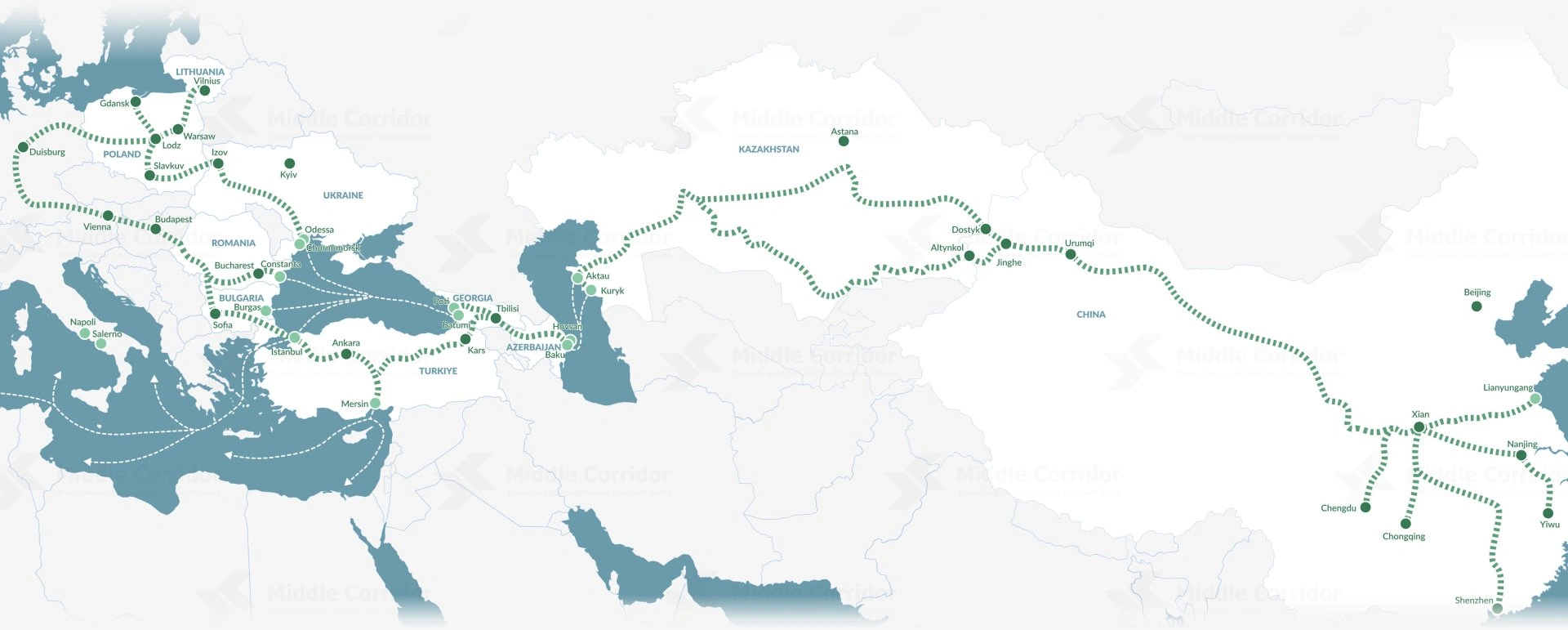
Azerbaijan is steadily reinforcing its position as a strategic transport and logistics hub linking Europe and Asia, supported by major investments in aviation infrastructure, airspace modernization, and the expanding importance of the Middle Corridor, said Rafael Schvartzman, Regional Vice President for Europe at the International Air Transport Association (IATA).
In an exclusive interview with Report, Schvartzman said Azerbaijan is benefiting from the ongoing transformation of global supply chains, rising passenger traffic, and growing demand for diversified trade routes connecting European and Asian markets.
“Azerbaijan is consistently strengthening its position as a key Eurasian transport and logistics hub connecting European and Asian markets. Amid the large-scale transformation of global supply chains, rising passenger traffic, and the rapid development of the Middle Corridor, the country is demonstrating impressive progress in modernizing its aviation sector. Key drivers of this process include the implementation of advanced airspace management strategies, expansion of route networks, development of new airport infrastructure, and the region's active participation in the global green transition agenda.”
Schvartzman highlighted Azerbaijan's increasingly significant role in the development of the Middle Corridor, noting that the country's geographic location and sustained investment in infrastructure have positioned it as a natural gateway for both cargo and passenger air transport.
“Azerbaijan is playing an increasingly important role in the development of the Middle Corridor, particularly as global supply chains seek more reliable and diversified routes connecting Europe and Asia. The country's advantageous geographic location, combined with major investments in infrastructure and logistics capacity, makes it a natural connecting hub for both cargo and passenger air services.”
He pointed to projects such as the Alat Free Economic Zone and the construction of a new dedicated cargo airport as evidence of Azerbaijan's long-term ambitions to expand its logistics capabilities. Schvartzman also said Heydar Aliyev International Airport has considerable potential for further growth through more efficient use of its existing capacity and by attracting additional airlines.
At the same time, he stressed that maximizing the Middle Corridor's potential will require addressing several operational and regulatory challenges.
“However, fully realizing the corridor's potential requires overcoming a number of operational and regulatory challenges. The first priority is ensuring price competitiveness: airport fees and service charges must remain attractive compared with alternative routes and hubs, as excessive costs could discourage airlines and logistics operators from choosing Baku as a transit point. This requires sound economic regulation that supports the development and operation of necessary infrastructure while providing investors with a predictable regulatory environment.”
Schvartzman also identified regulatory simplification and market liberalization as essential to strengthening Azerbaijan's competitiveness.
“In addition, simplifying the regulatory framework and advancing liberalization remain key priorities. This includes streamlining customs procedures and related documentation to reduce entry barriers and attract new market participants.”
He emphasized that digital transformation will be another critical factor in improving the efficiency of regional logistics networks.
“Digitalization and data exchange will also play a critical role. The implementation of advanced standards such as IATA's ONE Record initiative could significantly improve cargo transparency, efficiency, and traceability throughout the logistics chain.”
According to Schvartzman, stronger integration between air, rail, road, and maritime transport will be vital to unlocking the full potential of the Middle Corridor and ensuring faster, more predictable freight movement.
“Furthermore, comprehensive multimodal integration of air, rail, road, and maritime transport is essential for maximizing the opportunities of the Middle Corridor. Effective coordination between different modes of transportation will help reduce delivery times and improve the predictability of shipments.”
He added that maintaining high operational standards will be equally important in reinforcing Azerbaijan's position as a trusted logistics hub.
“Finally, maintaining high levels of operational efficiency and quality standards through industry programs such as the IATA Safety Audit for Ground Operations (ISAGO) will help strengthen overall safety, reliability, and confidence among international logistics partners.”
By Vafa Guliyeva