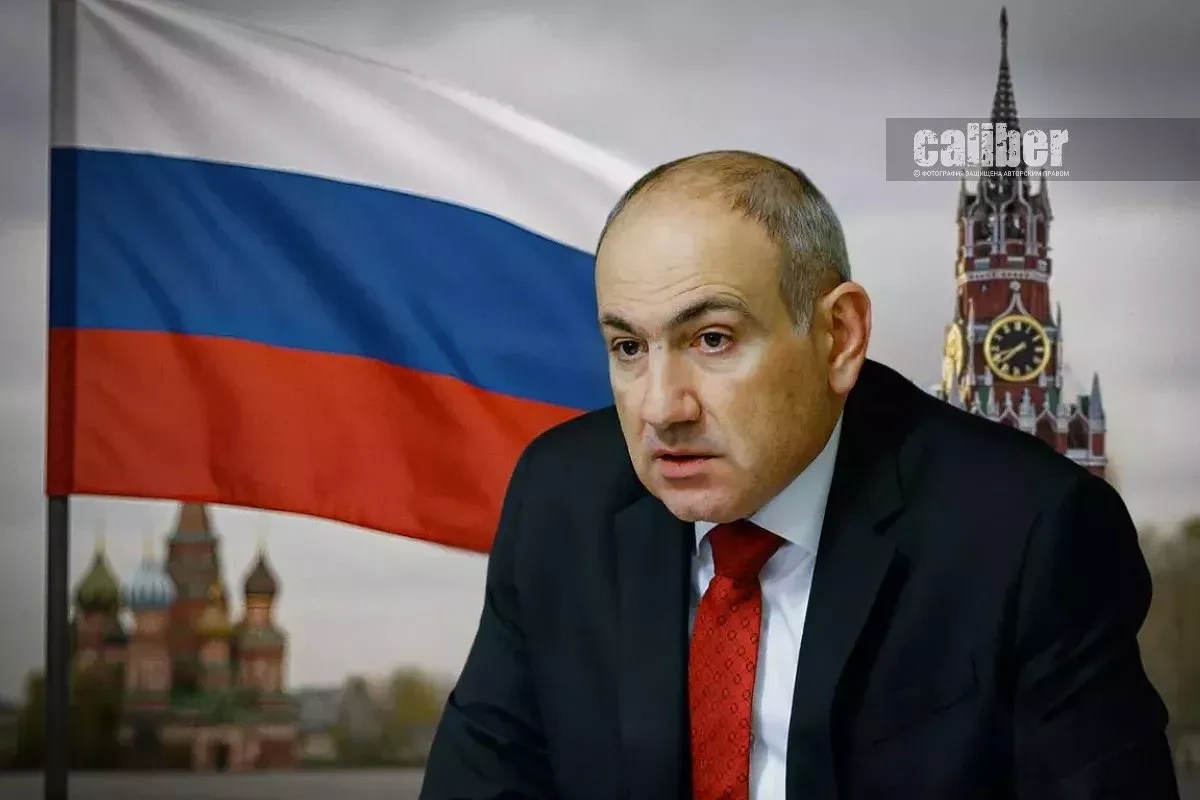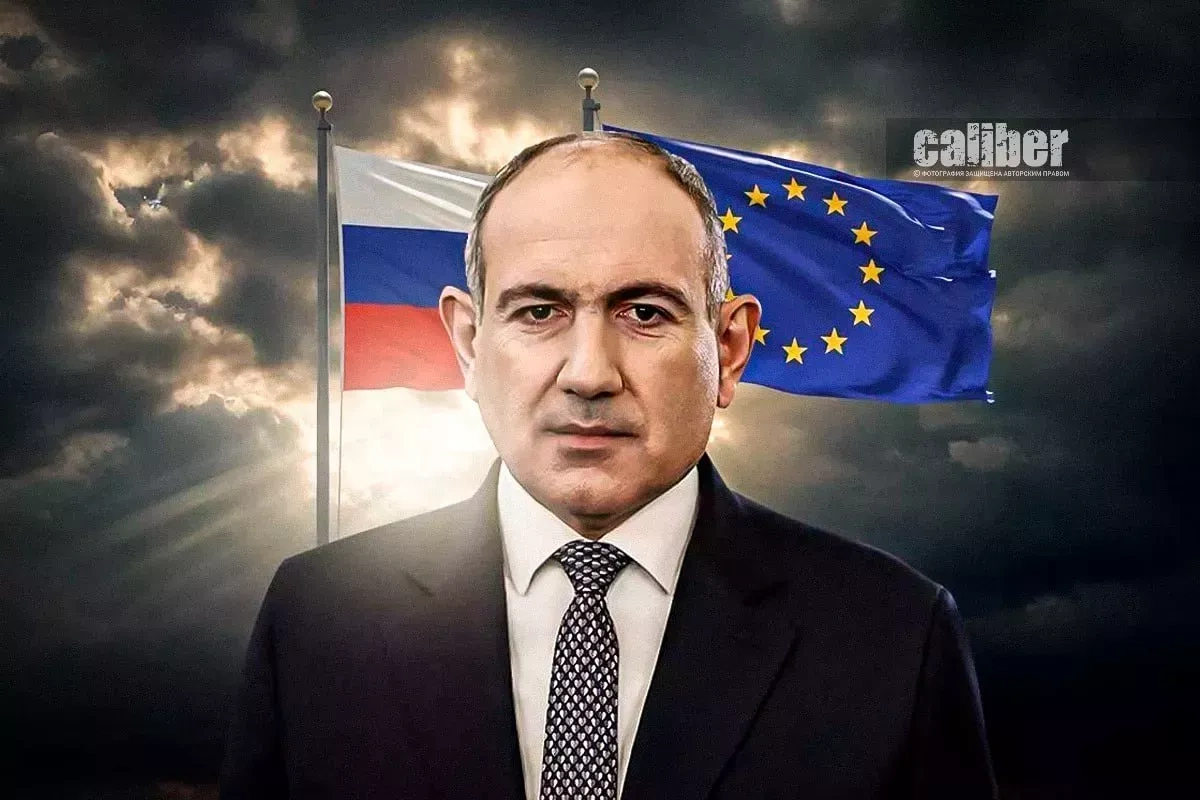
If the Eurasian Economic Union does not hurry to restore Armenia’s access to its markets, this “will mark the beginning of the end of the EAEU,” Prime Minister Nikol Pashinyan warned Russian President Vladimir Putin on Wednesday.
Consistency is not exactly Pashinyan’s strong suit. Throughout his political career, he has called for Armenia’s withdrawal from Russia-linked integration initiatives and a shift towards the West. For nearly eight years, Pashinyan has governed his country under these slogans, while continuing to keep Russian troops on Armenian territory, actively exporting to Russia, and seeking assistance from the EAEU and the Collective Security Treaty Organization (CSTO).
At the same time, the objectives of his policy toward both the West and the East remain the same: by shamelessly exploiting distant allies, he seeks to once again push through solutions favoured by Armenian elites in relations with neighbouring countries.
The signature move — provocation and sabotage
From the very beginning of summer, Pashinyan and his allies urged Armenian agricultural producers not to worry about losing access to Russian markets, claiming that European alternatives were already on the horizon. Yet on Tuesday, Armenia’s prime minister called the Kremlin. And it was Pashinyan himself who made the call.
On the one hand, he urged Putin to reopen the Russian market to Armenian goods as soon as possible, referring to bilateral agreements and the rules of the Eurasian Economic Union. On the other hand, he stated that Armenia currently has no plans to hold a referendum on the country’s membership in the EAEU and the EU.
Yerevan was urged to hold such a referendum on May 29 by the leaders of the EAEU member states, as the Armenian leadership has declared its firm determination to begin “European integration” — a process that could start undermining the EAEU from within if Armenia begins accession talks with the EU while remaining part of another bloc.
Pashinyan commented on his conversation with the Russian leader as follows: “At least on several issues, we reached a common understanding. The most important thing is that Armenia has the legitimate right to create alternatives for itself. I told the President of the Russian Federation that we have declared this
At the same time, in Pashinyan’s rhetoric, the concept of Armenian independence, which, he argued, should be ensured by “replacing dependence on a few with dependence on many.”
In reality, however, in every situation he has had one answer to all problems — moving away from Russia toward the EU and NATO. He has neither created nor is creating any “alternatives.” His political vision is based on manoeuvring between the West, represented by the EU (Pashinyan has now pushed the United States aside, as his main backer within the EU — French President Macron — has clashed with Trump), and Russia.
For someone with such a worldview — one typical of post-Soviet liberals — other countries, even neighbouring ones, are merely secondary directions of foreign policy. Their logic is built on blatant racism and subservience to empires: the idea that the main task is to reach agreements with global powers and major blocs, after which, relying on those agreements and new allies, one can impose preferred solutions on neighbours. It was precisely this logic that guided half of Eastern Europe when it joined the EU and NATO.
As a result, small countries began exploiting their EU-NATO membership to pressure their neighbours. This selfish geopolitical “happiness” proved short-lived, but it contributed to pushing Europe into its current pre-war state, in which those who seek to pressure their neighbours by relying on alliances with great powers may themselves become expendable assets. The “European integration” of Armenia as envisioned by Pashinyan is not particularly different from these examples.
After all, even now Pashinyan is not as concerned with a peace treaty or establishing relations with neighbouring countries as he is with his dealings with the EU and Russia. Meanwhile, his distant partners have already begun actively involving themselves in Armenia’s relations with its neighbours — the President of the European Commission has promised to assist Yerevan in resolving disputes with them.
At the same time, Pashinyan has remained within integration blocs that are important to the Kremlin throughout this entire period. For years, he has governed the country while speaking of the inevitability of joining the EU and NATO, yet he has continued to maintain close ties with Russian leadership.
This is not even about withdrawing from the EAEU and the CSTO — which would have been the logical step if Pashinyan truly believed the accusations he levels against these organisations. Rather, the issue is that year after year he managed to create scandals at EAEU summits, declare one of the member states — Belarus — an enemy (allegedly because of its ties with Azerbaijan, though more likely at the request of European liberal elites), sabotage meetings, and almost openly mock those gathered by arriving late and questioning the organisation’s work — while still remaining a member of the bloc.
And Pashinyan behaved in much the same way toward another organisation close to the heart of the Russian leadership — the Collective Security Treaty Organisation (CSTO). After coming to power, he immediately had its sitting Secretary General arrested, attempted to involve the organisation in the conflict over Armenian territorial claims in Azerbaijan, and later began boycotting its activities.
And the issue is not even that this cannot be called fair play. It was not a serious game either — rather, an attempt to move toward the West at Russia’s expense, which, in its contradictions, at times resembled the behaviour of Ukraine’s ousted President Viktor Yanukovych. As a result, Armenia has recently entered another stage of rapprochement with the EU completely unprepared — with numerous vulnerabilities that no one even needs to exploit; they will reveal themselves on their own.
The entire concept of Armenia’s European integration under the current leadership appears to be an ideologically driven geopolitical gamble. It is based on moving toward the EU and NATO while:
Failing to settle relations with neighbouring countries — through whose territory and airspace alone communications with the EU are possible;
Failing, after nearly a decade in power, to even lay the groundwork for diversifying the country’s foreign trade;
Expanding trade with the main opponent of the EU and NATO — Russia — by circumventing anti-Russian sanctions;
Failing to withdraw Russian troops from the country’s territory at a time when Russia and the EU-NATO bloc are engaged in an undeclared confrontation in Eastern Europe;
Failing to end the unusual close alliance with Iran, which is under hundreds of Western sanctions and is engaged in a full-scale confrontation with the United States;
Accelerating rapprochement with the West precisely at a time when conflicts involving Western powers are taking place in neighbouring regions — Iran and Ukraine;
Actively and demonstratively acquiring Iranian weapons.
These are only seven of the most serious contradictions in Yerevan’s current course. Each of them could not only turn Armenia into a potential battleground between Russia and the West, but also create additional problems for neighbouring countries. Moreover, Pashinyan is pursuing this policy without having secured reliable material support from the West.
Yes, shortly before Armenia’s June elections, Pashinyan staged a grand political spectacle in Yerevan involving EU leaders and the President of France, leaving little room for ambiguity: Armenia’s leadership intends to move toward the EU at any cost. And the EU is willing to play along with Pashinyan — especially since for the current EU leadership it is crucial to revive the bloc’s expansion process, which has been stalled since 2013.
However, this political spectacle did not signify the EU’s readiness to invest in pulling Armenia out of Russia’s orbit. Especially given that Pashinyan’s voluntarism and disregard for relations with neighbouring countries have made such a potential break with Russia extremely costly in every respect. After all, while seeking to launch European integration, Pashinyan has not even resolved relations with Türkiye — so how exactly are Armenian products supposed to be exported to the EU? Through Georgia, whose leadership European liberal elites are eager to remove at the first opportunity?
The “Jars of freedom”
As a consequence of this voluntarist approach, no rapid reorientation of Armenian trade has taken place. This reality could not be concealed even by the performances staged around EU solidarity with Armenian apricots after the latest elections, which Brussels and Yerevan portrayed as a triumphant shift in the Armenian people’s foreign policy orientation.
First, on June 23, Pashinyan’s media outlets celebrated the “first symbolic batch of Armenian apricots” destined for the EU, which was personally delivered by one of Armenia’s ministers — apparently straight in his luggage.
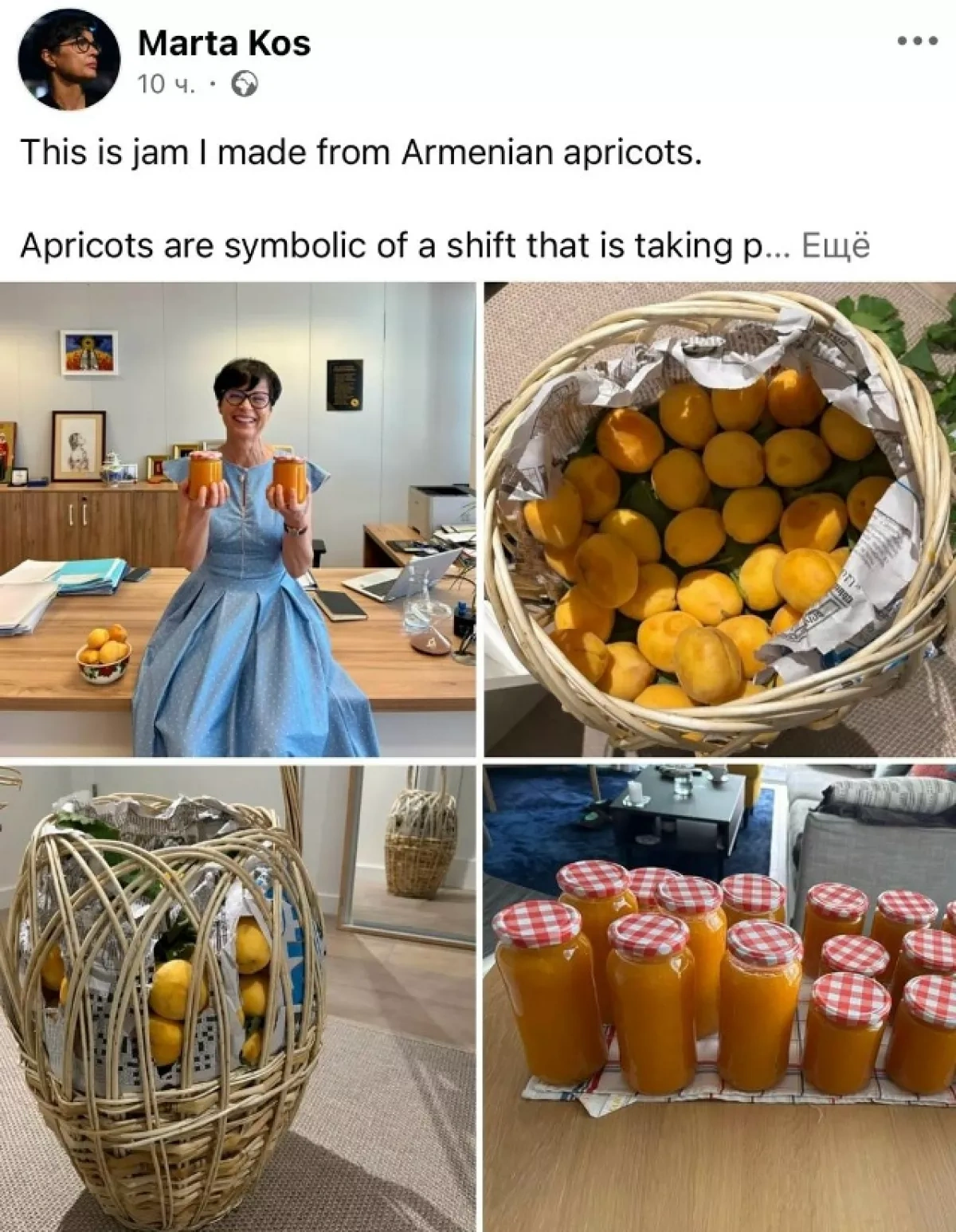
Following this, on July 6, EU Commissioner for Enlargement Marta Kos published a post featuring playful images of the “Jars of freedom” she had made from apricots brought from Yerevan. Her account was filled with rhetoric about how Russia was pressuring Armenia by restricting imports of Armenian fruits and flowers, while the EU was coming to Armenia’s assistance.
“When you go to the supermarket, pay attention to Armenian apricots, plums and cherries. This is a small step that can help Armenian farmers and support their country’s democratic choice.” As even some Euro-enthusiasts sarcastically pointed out, at the time of the post, Armenian apricots were not actually being exported to the EU.
At the height of the season, Armenian farmers were left to fend for themselves by European bureaucrats. According to Armenian media reports, in June only 35.5 tonnes of fruit and vegetables managed to be sold to the EU. Last week, even pro-Pashinyan outlets cautiously described the results of the export reorientation. Thanks to the active involvement of the Polish government in helping Armenia gain access to the “free market,” they were able to report that “another 60 tonnes of apricots and the first batch of fresh flowers will be sent from Armenia to Europe, with Poland as the destination.” Following this, “the total volume of apricots exported under the project will exceed 100 tonnes” — meaning roughly five per cent of all Armenian apricot exports this year.
These are mere crumbs, and even those became possible only thanks to the intervention of the Polish government led by pro-Brussels liberal politicians. How can this be explained? After all, at the beginning of June, Armenia’s leader promised to resolve everything and assured that work was already underway “to develop new export markets,” with “specific proposals for the purchase of roses, fruits and vegetables” already on the table. Yes, Armenian flowers and apricots appear to confirm that. But perhaps such statements should not be taken too seriously, given that they were made ahead of elections?
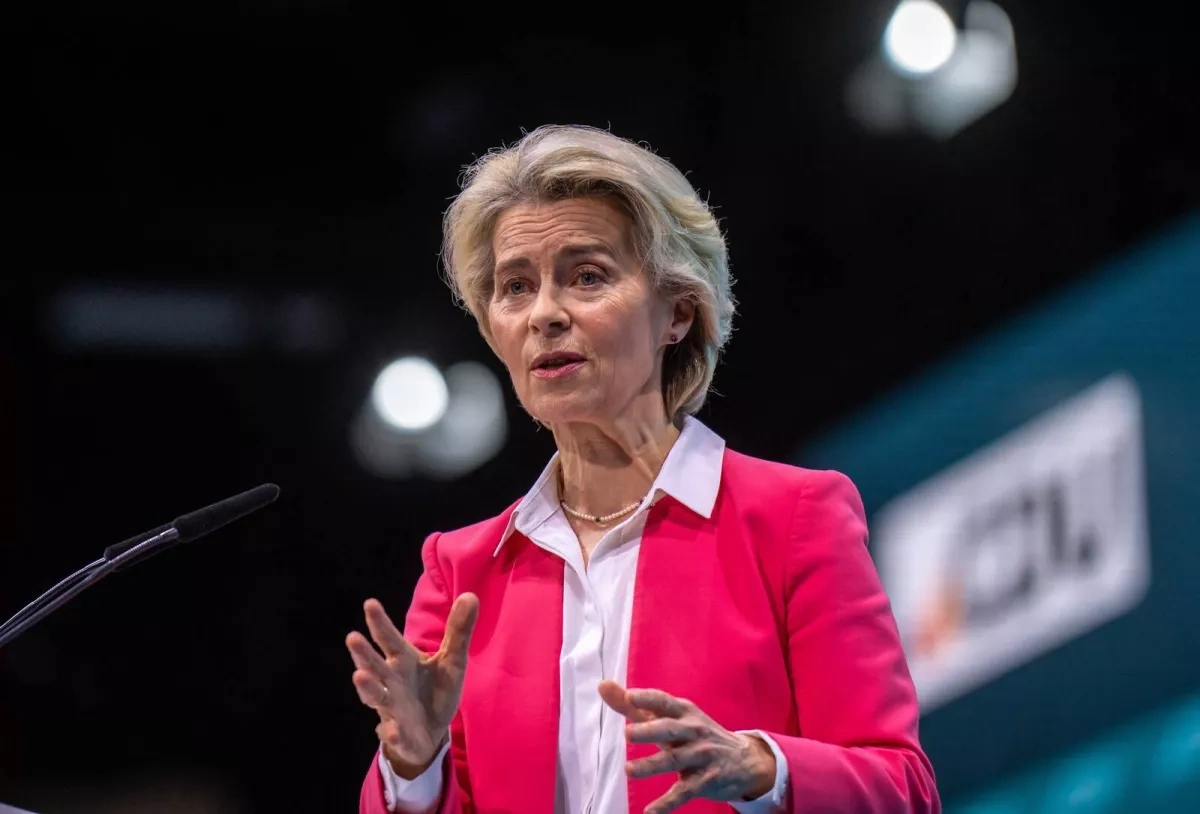
However, European Commission President Ursula von der Leyen also promised to facilitate trade in Armenian goods, particularly agricultural products — and she made such a promise as recently as early July. During her visit to Yerevan at the time, she said that the EU would introduce “autonomous trade measures,” removing tariffs on around 80% of Armenia’s exports. This, she claimed, would allow 99% of fresh agricultural products, fruits and vegetables, as well as more than 90% of non-alcoholic and alcoholic beverages, to be redirected to EU markets.
However, it appears that her promises will not be fulfilled anytime soon. The European Commission’s proposals must be approved by all EU member states and the European Parliament. This is a complicated and lengthy process, as agricultural policy and agricultural imports are among the most contentious issues within the bloc.
The current European Commission is not in a position to push such decisions through. In fact, when it comes to truly important matters, such as military cooperation, it has consistently been sidelined by major European states. Moreover, the Commission itself is being torn apart by internal conflicts, including tensions between Ursula von der Leyen and the EU’s chief diplomat, Kaja Kallas.
Furthermore, Armenian producers will still have to comply with quotas for certain products and undergo certification procedures. Armenian exporters have little chance of displacing Moroccan tomatoes or Egyptian, Italian, and Spanish fruits from Western European markets. The issue is not only that transport costs and infrastructure limitations work against Armenian alternatives — the current suppliers are backed by powerful economic and political actors.
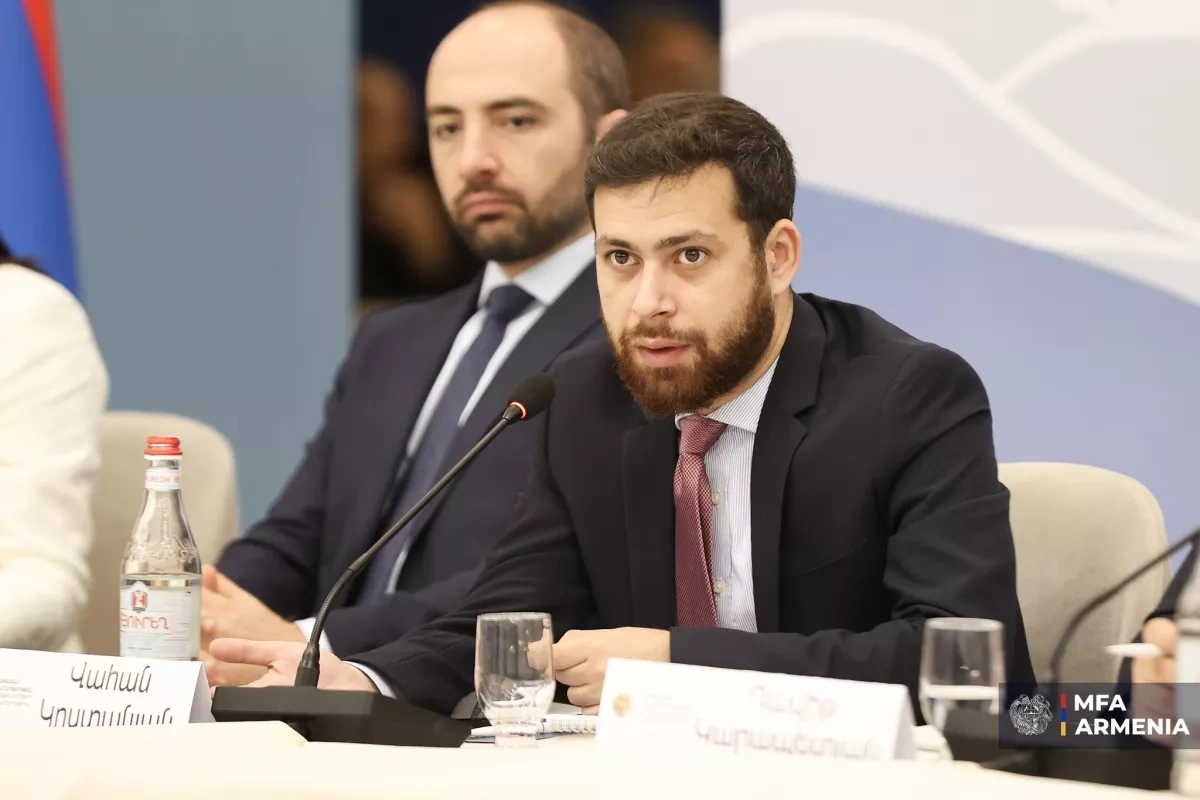
But let us assume that this succeeds and the European assistance promised by von der Leyen arrives. The deputy foreign minister of Armenia, Vahan Kostanyan, has hinted at how modest it actually is. He recalled the previous preferences granted by the EU to Armenia in 2009–2021 as a low-income country. At that time, under the EU’s Generalised Scheme of Preferences Plus (GSP+), Armenian products enjoyed zero or reduced customs duties on more than 6,000 product categories. In 2020, Brussels declared that Armenia had become wealthier, and these preferences were cancelled a year later. In practice, Ursula has simply promised to restore the same arrangement — but under a different name.
EU: No money, but hold on!
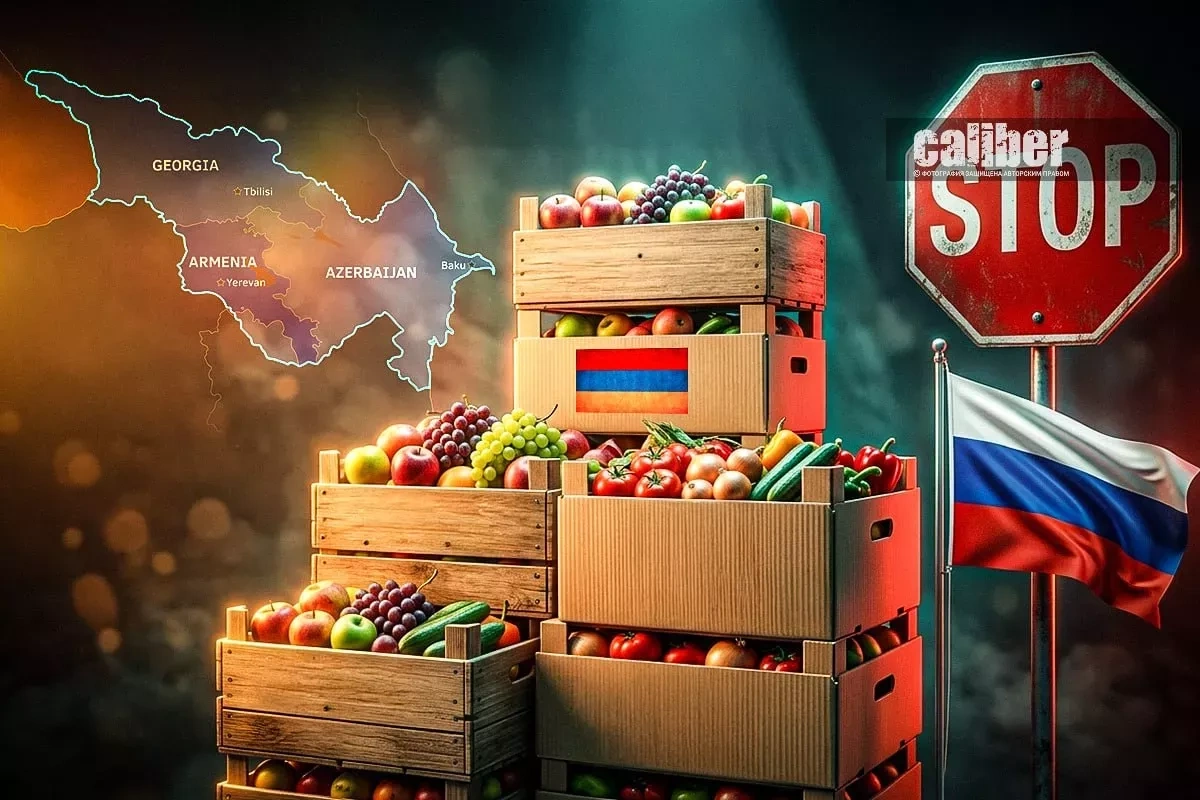
The bottom line is that the much-touted reorientation has turned out to be an illusion, while Yerevan urgently needs to address its export problems in the middle of the agricultural season. At the same time, Russia is expanding the range of Armenian products subject to restrictions. Over the past two months, these measures have affected flowers, tomatoes, cucumbers, strawberries, cherries, apples, fish, and alcohol. Last weekend, Russia introduced a ban on imports of Armenian dairy products.
Instead of offering concrete solutions, Pashinyan, facing demands from people for assistance, lashed out at Armenian fish during a government meeting this week. He argued that its quality was unacceptable because, as he claimed, “fat runs out of it when it is cooked.”
Back in June, the head of Armenia’s Central Bank, Martin Galstyan, warned of the possibility of GDP decline due to restricted access to the Russian market. Naturally, he said the drop would amount to only 2% and that the consequences of the restrictions could be quickly neutralised. However, he sounded rather uncertain, adding: “If exports decline significantly and this cannot be offset by other components of the balance of payments, such as capital inflows, the situation could put pressure on the dram’s exchange rate against the dollar.”
This was where he inadvertently revealed the Armenian leadership’s main hope — money from the EU. At a press conference in Yerevan a month ago, von der Leyen promised that Armenia would soon receive €18 million remaining from a previously allocated €52 million grant or loan intended to diversify the country’s foreign trade. This is a drop in the ocean, while the Yerevan establishment requires much more substantial support.
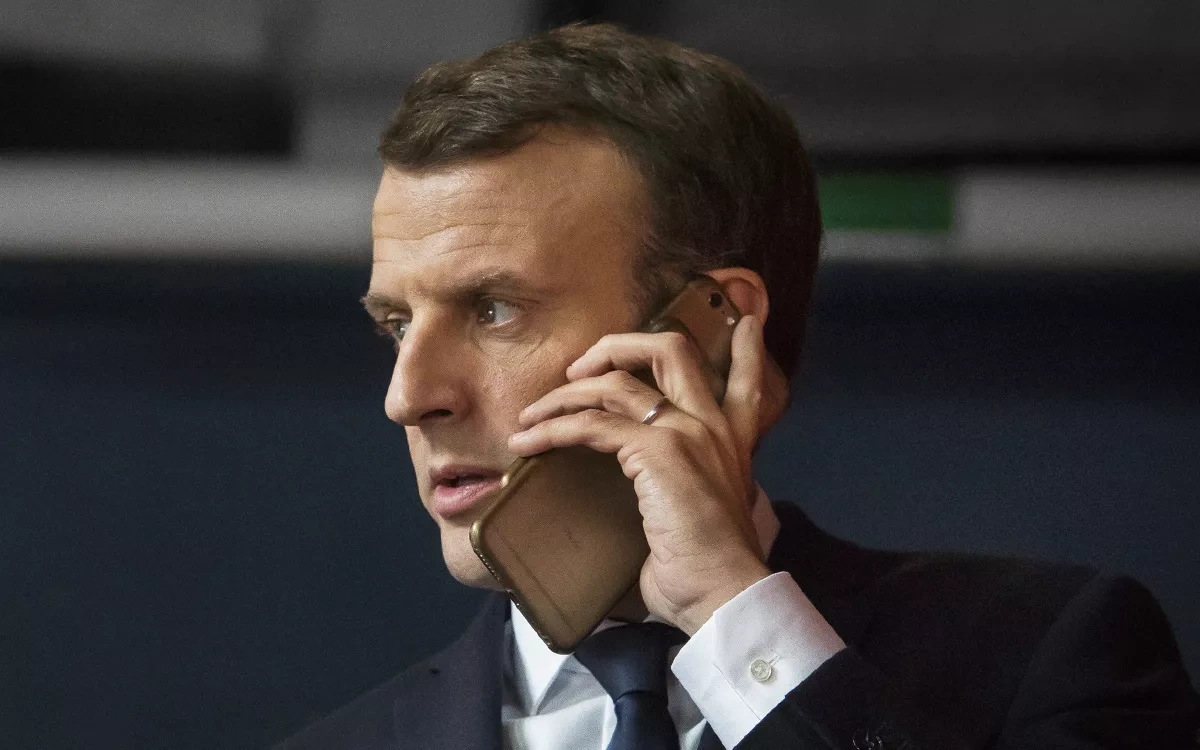
Indeed, just a few days before calling Putin, Pashinyan spoke by phone with French President Emmanuel Macron to discuss “the importance of expanding Armenia’s export opportunities” and thank him for “France’s continued support for the country’s democratic reform agenda.” However, Macron is unlikely to be able to help secure significant EU financial assistance — simply because the EU itself lacks the necessary funds.
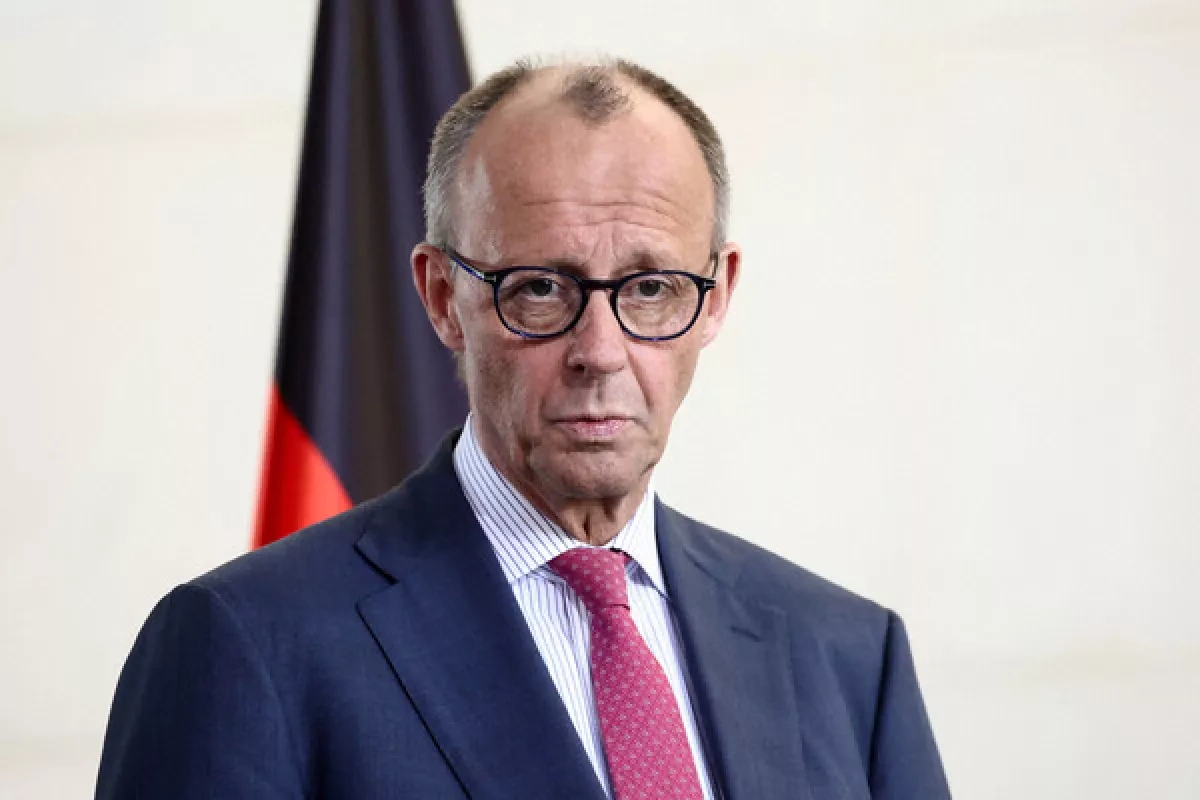
On Monday, German Chancellor Friedrich Merz criticised the “imbalanced” nature of the draft EU budget for 2028–2034. Earlier, the European Commission had presented a proposal for an expanded EU budget worth around €1.76 trillion. Merz called on Brussels to do the opposite — to “reduce spending in all areas” by several hundred billion euros. To add weight to his argument, he recalled that the final budget must “remain affordable” for Germany, the bloc’s largest economy and its biggest contributor to the EU budget.
At the same time, spending cuts are also being demanded by a number of other EU member states that are net financial contributors to the bloc, including the Netherlands, Sweden, and Denmark.
This is taking place against the backdrop of growing political instability in the EU and its major member states amid economic difficulties and heightened security tensions. As a result, even the accession of relatively prosperous Montenegro, with a population of just 600,000, is now facing major obstacles. The country is being considered for membership under special conditions, with an explicit understanding that it will not receive the same level of subsidies as previous entrants.
That is also why, even in the case of Ukraine, the EU is attempting to offer a reduced form of membership that would be less costly for the bloc, as it would relieve it of some of its financial obligations.
In this situation, it is difficult to seriously speak of EU assistance to Armenia in redirecting its trade. The likely introduction of visa-free travel for Armenian citizens to the Schengen area does not change this equation — as practice shows, visa liberalisation does not contribute to economic development, but instead mainly facilitates smuggling and illegal employment.
Unfortunately, even this kind of “European integration” of Armenia, which Pashinyan intends to continue pursuing, carries potentially contradictory consequences for the entire South Caucasus — politically, economically, militarily, and socially. This is because new barriers will be built in pursuit of illusions, just as happened in Eastern Europe.
This appears particularly tragic against the backdrop of the fact that Armenians and other peoples of the region now have an alternative — one that Pashinyan does not want to discuss: the alternative of restoring relations primarily with regional neighbours and developing integration with neighbouring countries.