BAKU, Azerbaijan, Aug. 1. Turkmenistan and the
European Union discussed bilateral trade and transport
cooperation.
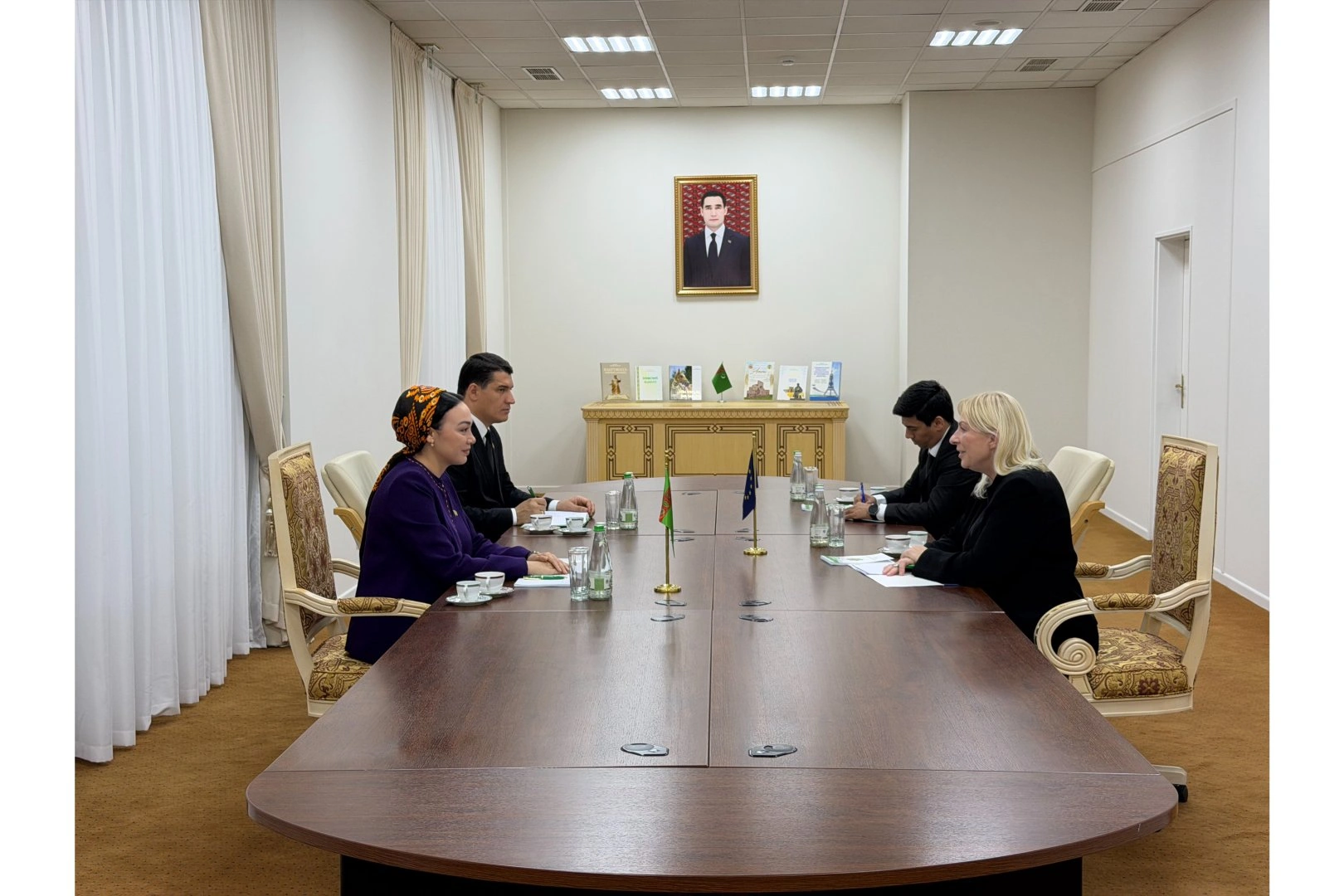
This was reflected in a statement published by the Mejlis
(Parliament) of Turkmenistan following a meeting between Speaker
Dunyagozel Gulmanova and EU Ambassador to Turkmenistan Beata
Pęksa.
According to the press release, the sides highlighted
cooperation in trade, energy, sustainable development, transport
corridors, science, education and environmental protection. They
also emphasized the role of the Turkmenistan-EU interparliamentary
dialogue in strengthening bilateral ties.
"It was noted that the established cooperation in such areas as
sustainable development, energy, ecology, science and education,
the creation of transport corridors and strengthening trade and
economic relations are fruitful," the report says.
The participants also underlined the regional importance of the
Central Asia-European Union format in advancing sustainable
development goals, the Mejlis notes.
Pęksa praised Turkmenistan's cooperation with international
partners and noted the country's engagement in areas including
environmental protection, climate change, digitalization, water
resources and the rule of law, according to the statement.
Meanwhile, relations between Turkmenistan and the European Union
are currently governed by an Interim Agreement on Trade and
Trade-related Matters, which entered into force in 2010. A broader
Partnership and Cooperation Agreement (PCA), signed in 1998, has
not yet been fully ratified by the European Parliament, making
Turkmenistan the only Central Asian country without a fully
implemented partnership agreement with the EU.
In recent years, cooperation has increasingly focused on
transport connectivity, trade facilitation, energy, education,
climate policy, and economic diversification. The EU's engagement
with Turkmenistan is carried out within the framework of the 2019
EU Strategy for Central Asia and the Global Gateway initiative. The
EU has allocated 18 million euros for bilateral cooperation with
Turkmenistan under its 2021-2027 programme.
Transport and logistics have become one of the key areas of
cooperation. Brussels views Turkmenistan as an important
participant in the Trans-Caspian Transport Corridor connecting
Central Asia and Europe. In March 2025, EU Commissioner for
International Partnerships Jozef Síkela visited Ashgabat and
reaffirmed EU support for the corridor's development as part of the
Global Gateway strategy.