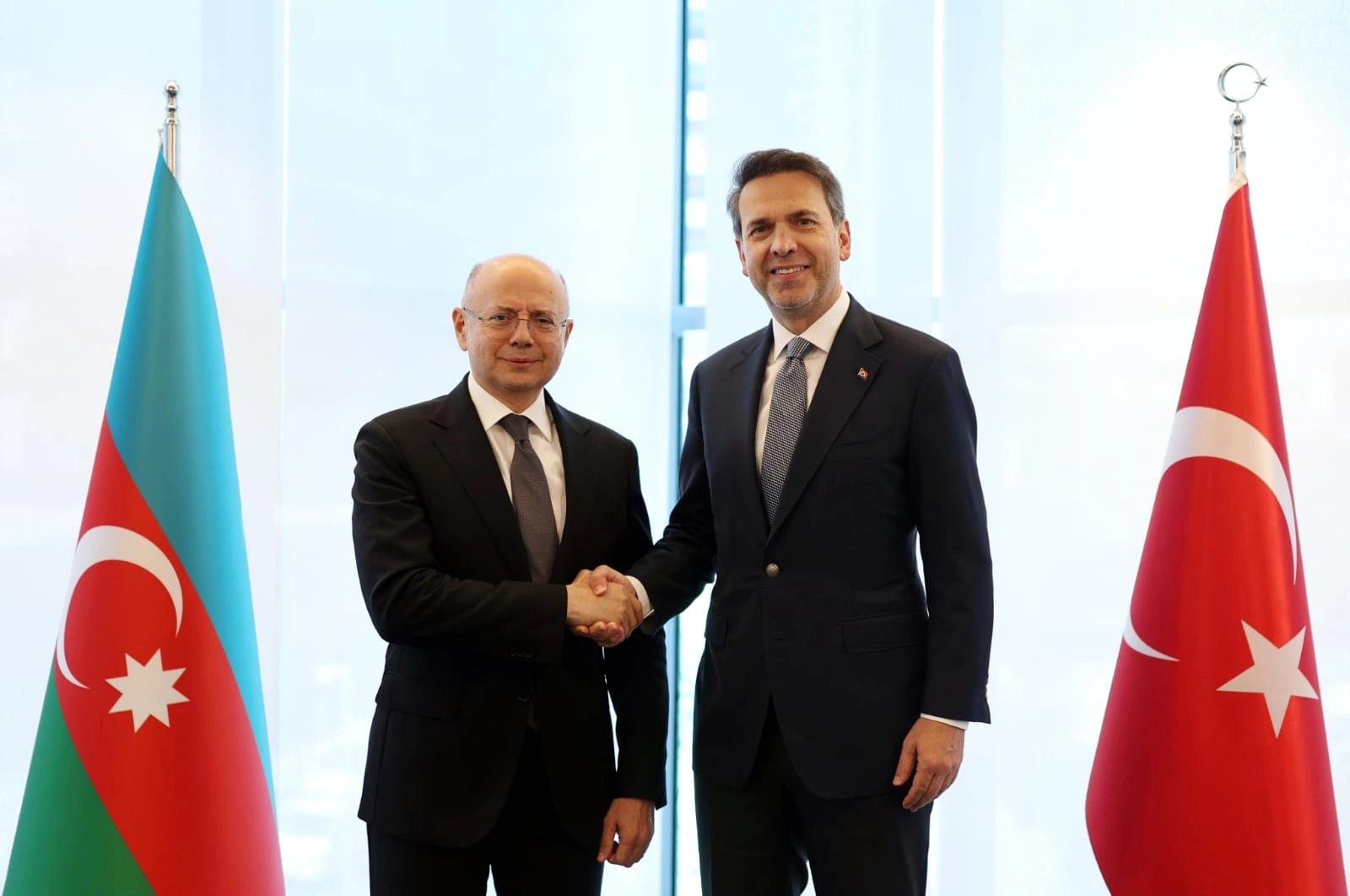
BAKU, Azerbaijan, August 1. Azerbaijan and
Türkiye have agreed to accelerate the implementation of energy
corridor projects, the Azerbaijani Minister of Energy Parviz
Shahbazov wrote on his X page.
"We discussed the next phase of our energy cooperation in
Istanbul with my dear colleague Alparslan Bayraktar, Türkiye's
Minister of Energy and Natural Resources. We agreed to accelerate
the implementation of the Azerbaijan (Nakhchivan)-Türkiye Energy
Interconnector and the Azerbaijan-Georgia-Türkiye-Bulgaria Green
Energy Corridor projects. We also explored potential cooperation
opportunities within the framework of the Caspian-Black Sea-Europe
Green Energy Corridor. These regional energy connectivity projects
will represent our next joint contributions to strengthening energy
security," the post reads.
Azerbaijan is implementing large-scale projects to increase
electricity production and diversify its energy system. In
particular, the development of renewable energy sources is one of
the main priorities of the state's energy strategy. Currently, the
country is implementing large investment projects for the
construction of solar and wind power plants with bp, Masdar, ACWA
Power, China Gezhouba Group Overseas Investment, SOCAR Green and
other partners. As a result of the implementation of these
projects, thousands of megawatts of new generation capacity will be
added to Azerbaijan's energy balance in the coming years, which
will reduce domestic demand for natural gas and allow for more gas
exports.
According to Azerbaijan’s Minister of Energy Parviz Shahbazov,
the implementation of these projects is expected to increase the
share of renewable energy sources in the country’s energy mix to
approximately 43% by 2035. The minister noted that Azerbaijan is
implementing strategic projects aimed at establishing a new energy
and investment platform between Central Asia and neighboring
regions. According to him, one of the key initiatives is the
Central Asia–Azerbaijan Green Energy Corridor project.
"The creation of the Trans-Caspian Energy Corridor, which will
connect the power grids of Azerbaijan, Kazakhstan, and Uzbekistan,
is part of our countries’ strategic vision. This project also opens
up broad opportunities for the development of the Middle Corridor,
which, via the Caspian Sea, will serve as a green energy bridge
between Europe, Asia, and China," Parviz Shahbazov emphasized.
According to the minister, the Green Corridor Alliance joint
venture, based in Baku, is already operational and is coordinating
the preparation of feasibility studies funded by the Asian
Development Bank and the European Bank for Reconstruction and
Development. In addition, work is actively continuing on the
"Caspian Sea–Black Sea–Europe" project, as well as on the
Azerbaijan–Türkiye–Europe and Azerbaijan–Georgia–Türkiye–Bulgaria
energy interconnectors.
Parviz Shahbazov stated that "green energy corridors are shaping
the geo-economic map of the future," and noted that these
initiatives will contribute not only to energy exports but also to
the development of digital connectivity, fiber-optic
infrastructure, and regional economic cooperation.
Meanwhile, Javid Abdullayev, Director of the State Agency for
Renewable Energy under the Ministry of Energy, stated in an
exclusive interview with Trend that the country is playing an
increasingly important role in establishing a "green energy bridge"
between Europe and Central Asia.
"Azerbaijan is no longer just an exporter of energy resources,
but also one of the initiators of regional energy links and green
energy corridors. The wind and solar energy projects currently
underway will not only strengthen the country’s energy security but
also significantly increase its export potential in the field of
electricity," Javid Abdullayev emphasized.
According to him, the Caspian Sea’s enormous wind energy
potential, the construction of new power transmission lines, and
initiatives such as the "Caspian Sea–Black Sea–Europe" green energy
corridor will further strengthen Azerbaijan’s role in Europe’s
energy security. "Green energy projects will not only bring the
country additional export revenues but will also allow us to
optimize the domestic energy balance, reduce natural gas
consumption, and redirect more gas to foreign markets," he
added.