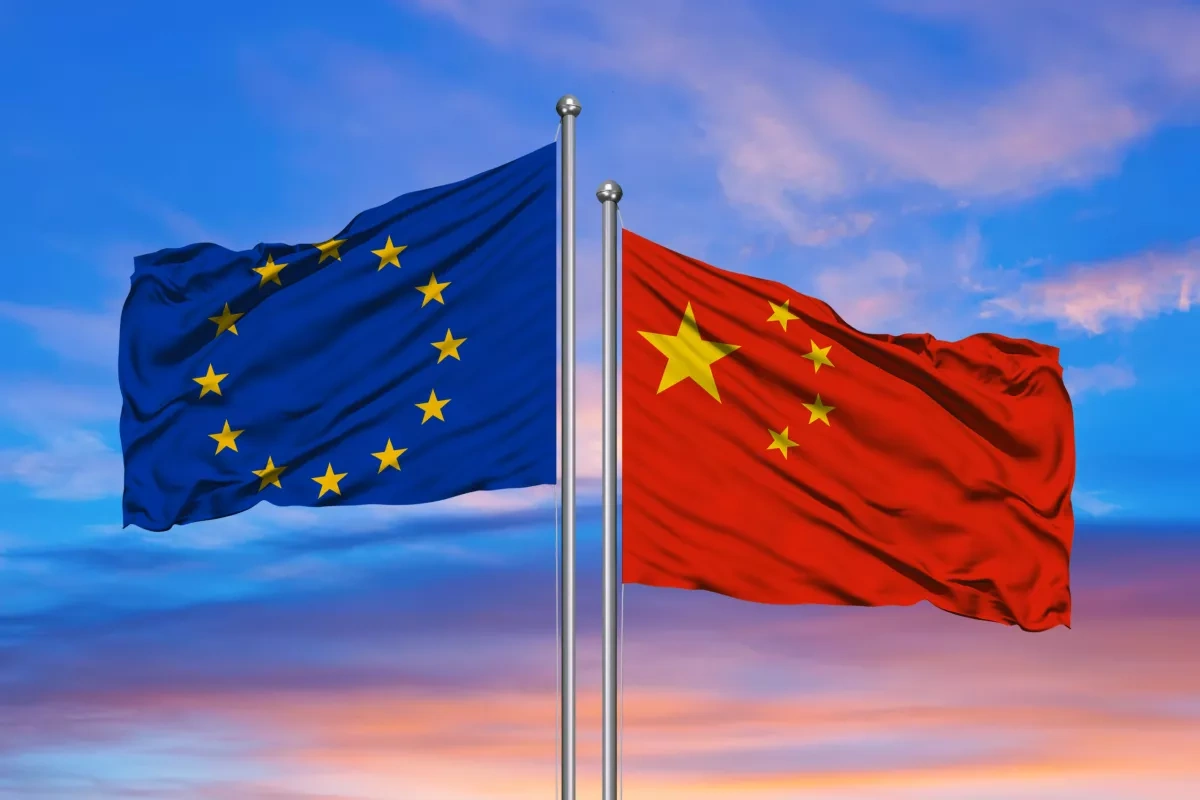
China's business community has criticised proposed European Union legislation on cybersecurity and industrial policy, arguing that the measures go beyond what is necessary to protect security and could undermine trade, investment and global supply chains.
Speaking at a press conference on July 31, Yang Fan, spokesperson for the China Council for the Promotion of International Trade (CCPIT), said the draft revision to the EU's Cybersecurity Act and the proposed Industrial Accelerator Act would create discriminatory barriers for Chinese companies operating in Europe, Caliber.Az reports per Chinese media.
"The proposed measures are inconsistent with the basic rules of the World Trade Organization, international commitments on trade in services and rules on investment protection," Yang said.
He urged the EU to take into account the concerns of the international business community during the legislative process.
"Yang called on the EU to fully consider the views of the global business community during the legislative process and carefully assess the potential impact of the proposed legislation on China-EU business cooperation, the EU's own industrial development and the stability of global supply chains."
According to Yang, the EU should maintain technology neutrality and adopt a performance-based approach rather than imposing restrictions based on the country of origin.
"The EU should uphold technology neutrality and performance-oriented principles, remove or substantially revise country-specific and discriminatory provisions, and safeguard the shared interests associated with existing investments and the common interests in future China-EU cooperation," Yang said.
He added that Chinese firms remain committed to working with European partners despite the proposed changes.
"Chinese enterprises are important partners in Europe's digital transformation and industrial upgrading," Yang said, adding that "China's business community stands ready to deepen cooperation with the EU in cybersecurity governance and green development, maintain an open, fair and non-discriminatory market environment, and help ensure global industrial and supply chains remain stable and unimpeded."
The draft revision to the EU's Cybersecurity Act proposes excluding products and services linked to "high-risk suppliers" from 18 critical sectors, including information and communications, energy and transport. Meanwhile, the proposed Industrial Accelerator Act would introduce restrictions on foreign companies' investments in the EU and their participation in public procurement.