The United States and Israel are discussing a possible land blockade of Iran as part of a broader effort to intensify economic pressure on Tehran after months of military strikes failed to achieve their objectives, The Telegraph reports.
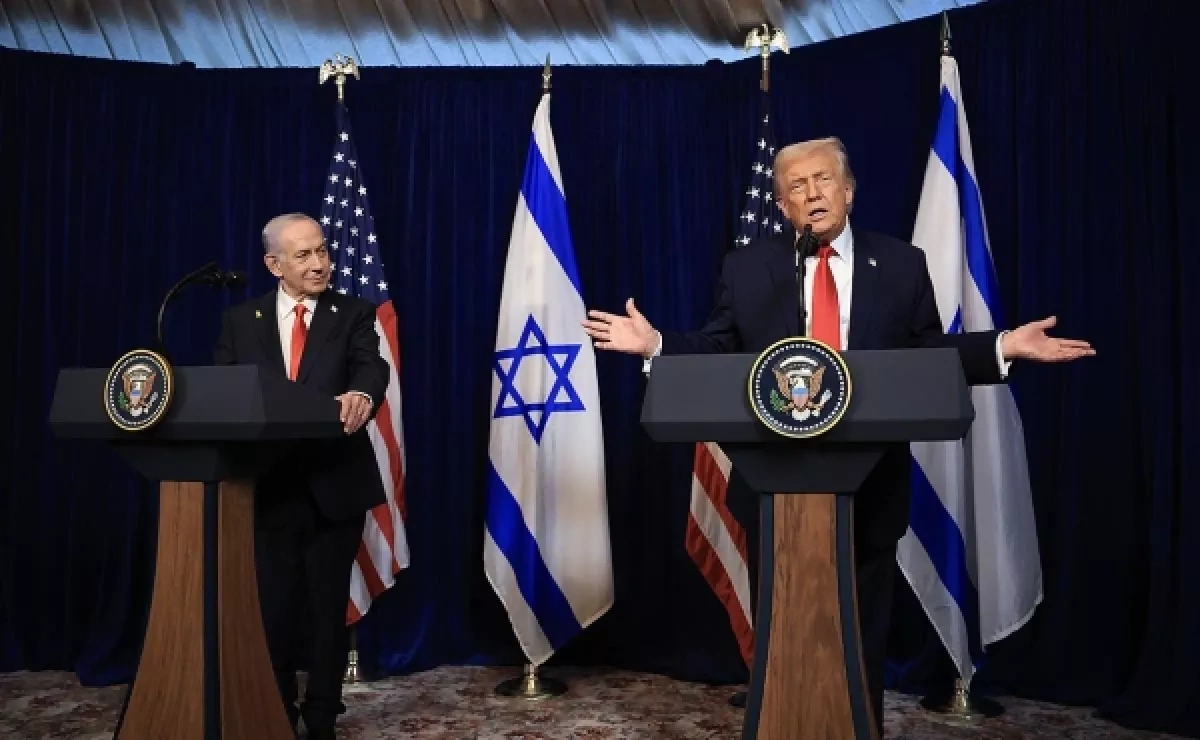
The outlet said US President Donald Trump and Israeli Prime Minister Benjamin Netanyahu discussed increasing pressure on Iran "through kinetic and non-kinetic means" during their meeting in the Oval Office on July 28.
The proposal would likely require Washington and Jerusalem to persuade Iran's neighbours and regional partners to tighten or close border crossings, restricting the country's imports and exports.
"What if you just blocked the land? Suppose Iran can't bring anything in and cannot take anything out. Anything will happen," a senior Israeli official told The Telegraph, describing one of the options under consideration.
Retired U.S. Lieutenant General Sean MacFarland made it clear that a land blockade would be "almost impossible" to implement but argued that depriving Iran of its ability to trade would isolate it economically.
"If you take away Iran's ability to trade... then you are isolating them economically. That's the way to bring them to their knees," he remarked.
MacFarland added that economic pressure alone would not be sufficient.
"The economic approach is the concise one, but it must have kinetic elements. Iran borders a whole bunch of countries over land, and Iraq is very aligned with Iran. That would make it very difficult to stop any support from getting in," he noted.
According to the report, a land blockade could target key border crossings, including Incheh Borun and Sarakhs-Sarahs on the Iranian-Turkmen border.
Iran shares land borders with Iraq, Türkiye, Pakistan, Afghanistan, Turkmenistan, Armenia and Azerbaijan, meaning the plan would require cooperation from countries that are not all close U.S. or Israeli allies. Pakistan and Iraq, in particular, could be viewed by Washington as potential weak links, the report added.
Any neighbouring country agreeing to participate would risk economic consequences and possible retaliatory strikes by Iran.
The report further stated that restricting access to ports and border crossings could also hinder Tehran's ability to replenish its military arsenal. Iran is reportedly expecting a shipment of hundreds of Chinese rocket launchers under a new $70 million defence agreement covering man-portable air defence systems (MANPADS). Cargo vessels arriving from China are known to dock at the southern Iranian ports of Bandar Abbas and Chabahar.
A source familiar with the discussions told The Telegraph that Trump believes his current strategy to reopen the Strait of Hormuz has reached its limits and is therefore considering additional escalation measures to pressure Tehran back to the negotiating table. A land blockade would fit his broader "maximum-pressure strategy”, which began with a naval blockade.
The report also noted that the proposal could have been floated as a diversion to distract Iran from other potential actions under consideration.
According to intelligence cited by The Telegraph, Iran's leadership is divided between officials concerned about a looming economic collapse and those who believe the conflict should continue.
"There are gas shortages. You're aware of that. Very severe gas shortages inside Iran. There are queues at gas stations that have run out of diesel fuel," the Israeli source stressed.
People familiar with Tuesday's Trump-Netanyahu meeting described it as positive and cordial. An Israeli official told the newspaper that the leaders discussed three possible courses of action: reaching a negotiated agreement, maintaining the naval blockade, or resuming military strikes. Netanyahu did not advocate any single option.
"We are protecting not only our lives but yours as well, and we're fighting the battle of civilisation against barbarism," the official emphasised. "We took out that lump of cancer because if we hadn't, we'd be dead, and we didn't have a choice. But it doesn’t mean that we don’t have to keep on taking out the attempts to do this thing to you know to come back. We’re doing that, and we’re able to do that. But it’s still a challenge."
On Wednesday night, the United States launched what it described as a "heavy wave of strikes" against Iran in retaliation for attacks on U.S. bases in Jordan. According to the report, the renewed hostilities followed what it called a surprise Iranian strike on American positions in Jordan on Tuesday night, ending five days of relative calm.
A White House official said: "The commander-in-chief has all options at his disposal."
By Bakhtiyar Abbasov