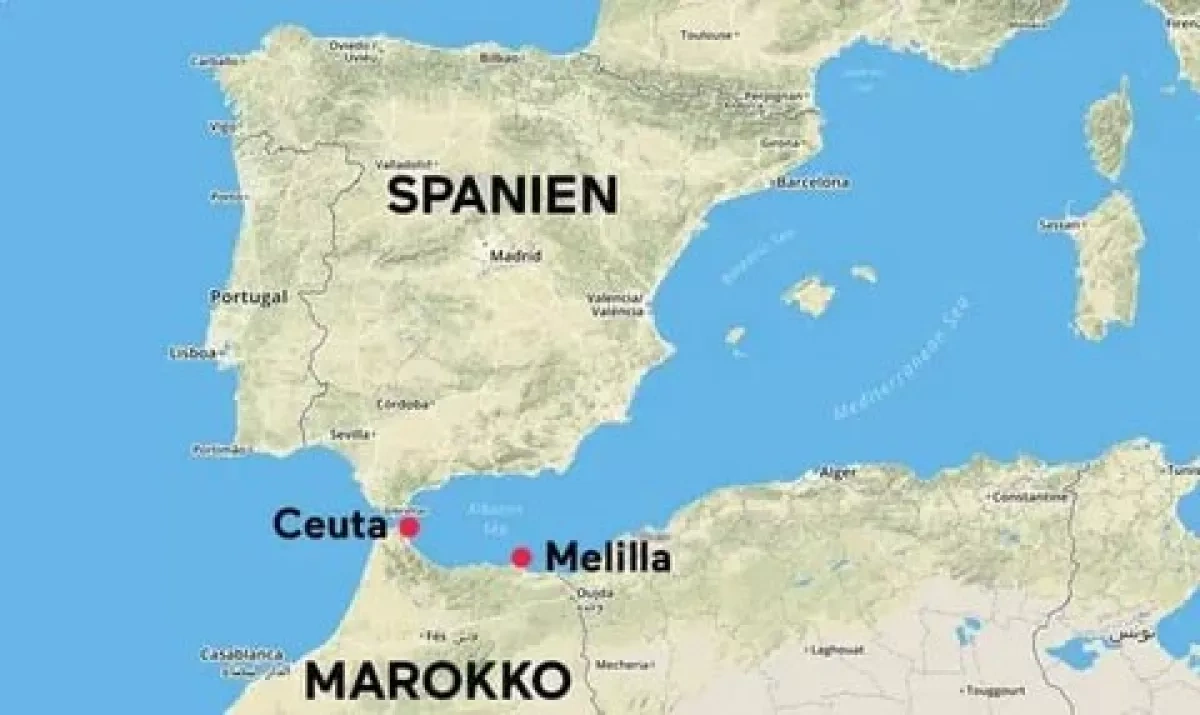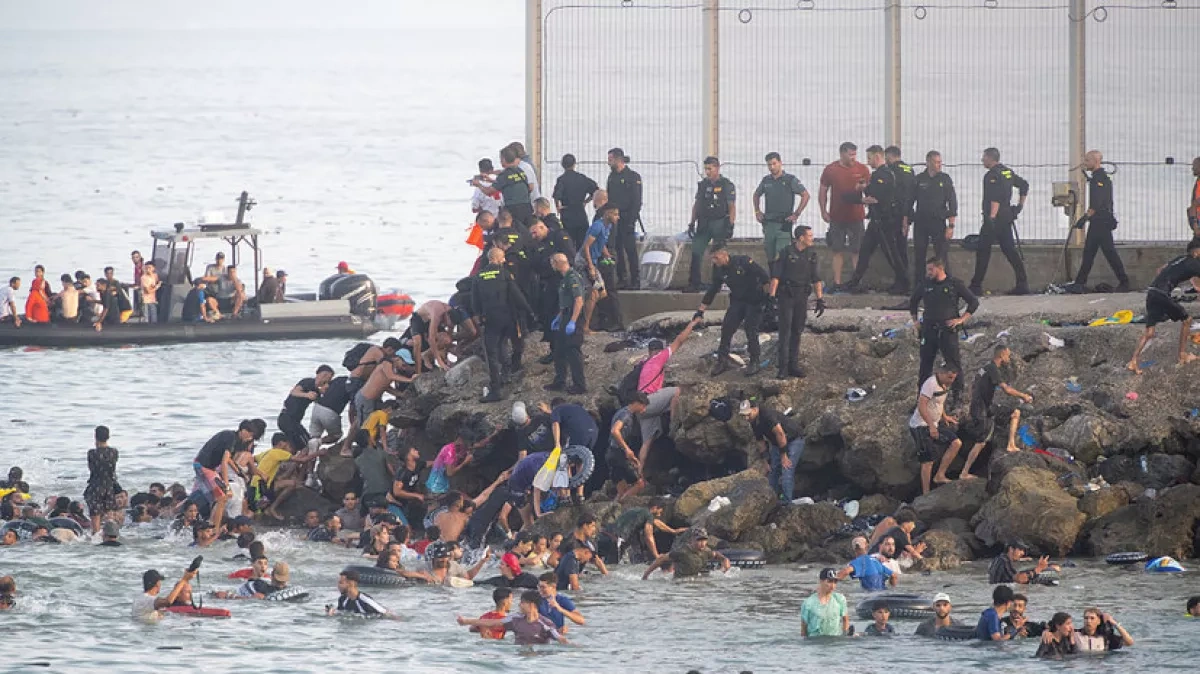
Spain is deploying troops to reinforce security in its North African enclave of Ceuta after tens of thousands of migrants attempted to enter the territory from Morocco, overwhelming border controls and triggering a humanitarian and political crisis.
Spanish authorities said the armed forces would support the Civil Guard in maintaining security in Ceuta following a surge in attempted crossings on July 30, Caliber.Az reports per foreign media.
"The armed forces will reinforce the Civil Guard in the exercise of its powers and any others that may be necessary to maintain security in the city of Ceuta," the Interior Ministry said in a statement.
According to Spanish media reports citing estimates from the Civil Guard, up to 40,000 people may have entered Ceuta illegally from Morocco on July 30. The figures have not been officially confirmed.
The crossing claimed numerous lives, with the latest reports indicating that at least 19 people died while attempting to reach the Spanish territory by sea. Migrants typically swim from the Moroccan town of Fnideq, around five kilometres away, or from the nearby town of Belyounech, where the crossing is shorter.
Authorities said groups of migrants also attempted to breach the border fence separating Ceuta from Morocco, with some throwing stones at security forces. Violent clashes were also reported near the Beni Ansar border crossing as hundreds of people, many of them minors, tried to enter Spain's other North African enclave, Melilla, via the border fence and the port.
Local officials had previously appealed to Madrid for additional support after a rise in attempted crossings. Images shared on social media appeared to show thousands of migrants sleeping on the streets of Ceuta after crossing the border.
Spain's Interior Ministry said it was working with Moroccan authorities to facilitate the return of those who had crossed into Spanish territory "as soon as possible."
The surge in arrivals follows a recent ruling by Spain's Supreme Court that migrants intercepted at sea while attempting to reach Ceuta or Melilla cannot be summarily returned to Morocco. The Interior Ministry accused human trafficking networks of exploiting the ruling to encourage irregular migration.
Spanish Prime Minister Pedro Sánchez is scheduled to visit Ceuta on July 31 alongside Interior Minister Fernando Grande-Marlaska. Authorities have not yet determined the reasons behind the sudden increase in attempted crossings.
The crisis has also led to diplomatic tensions between Spain and Italy. Italian Prime Minister Giorgia Meloni warned that large-scale illegal migration threatens Europe's external borders and suggested that the Schengen Agreement with Spain could be suspended. Spain's Foreign Minister José Manuel Albares rejected the remarks as inappropriate, saying European partners should demonstrate solidarity rather than engage in political rhetoric. Spain later summoned the Italian ambassador over the comments.
The situation has also drawn international attention online, with entrepreneur Elon Musk comparing the influx of migrants to scenes from the film World War Z in a post on social media.
Meanwhile, France has strengthened border controls along its frontier with Spain in response to the migration crisis.
By Sabina Mammadli