US President Donald Trump has said he has not yet decided whether to allow Ukraine to produce Patriot surface-to-air interceptor missiles, raising uncertainty over one of Kyiv’s key defence priorities.
In a phone interview with the Financial Times on Thursday, Trump said he was “not sure” whether Washington would grant Ukraine a licence to manufacture the system, adding that “we’re looking at it”.
“It’s a very extraordinary weapon, and . . . we have to be a little bit careful of who we license to. We don’t really license equipment,” he said.
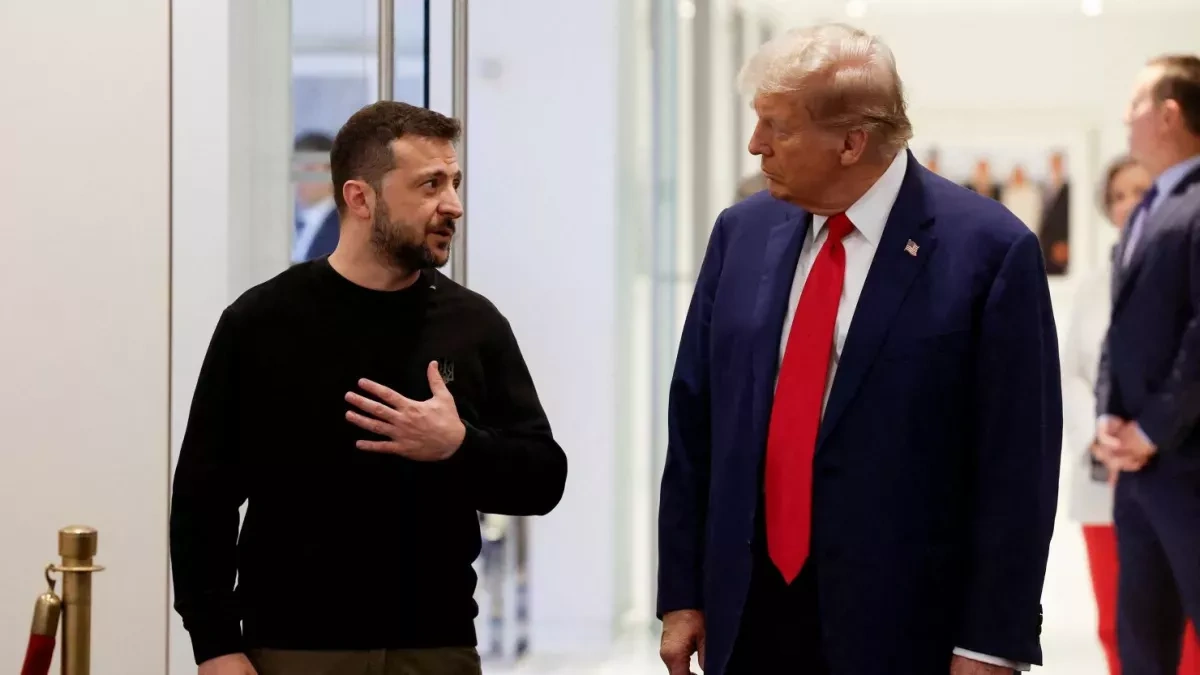
His remarks come just two days after a meeting at the White House with Ukrainian President Volodymyr Zelenskyy, who had described the talks as “good” and said they included discussions on “Patriot interceptor production and several other ideas”.
Earlier in July, Trump had indicated at a NATO summit in Türkiye that the United States would grant Kyiv such a licence.
The Patriot air defence system is considered critical to Ukraine’s ability to intercept Russian ballistic missiles targeting Kyiv and other cities. Securing US approval for local production would mark a significant step for Ukraine.
Following the White House meeting on Tuesday, Zelenskyy said Trump “accepted that he will give us licences”.
Zelenskyy added that he had recently met manufacturers involved in the system: “I had [a] meeting with the representatives of production . . . I hope that we will do co-production. This is very important.”
Patriot interceptors are produced by Lockheed Martin and RTX.
Trump told the Financial Times that his primary focus remains ending the war between Russia and Ukraine, adding that his envoys Jared Kushner and Steve Witkoff would travel to Ukraine in the coming days.
“Very simply put, we want the war in Ukraine with Russia ended,” he said. “I’m not looking for missiles. We’re looking for peace.”
He also addressed tensions in the Middle East, saying that despite Iran’s recent strikes across the region, Tehran would eventually be forced to back down.
“We are beating the hell out of them,” he said.
Trump expressed optimism about finalising a landmark US-Saudi civil nuclear agreement unveiled last week, which he had previously said would depend on Saudi Arabia normalising diplomatic relations with Israel.
He said he had discussed the issue with Saudi Crown Prince Mohammed bin Salman and Israeli Prime Minister Benjamin Netanyahu, adding that normalisation is “something that both countries like very much. It could happen.” Trump also met Netanyahu at the White House on Tuesday.
However, the Saudi crown prince has previously said such a step would require irreversible progress toward the establishment of a Palestinian state, which Israel has so far rejected.
Turning to the United Kingdom, Trump praised Prime Minister Andy Burnham for signalling a “pragmatic” stance on North Sea oil exploration, despite maintaining the Labour Party’s pledge to end new drilling licences.
“The one thing that seems to be loud and clear is that he [Burnham] wants to make his country rich, and he knows that he can do that by opening up the North Sea oil,” Trump said, referring to their first call last week.
“I think that he’s going to do it. If [Burnham’s predecessor Sir Keir] Starmer had done it, he wouldn’t be right now sitting at home watching television.”
By Tamilla Hasanova