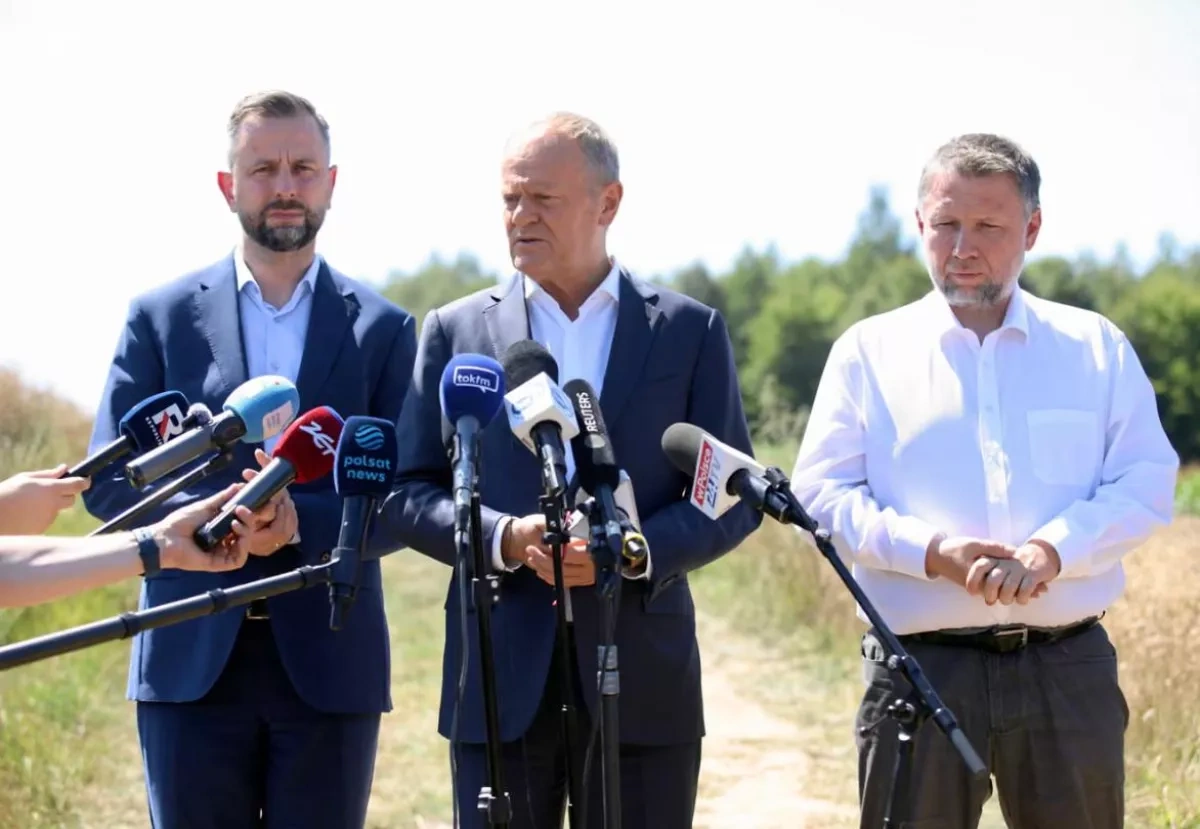
The next 100 days could determine the outcome of the war in Ukraine, with the chances “50-50,” Polish Prime Minister Donald Tusk stated.
Tusk said the July 30 missile incident had only strengthened his determination to support Ukraine, adding that “if the Ukrainians had received much more of what they have been asking for all along, perhaps the missile would never have been launched toward Poland.”
Recalling his conversation with Ukrainian President Volodymyr Zelenskyy the previous day, the prime minister noted:
“After my conversation with President Volodymyr Zelenskyy, it became absolutely clear to me that the next 100 days could determine the outcome of this war. Right now, I would say the chances are fifty-fifty. Much depends on the decisions made by the President of the United States. Other people also play an important role—for example, Elon Musk when it comes to Starlink and other systems. So some of this goes beyond politics.”
The comments came after a July 30 incident in which, during a large-scale Russian missile and drone assault on western Ukraine, an unidentified object entered Polish airspace and later crashed in a field near the village of Tarnawa-Kolonia in the Lublin region, roughly 80–100 km from the Ukrainian border, creating a crater about 10 meters wide.
Polish forces detected the object moving westward, scrambled an F-16 fighter to intercept it, and dispatched an Mi-24 helicopter after it disappeared from radar; Prime Minister Donald Tusk and officials stated that recovered fragments and initial analysis indicated it was most likely a Russian Kh-101 cruise missile that was not aimed at Poland.
Ukrainian officials independently confirmed that a Russian Kh-101 had crossed into NATO airspace as part of the overnight strikes, while Polish authorities emphasised they were prepared to shoot it down had it continued toward populated areas and launched an investigation.
By Jeyhun Aghazada