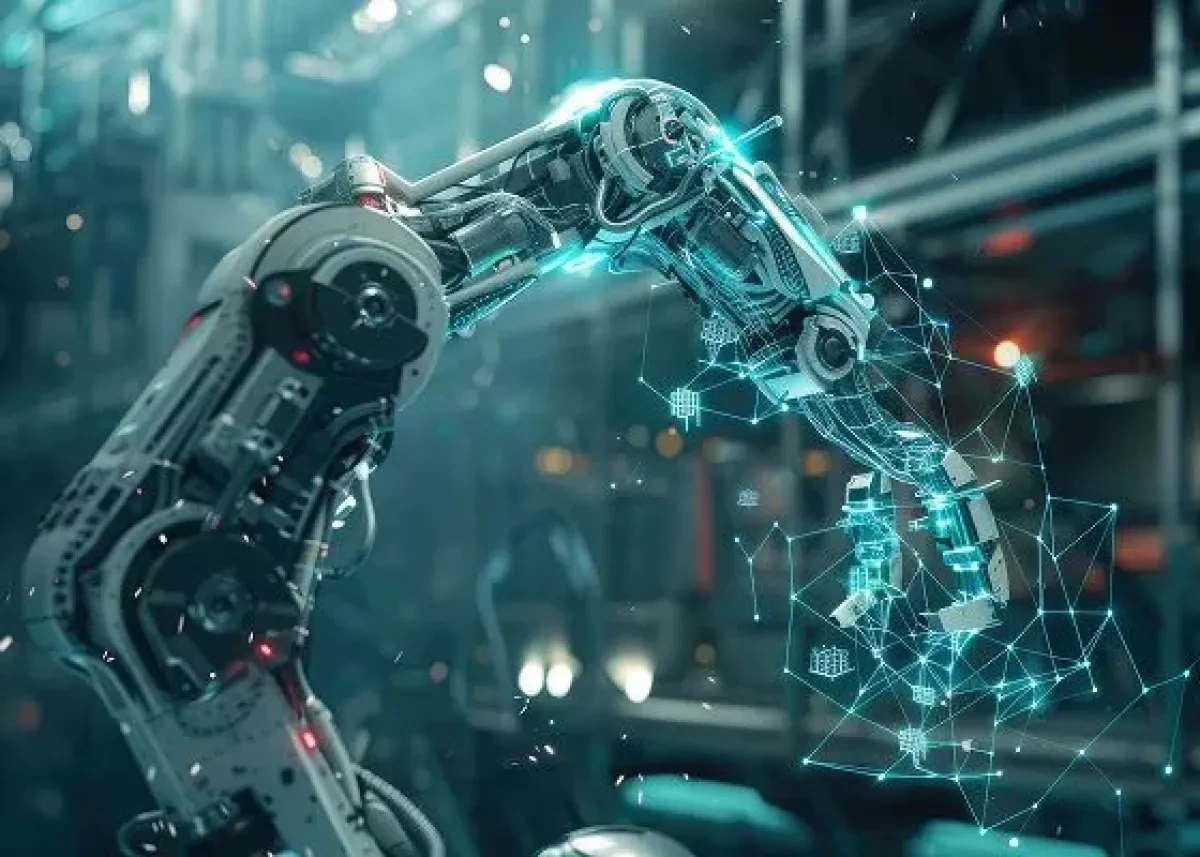
The US Air Force has awarded an additional $2.9 million to Palladyne AI to further develop embodied artificial intelligence technology that enables autonomous robots to learn new tasks from human demonstrations and carry out missions with minimal operator involvement.
The new funding will support demonstrations of autonomous robotic systems capable of learning new skills, working alongside remote operators, and independently performing mission-relevant tasks in complex operational environments, according to Military AI.
Palladyne AI said its Palladyne IQ platform is designed to teach robots new behaviours through as few as one to five human demonstrations. Once trained, the system can apply those skills across different environments and execute them without relying on cloud connectivity.
The company said this capability makes the platform suitable for communications-degraded or contested environments, where access to external networks may be limited or unavailable.
Unlike systems developed for specific robotic platforms, Palladyne IQ is hardware-agnostic, allowing it to integrate with a wide range of robotic systems and sensor suites. The software combines real-time sensor fusion with adaptive AI processing at the edge, enabling robots to continue operating with limited external support.
The US Air Force first awarded Palladyne AI a contract in 2023 and has continued increasing its investment as the technology progressed through successive development milestones, including the completion of the program's first phase in 2024.
With the latest contract option, the total value of the Air Force's investment in the project has reached $10.6 million.
"When a customer like the US Air Force commits additional funding after seeing the technology perform, that is an unambiguous signal," Palladyne AI Chief Executive Ben Wolff said. "Palladyne IQ's AI architecture is working."
By Sabina Mammadli