Radio France Internationale (RFI) has published an article examining the forgotten history linking the Élysée Palace to slavery and the slave trade. Caliber.Az presents the most striking parts of the publication.
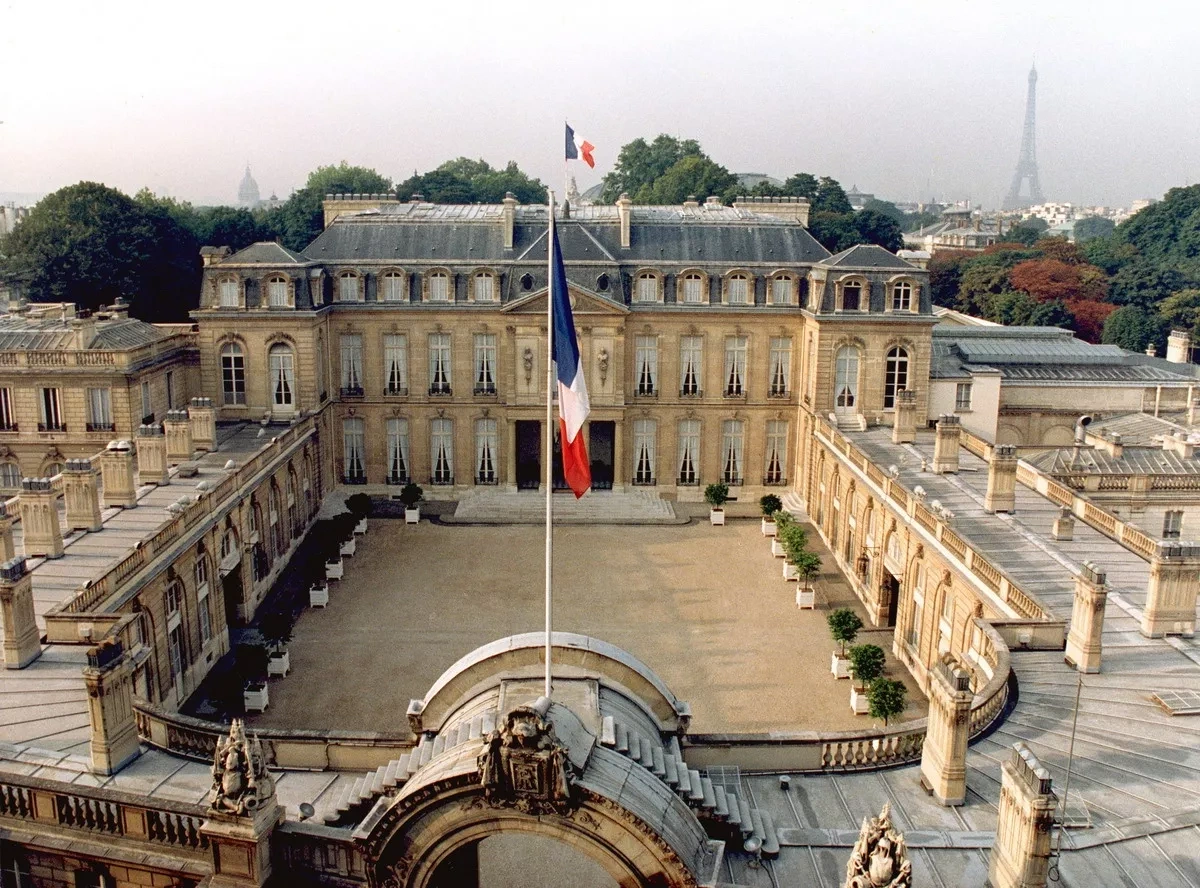
The Élysée is France’s White House, shorthand for the presidency itself. And like the home of the United States’ president, it owes its construction to slavery.
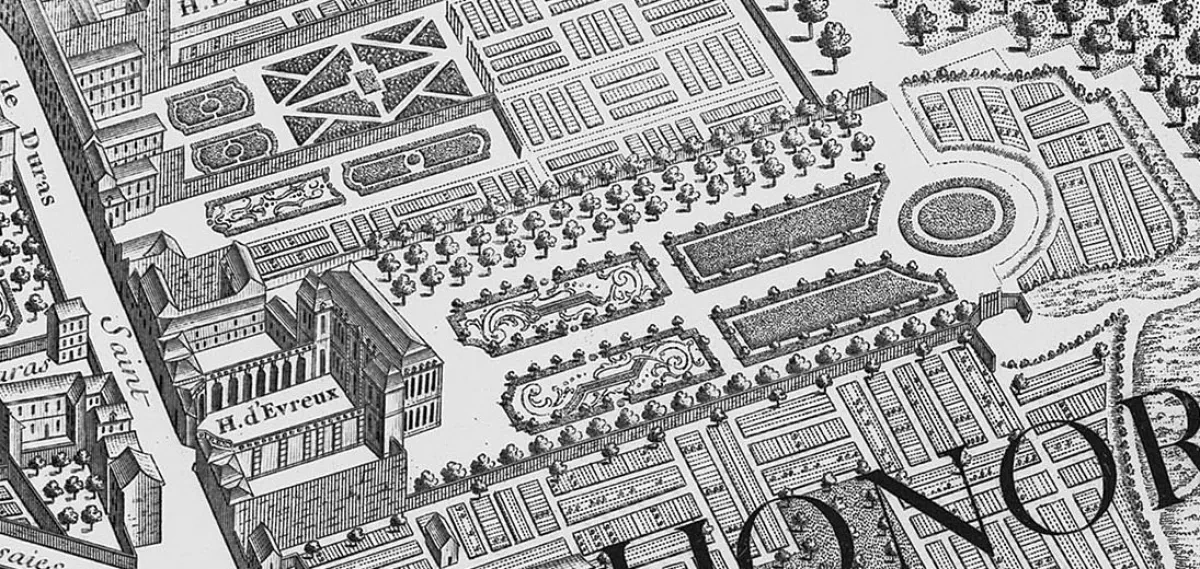
The mansion that now stands among embassies, luxury boutiques and art galleries just north of the Champs-Élysées dates back to 1718, when an aristocrat purchased a plot of what was then marshland on the outskirts of Paris.
Louis-Henri de La Tour d’Auvergne, Count of Évreux and recently appointed governor of the region of Poitou, wanted to build himself a residence befitting his ambitions. A member of a noble dynasty on the wane, he had supplemented his family wealth by marrying the daughter of the richest man in France.
His father-in-law was Antoine Crozat, a merchant banker from Toulouse who built an empire financing the burgeoning slave economy in the Americas.
Investing first in tobacco in the French colony of Saint-Domingue – now Haiti – he pushed growers to switch to cultivating sugar, a cash crop that demanded larger plantations and more slaves.
Crozat would help accelerate the transportation of enslaved people via the Compagnie de Guinée, a trading company founded by Louis XIV to funnel slaves from West Africa to French-owned islands in the Caribbean. The king put Crozat in charge of expanding its activity, which grew to include supplying Spanish colonies too.
In 1712, Louis gave him exclusive rights to French Louisiana, a vast territory spanning almost the length of what is now the United States. Effectively its first developer, Crozat shipped slaves there too.
His ventures made him one of Europe’s richest men, estimated to be worth the equivalent of nearly €300 billion today.
In 1707, Crozat arranged for his only daughter, Marie-Anne, to wed the Count of Évreux. She was no more than 12 years old at the time.
The deal was sweetened by a prodigious dowry of roughly 2 million livres – more than €50 million. A decade later, this fortune would allow the count to build his stately Paris home.
When the count died without heirs in 1753, it was sold on to a string of wealthy occupants ranging from royal mistress Madame de Pompadour to Napoléon Bonaparte.
In 1848, his nephew Louis-Napoléon Bonaparte became France's first president and declared the palace the official residence of the head of state.
The same year, France abolished slavery in its territories for good.
Until recently, little marked this part of the Élysée’s history. In 2020, the year of its 300th anniversary, anti-racism campaigner Louis-Georges Tin wrote an open letter to President Emmanuel Macron calling on him to officially acknowledge the connection.
“We are not saying that he’s [Macron - ed.] responsible for what happened in the past, but now that he knows, he is responsible for doing something about it or not. For example, he could decide to build a memorial within the presidential palace. He didn’t do it. So now it’s not ignorance, it’s denial.”
Tin sees this as symptomatic of a broader reluctance to commemorate France’s role in the slave trade.
“There is no museum of slavery in France, believe it or not,” he points out. “I think there are 12 museums for wooden clogs in France, but not a single museum about slavery. That’s a shame.”
A national memorial to the victims of slavery, a persistent demand of their descendants, is also yet to materialise. After disagreements over the planned site and design, the government promises it will be unveiled in Paris sometime in 2027.
For Tin, it all adds up to a larger problem. “There is a lack of recognition, even more a lack of reparation, in the French context.”
Following slavery's footprints
Outside official commemorations, activists and community organisations have taken on the work of tracking slavery’s footprint in France.
Founded in Bordeaux in 2012, the group Mémoires et Partages (“Memories and Sharing”) offers tours of the material reminders of the slave trade to be found in cities across France. While the ports of Nantes, Le Havre, La Rochelle and Bordeaux bear the most obvious traces of slave ships and their owners, Paris attests to the riches and power built on enslavement at the heart of the French establishment.
Laurine Gomis, president of Mémoires et Partages in the Paris region, says the route takes visitors to the Élysée Palace and several other government buildings.
“We go by the Hôtel de la Marine, which was originally a royal storehouse and later became the headquarters of the Ministry of the Navy, which administered the French colonies and colonial trade,” she tells RFI. “And so, during the 18th and 19th centuries, it was the centre of colonial power. Today it houses the Foundation for the Remembrance of Slavery.”
In May this year, as France marked 25 years since it passed a landmark law designating slavery a crime against humanity, Gomis was one of the guests invited to the Élysée for the president’s official ceremony.
There, representatives of the Foundation for the Remembrance of Slavery presented Macron with a plaque that describes Crozat’s role in funding the property and pays tribute to the 4 million people forced into slavery in French colonies between 1626 and 1848.
The president’s office has not confirmed whether the plaque will be permanently displayed, or where.