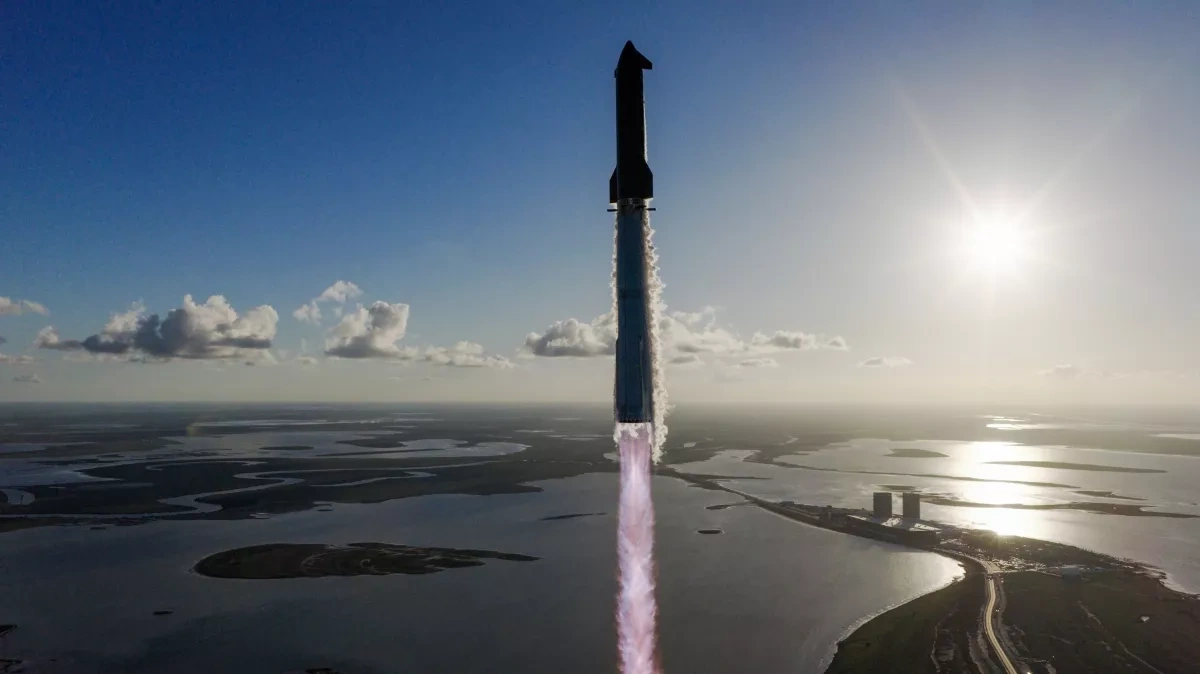
SpaceX’s Starship completed its 13th flight test on July 24, successfully deploying 20 next-generation Starlink V3 satellites before splashing down in the Indian Ocean.
The launch took place from Starbase, Texas, at 5:51 p.m. CT. It marked the second flight of the Starship and Super Heavy V3 vehicles and the first Starship mission to deploy Starlink V3 satellites, Caliber.Az reports per SpaceX.
The spacecraft completed its ascent, reached the planned trajectory and successfully deployed all 20 satellites. SpaceX said it established contact with every satellite through radio-frequency and laser links, with the satellites later re-entering the atmosphere and burning up as planned.
Starship also successfully reignited one Raptor engine while in space, demonstrating a capability intended for future orbital missions.
During re-entry, the spacecraft collected data on its heat shield before performing a controlled descent and a landing manoeuvre. It then achieved a soft splashdown in the Indian Ocean, coming to rest intact.
The Super Heavy booster, meanwhile, completed part of its planned return sequence but failed to complete its landing burn and made a hard splashdown in the Gulf of Mexico.
The launch followed an aborted attempt on July 17, when an automatic system halted the countdown less than a second before liftoff after the booster’s Raptor engines began firing.
By Sabina Mammadli