BAKU, Azerbaijan, July 22. President of
Azerbaijan Ilham Aliyev's visit to Germany on July 20-21
demonstrated that Baku and Berlin have entered a new stage of
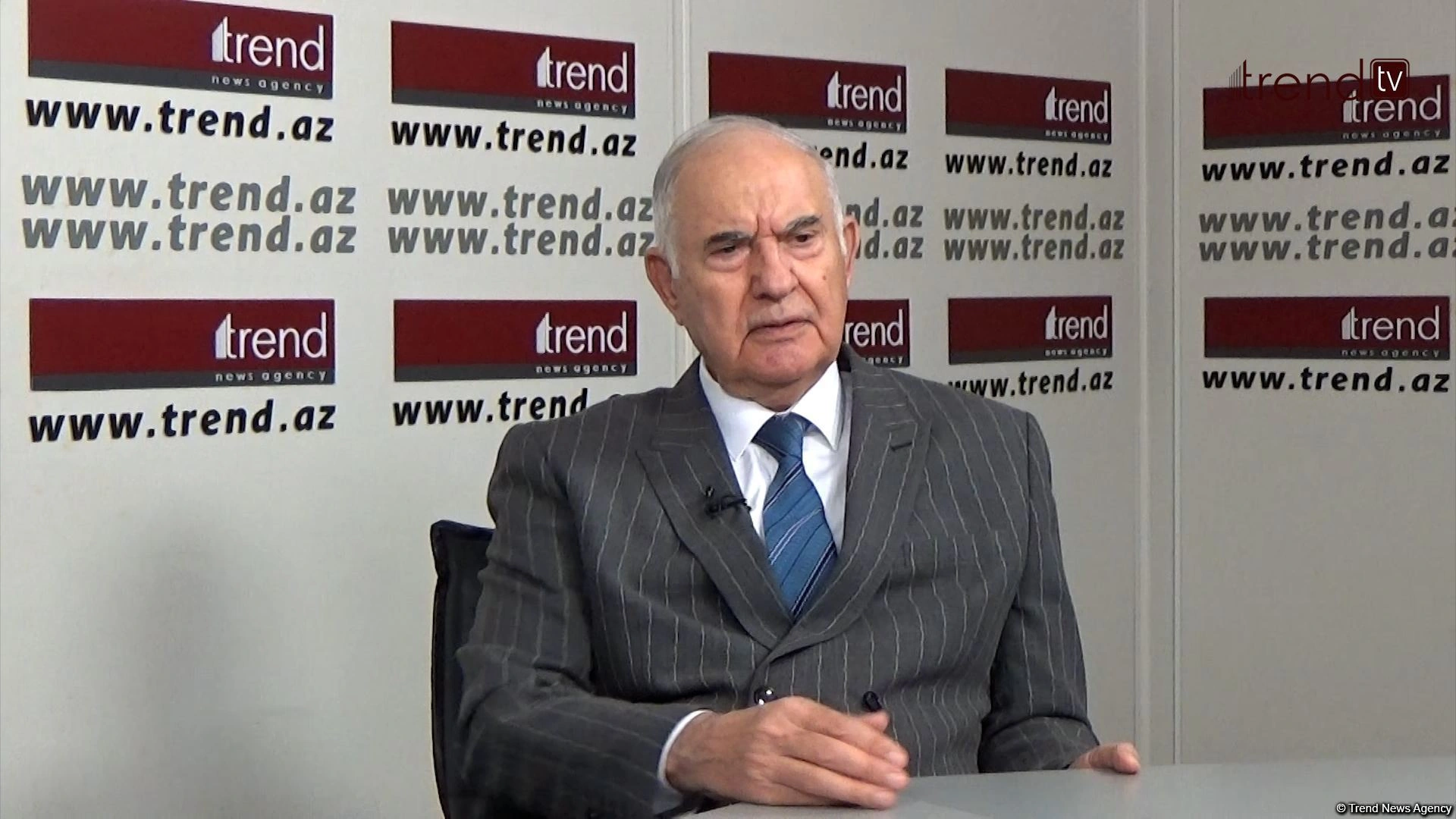
strategic partnership, political analyst Azer Garayev told Trend.
According to Garayev, it's no coincidence that the dialogue
between Berlin and Baku has taken on a strategic character in
recent years, against the backdrop of the rapid changes in the
geopolitical landscape both in Europe and in the world, and the
emergence of energy security, new transport routes, and regional
stability issues.
He said that the documents signed at the end of the visit, the
high-level meetings held, and the messages conveyed indicate that
relations between the two countries are entering a new stage.
"Within the framework of the visit, President Ilham Aliyev held
meetings with German President Frank-Walter Steinmeier and Federal
Chancellor Friedrich Merz. During the talks with both the head of
state and the chancellor, energy security, economic cooperation,
the Middle Corridor, the peace process in the South Caucasus,
relations with the European Union, and global security issues were
widely discussed. This agenda confirms that Baku and Berlin no
longer approach relations only within a bilateral framework, but in
a broader regional and international context.
The main result of the visit was the signing of the Joint
Declaration on the Strategic Agenda for Bilateral Partnership
between Azerbaijan and Germany by President Ilham Aliyev and
Chancellor Friedrich Merz. At the same time, the adoption of the
Joint Declaration on the Establishment of the Azerbaijan-Germany
Business Council provided a new institutional basis for economic
relations.
These documents are not only an expression of political will.
They envisage the systematic development of cooperation between the
two countries in specific areas, the creation of working groups,
and the formation of long-term action mechanisms. This is an
important indicator that relations have moved from episodic visits
to sustainable strategic cooperation," he noted.
According to him, Azerbaijan has consistently strengthened its
role in Europe's energy security in recent years.
"Currently, the country's natural gas is supplied to ten
European Union member states. The addition of Germany to this list
gives a completely new content to cooperation between Baku and
Berlin. President Ilham Aliyev expressed the results achieved in
this direction in his press statement: "Starting this year,
Azerbaijan has begun exporting its natural gas to Germany. Thus,
our gas is currently delivered to 10 European Union member
countries, which undoubtedly makes a major contribution to energy
security." This statement is not just a statistical indicator. It
shows that Azerbaijan's position as a reliable partner in the
European energy market is further strengthened. Germany, as the
largest economy in the European Union, attaches particular
importance to the diversification of energy sources. That is why
the entry of Azerbaijani gas into the German market demonstrates
the coincidence of the strategic interests of the two countries,"
he explained.
Garayev pointed out that Federal Chancellor Friedrich Merz also
clearly expressed the importance of Azerbaijan for Germany.
"He emphasized that Germany intends to further diversify its
energy supply, and in this regard, Azerbaijan occupies a special
place as a reliable partner. The Chancellor's views on renewable
energy, hydrogen, and long-term energy cooperation show that the
parties don't intend to limit relations only to existing gas
supplies. Along with energy, transport, and logistics issues also
became one of the main topics of the negotiations. Against the
backdrop of geopolitical changes in recent years, the importance of
the Middle Corridor has increased significantly. Azerbaijan, as one
of the main links of this route, plays an important role in
ensuring reliable connectivity between Europe and Asia. President
Ilham Aliyev assessed Azerbaijan's growing role in this direction
as follows: "Azerbaijan continues to modernize its transport
infrastructure. By becoming a full member of the Central Asian
Consultative Meetings format last year, Azerbaijan serves as a
bridge between Central Asia and Europe—a role that will steadily
expand." This approach is also of great importance for Germany.
Germany, one of Europe's leading exporters, is interested in the
development of new and safe logistics routes. In this regard,
Azerbaijan is not only an energy partner, but also one of the main
transit centers on the transport map of Eurasia," Garayev said.
The analyst stressed that regional security issues were also in
the spotlight during the visit.
"The German leadership highly appreciated the results achieved
in the direction of normalization of Azerbaijani-Armenian
relations. Chancellor Friedrich Merz called the initialing of the
peace agreement a historic event and stated that Germany is ready
to support lasting peace in the region. President Ilham Aliyev
highlighted the fact that Azerbaijan has already taken concrete
practical steps in the post-conflict stage: "Immediately after this
agreement, Azerbaijan proceeded to take practical steps. Today,
petrol and diesel fuel supplied by Azerbaijan are making a
significant contribution to Armenia's energy security." These
statements demonstrate that Azerbaijan is trying to contribute to
strengthening stability in the region not only with political
statements, but also with real economic and humanitarian steps.
Germany's support for this process is an indicator of the
importance that Europe attaches to long-term stability in the South
Caucasus," the analyst said.
According to him, one of the striking aspects of the visit was
that relations with the European Union were a separate topic of
discussion.
"In light of the visits to Baku in recent months by the
President of the European Council Antonio Costa, and the President
of the European Commission Ursula von der Leyen, the Berlin
meetings can be assessed as a continuation of the Azerbaijan-EU
dialogue. Given Germany's leading position in the European Union,
the development of relations with Berlin also creates additional
opportunities for Baku in the direction of Brussels.
Economic cooperation is also entering a new stage. Currently,
more than 200 German companies operate in Azerbaijan. The newly
established Azerbaijan-Germany Business Council can become an
important platform for increasing investments, developing new
projects, and expanding direct contacts between business circles.
In particular, areas such as green energy, industry, digital
technologies, logistics, and infrastructure are considered the main
directions of future cooperation," he said.
Garayev noted that President Ilham Aliyev's visit to Germany
showed that relations between Baku and Berlin are no longer limited
to diplomatic relations and trade turnover.
"Issues such as energy security, transport routes, regional
stability, investment cooperation, and the formation of a new
geopolitical balance between Europe and Asia are bringing
Azerbaijan and Germany closer together.
The signed strategic documents strengthen the legal and
political basis of this cooperation. The working groups, business
platforms, and new projects to be created in the coming period will
determine the practical results of these agreements. Against the
background of current geopolitical realities, the expansion of
cooperation between Baku and Berlin can be assessed as the
beginning of a new stage of partnership not only between the two
countries, but also between Europe and the South Caucasus as a
whole," the analyst added.