BAKU, Azerbaijan, July 17. The Institute for
Development and Diplomacy (IDD) at ADA University is pleased to
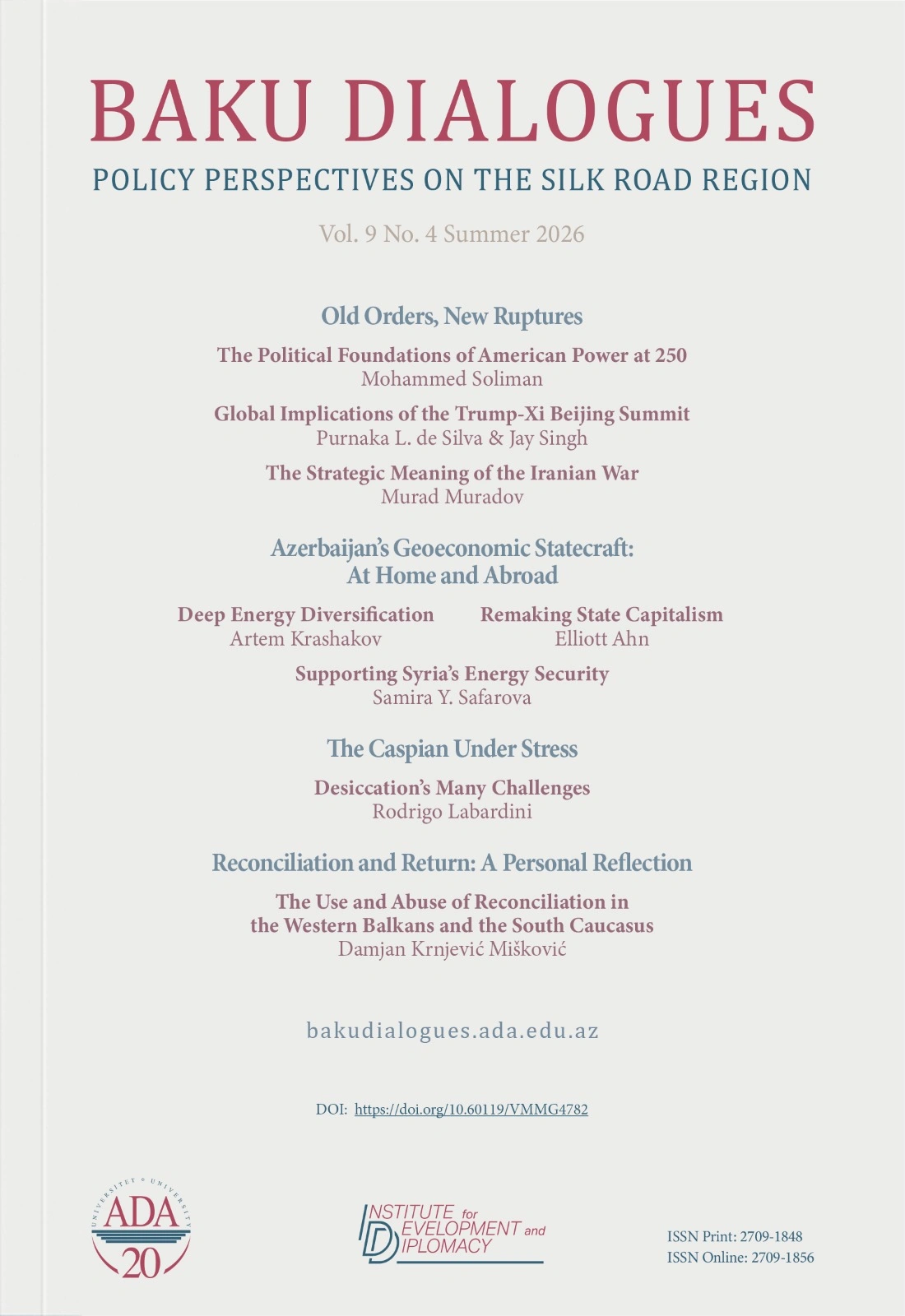
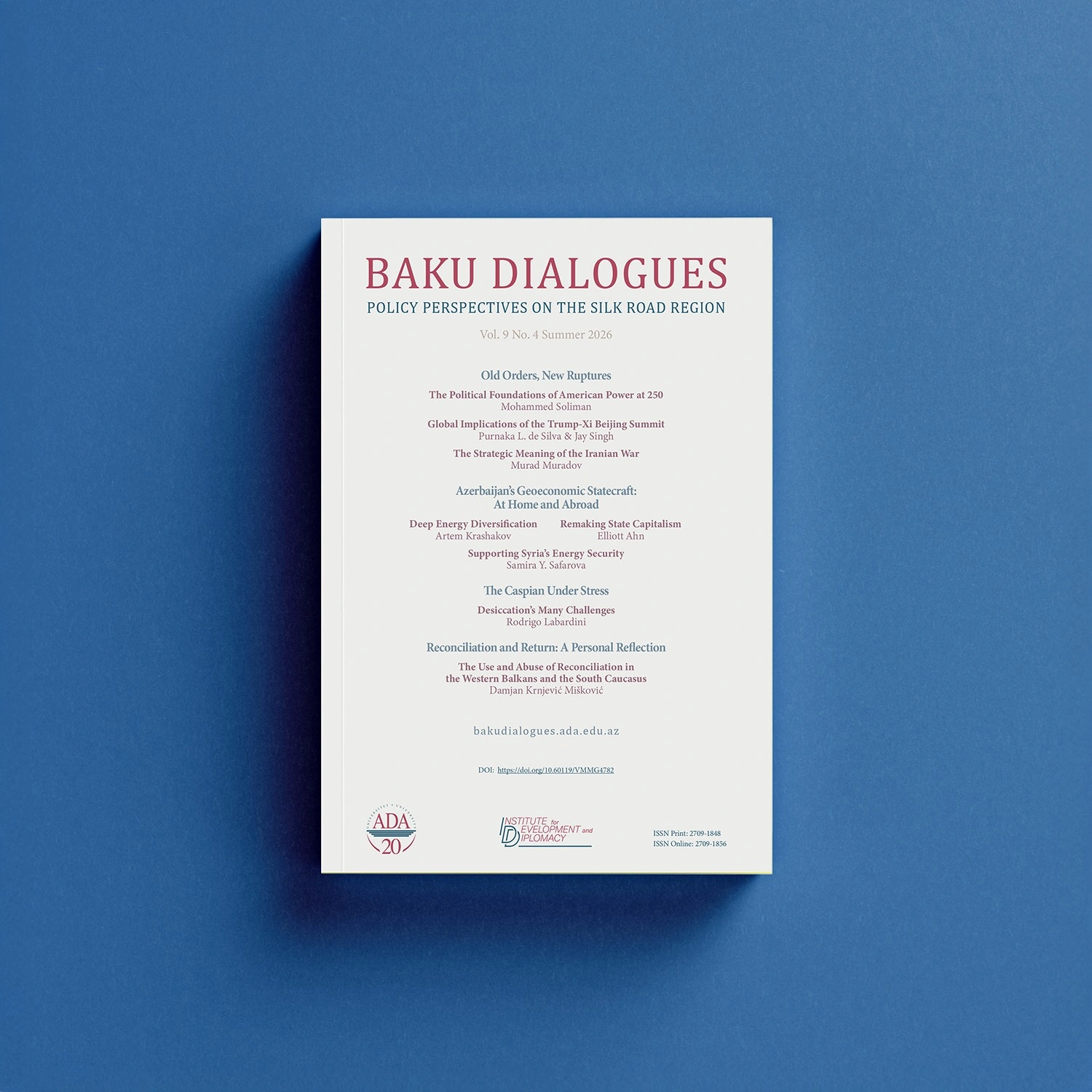
announce the publication of its latest edition of Baku Dialogues,
its flagship English-language quarterly policy journal.
The Summer 2026 issue brings together leading scholars and
policy practitioners to examine the major geopolitical, economic,
and strategic developments shaping the Silk Road region and the
wider international order. Organized into four thematic sections,
"Old Orders, New Ruptures," "Azerbaijan's Geoeconomic Statecraft:
At Home and Abroad," "The Caspian Under Stress," and
"Reconciliation and Return: A Personal Reflection", the edition
explores the evolving foundations of global power, geoeconomic
transformation, environmental security, and post-conflict
reconciliation.
The opening section, "Old Orders, New Ruptures," examines the
shifting foundations of today's international system. Director of
the McLarty Associates, Mohammed Soliman's "The Political
Foundations of American Power at 250" explores how America's
long-term strategic strength depends on political renewal and
institutional resilience. Seton Hall University scholar Purnaka L.
de Silva and retired senior U.S. diplomat Jaidev "Jay" Singh
analyze the global implications of the Trump-Xi Beijing Summit,
while co-founder and deputy director of the Topchubashov Center,
Murad Muradov's "The Strategic Meaning of the Iranian War" assesses
how recent regional conflicts may reshape the emerging
international order.
The second section, "Azerbaijan's Geoeconomic Statecraft: At
Home and Abroad," focuses on Azerbaijan's evolving economic and
energy strategy. Chief Technical Representative of the CETCO
industrial group in the Caspian Region, Artem Krashakov's "Deep
Diversification of Azerbaijan's Energy Sector as a New Stage of
Development" examines the country's expanding energy agenda beyond
hydrocarbons. Professor of the Gwangju Institute of Science and
Technology (GIST), Elliott Ahn's "Baku's 'Beyond Black Gold' Model"
explores Azerbaijan's approach to state capitalism and economic
transformation, while international law and security expert Samira
Y. Safarova's "Supporting Syria's Energy Security" discusses energy
cooperation as an emerging pillar of the Ankara-Baku
relationship.
The third section, "The Caspian Under Stress," features the
professor of ADA University, Rodrigo Labardini's "Caspian
Desiccation: Social, Political, and Legal Challenges," which
examines the environmental, political, and legal consequences of
the Caspian Sea's declining water levels and underscores the need
for greater regional cooperation in addressing this growing
challenge.
The issue concludes with "Reconciliation and Return: A Personal
Reflection," in which IDD Director for Policy Research and Analysis
Damjan Krnjević Mišković reflects, in his personal capacity, on the
opportunities and limitations of reconciliation processes in the
Western Balkans and the South Caucasus. Through "The Use and Abuse
of Reconciliation in the Western Balkans and the South Caucasus,"
he offers a thoughtful perspective on memory, return, and the
enduring complexities of post-conflict peacebuilding.
This edition of Baku Dialogues provides timely policy
perspectives on the geopolitical, geoeconomic, and environmental
transformations redefining the Silk Road region and contributes to
broader discussions on the future of international order.
The full issue is available for reading and download on bakudialogues.idd.az