GUSAR, Azerbaijan, July 16. Media coverage of
religious issues is not only a matter of journalism but also a
question tied to the future of society, and the media bears greater
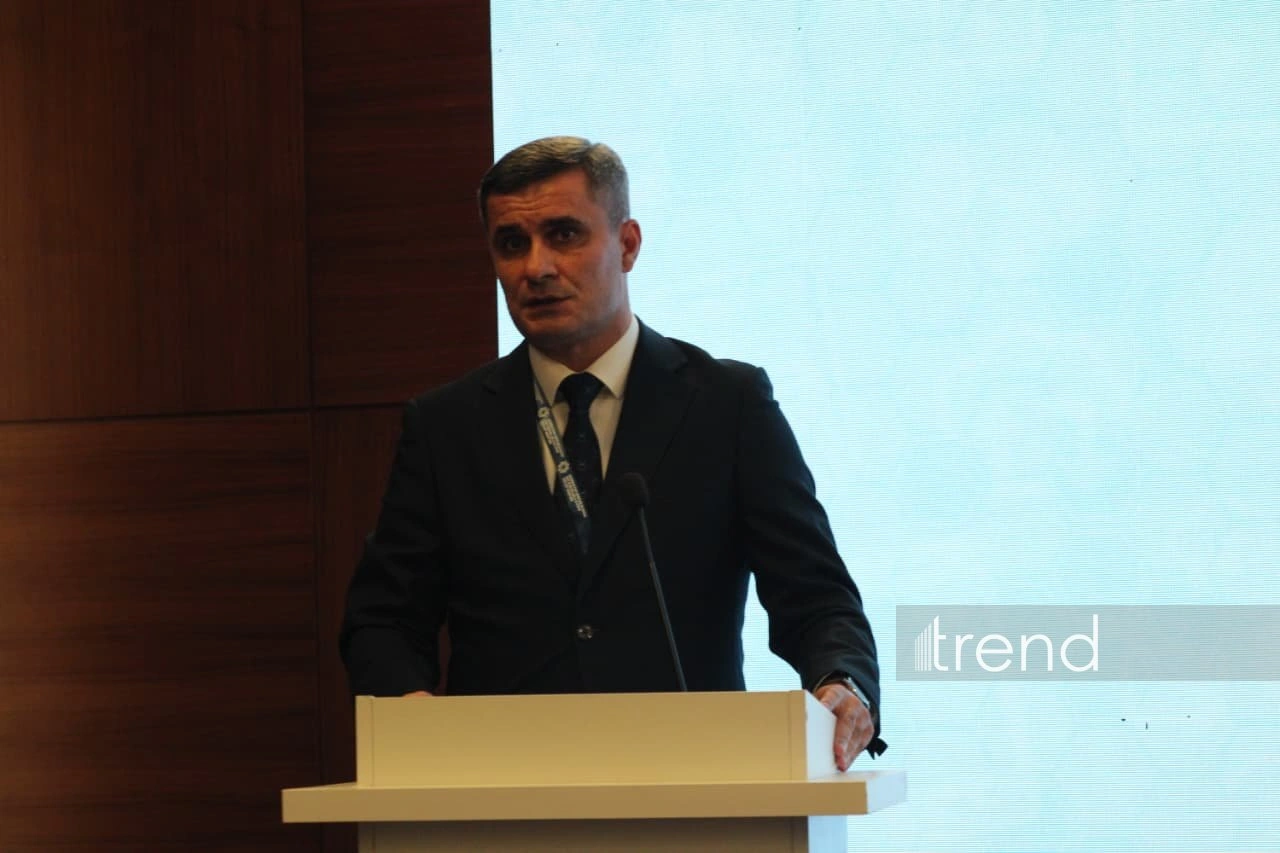
responsibility in this area, Radik Ismayilov, chairman of the board
of ARB Media Group, said, Trend’s correspondent reports from the event.
Ismayilov made the remarks at a conference in Qusar titled
“Coverage of Religious Issues in the Media: Shared Responsibility
for Maintaining Religious Stability.”
He thanked the State Committee for Work with Religious
Organizations for organizing the event, saying that preserving
religious stability is a shared responsibility not only of media
representatives but of society as a whole.
Ismayilov said journalists covering religious issues must
demonstrate a much higher level of responsibility than when
preparing ordinary news reports.
“In the modern era, a news report can spread within seconds. A
headline, an image or an article can lead to unexpected reactions
and consequences. Therefore, the role of the media in this field
has grown significantly compared with previous periods,” he
said.
According to Ismayilov, modern media is no longer only a tool
for transmitting information but has become an important social
institution that shapes people’s attitudes toward events and toward
each other.
“Every term used in covering religious topics, every headline
chosen and every image published sends a certain message to
society. That is why this field requires not only professionalism
but also a high level of responsibility,” he said.
The ARB Media Group chairman said competition for ratings and
views sometimes pushes fundamental journalistic principles into the
background.
“Social media algorithms spread emotional and polarizing content
more quickly. This can have particularly dangerous consequences
when it comes to religious issues. Associating the actions of
individuals with an entire religion, reinforcing stereotypes and
making generalizations based on religious identity weakens mutual
trust in society. The mission of the media is not to separate
people from one another, but to bring them closer through accurate
information,” he added.
Ismayilov said new forms of information manipulation are
emerging, with artificial intelligence-generated fake images,
out-of-context videos, disinformation campaigns and platforms
promoting hate speech turning religious topics into tools of
information warfare.
He said religion is also being used as a political
instrument.
“While preparing a documentary on the rise of antisemitism and
Islamophobia in Europe, we witnessed this. Some right-wing parties
that once held antisemitic positions now support Jews, while some
left-wing forces that previously rejected Islam now defend Islam.
Unfortunately, all of this is being used as a political tool,” he
said.
Ismayilov said religious stability cannot be protected through
legal mechanisms alone.
“Proper laws and state policies are important. However, one of
the key factors is a healthy information environment. If the media
is responsible, society will live with healthy information. If the
information environment becomes toxic, the consequences will
eventually appear in public relations,” he said.
He noted that Azerbaijan has its own experience in this
area.
“For centuries, representatives of different religions have
lived in Azerbaijan in an atmosphere of mutual respect. Mosques,
churches and synagogues continue to operate side by side today.
Religious diversity in Azerbaijan is not a source of conflict but a
source of cultural enrichment,” Ismayilov said.
He added that while working on a documentary about the weakening
of the tolerance model in Europe, they made several notable
observations.
“People we interviewed in France said the French model of
tolerance was gradually deteriorating. At the same time, they cited
Azerbaijan’s model of tolerance as an example. We reflected these
views in the documentary, and this made us proud,” he said.
Ismayilov stressed that tolerance is not only a historical
legacy but also a value that must be protected every day, with the
media playing a special role in preserving it.
“When covering religious issues, journalists should not only
answer the traditional six questions of journalism, but also ask:
‘How will this news affect society?’” he said.
Ismayilov said covering religious topics should not be about
censorship or restrictions, but about professional ethics and
responsibility.
“Free media and responsible media are not contradictory
concepts. On the contrary, true media freedom benefits society when
it is complemented by responsibility. Relying on facts, maintaining
balance, avoiding stereotypes and staying away from hate speech are
matters of both professional ethics and public responsibility,” he
said.
He added that religious leaders also have an important role in
this process.
“Religious leaders should not shy away from the media and should
remain open to journalists. Questions should be answered based on
science and the essence of religion, not superstition. Mosques,
churches and synagogues should be open to journalists, and a list
of experts capable of speaking on religious issues should be
prepared. This would significantly facilitate journalists’ work,”
he said.
Concluding his remarks, Ismayilov said bringing together media
representatives, state institutions, religious communities and
experts on a single platform demonstrates shared
responsibility.
He expressed confidence that the ideas discussed at the
conference would not be limited to an exchange of views but would
also help establish practical directions for future work.