GUSAR, Azerbaijan, July 16. The main objectives
of Azerbaijan’s state policy on religion are to preserve national
and spiritual values, strengthen religious tolerance, solidarity,
and social stability, expand digitalization in this sphere, and
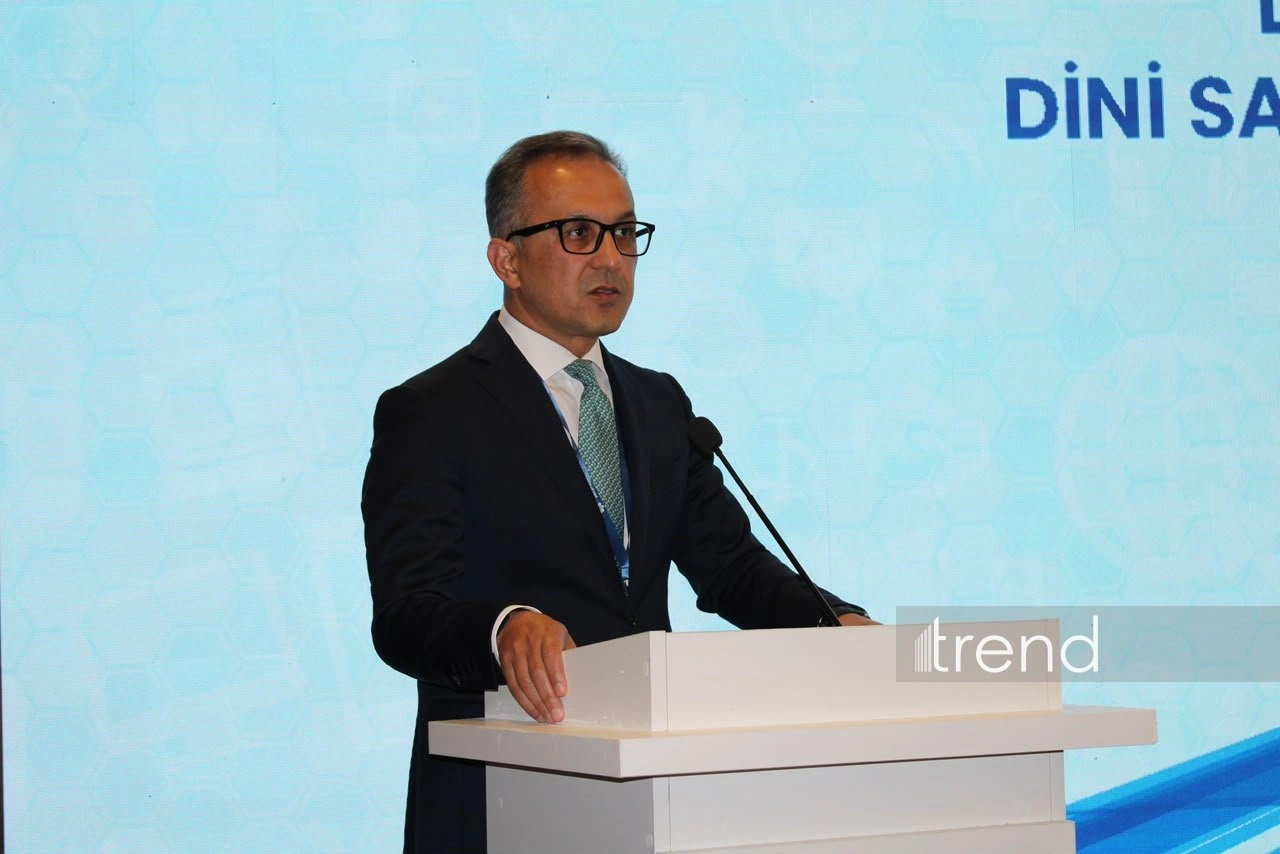
intensify educational activities, said Ramin Mammadov, chairman of
Azerbaijan’s State Committee for Religious Affairs, Trend’s correspondent reports
from the event.
Mammadov made the remark during a speech at a conference titled
“Coverage of Religious Issues in the Media: Shared Responsibility
for Maintaining Religious Stability,” held in Gusar.
He noted that the current era is characterized by both new
challenges and broad opportunities, and the State Committee’s
activities are shaped with these realities in mind.
Furthermore, Mammadov emphasized that the documentary film
presented at the conference’s opening, the AMIN information system,
which is part of the Committee’s digitalization policy, and the “A
Library in Every Mosque” project, although they appear to cover
different areas, are in fact part of a unified strategic
approach.
According to him, these initiatives represent a modern,
innovative, and future-oriented implementation of state policy in
the religious sphere, consistently carried out under the leadership
of the President of the Republic of Azerbaijan, Ilham Aliyev.
The Committee Chair emphasized that the projects currently being
implemented are aimed at preserving national and spiritual values,
strengthening religious tolerance, solidarity, and social
stability, digitizing government structures, and developing
educational initiatives.
“Overall, the main goal of these projects is to demonstrate that
Azerbaijan’s unique state policy in the religious sphere and the
principles of secularism complement one another,” he said.
R. Mammadov noted that the film is an artistic and visual
presentation reflecting the history and current state of religious
and social stability, as well as religious diversity in Azerbaijan.
According to him, since journalists closely follow these processes,
most of the facts depicted in the film are well known to them.
According to the Committee chairman, the successful
implementation of Azerbaijan’s state policy in the religious sphere
is due to the high regard that Azerbaijani President Ilham Aliyev
holds for religious denominations, the religious community, and
national and spiritual values.
He added that promoting these values is of great importance not
only within the country but also at the international level.
“In this regard, the work of the President of the Heydar Aliyev
Foundation, First Vice President Mehriban Aliyeva, is of
exceptional importance, and each of us holds it in high regard,” R.
Mammadov emphasized.
The Committee Chair stated that the “AMIN” information system is
a prime example of the implementation of the government’s
digitalization policy in the sphere of state-religion
relations.
“We have set ourselves the goal of digitizing all our services
through this platform. The system will improve access to services,
enable the public to receive reliable and accurate information, and
become one of the key tools in the fight against disinformation and
fake news,” he said.
Mammadov noted that another project presented, the “A Library in
Every Mosque” initiative, also serves to revive the historical
traditions of the Enlightenment.
“In Azerbaijan, mosques have historically been not only places
of worship but also centers of science and education. As a result
of various historical and political processes, this tradition has
weakened to some extent. The project we are implementing aims to
revive this tradition of the Enlightenment in accordance with the
demands of the modern era and to reintroduce it into society,” the
Committee Chairman said.
According to him, the public feedback received during the
project’s implementation and the improvements made indicate that
this initiative is generating significant interest among the
public.
R. Mammadov noted that meetings with media representatives in
this format have already become a tradition.
“Our first meeting is taking place in Shusha, the second in
Shamakhi, and the third in Gusar. We plan to continue holding
similar meetings in other regions in the near future,” he said.
The committee chair thanked the executive branch of the Gusar
District for organizing the event and for their hospitality.
He emphasized that Gusar is one of the regions that is always
considered in the context of state-religion policy.
“This is due not only to the region’s sensitivity but also to
its religious and ethnic diversity. Although certain challenges
exist here, we, as a government body and an institution that
regulates state policy in the religious sphere, see opportunities
first and foremost. We believe that, together with local executive
authorities, community representatives, and religious leaders, we
are capable of preventing any potential religiously motivated
threats in this region and ensuring that such situations do not
arise in the future,” Ramin Mammadov added.