BAKU, Azerbaijan, July 16. After months of
steady diplomatic engagement, Turkmenistan and Georgia appear
poised to shift their partnership from political dialogue to the
implementation of joint projects, with transport connectivity
expected to dominate the agenda.
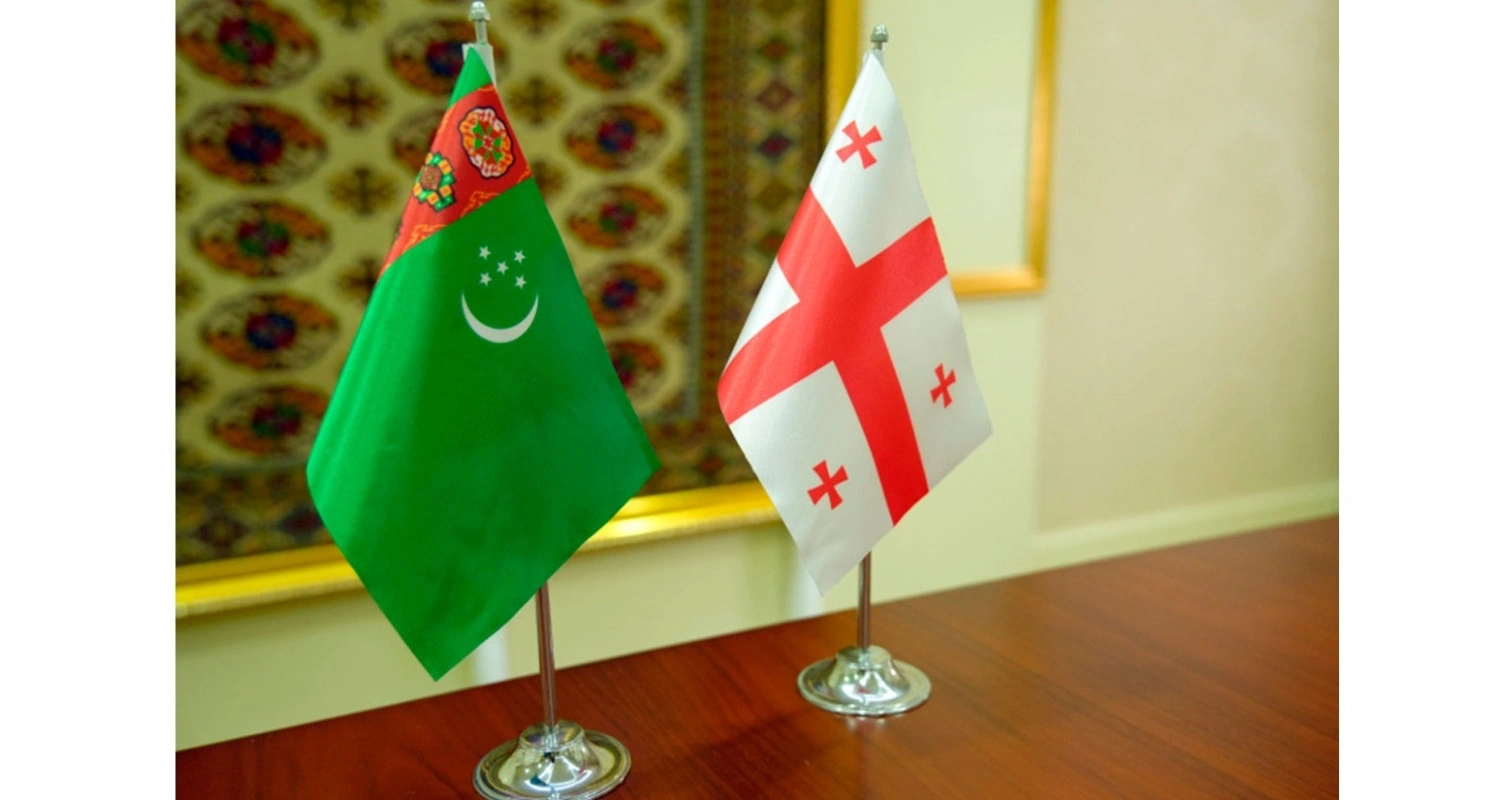
Turkmen President Serdar Berdimuhamedov's state visit to Tbilisi
on July 16 follows a series of high-level contacts that have
intensified since the beginning of 2026. Over that period,
bilateral relations have expanded beyond traditional political
engagement to include transport, logistics, investment, finance and
trade. The focus is now increasingly shifting from discussing
opportunities to delivering concrete results.
That trajectory was reinforced by a recent phone conversation
between the foreign ministers of Turkmenistan and Georgia. In
addition to reviewing preparations for the presidential visit, the
ministers discussed prospects for bilateral cooperation and
Georgia's engagement with Central Asian countries. Both sides
stressed the importance of maintaining regular high-level dialogue,
which has become a defining feature of Turkmen-Georgian relations
in recent months.
The centerpiece of the upcoming talks is expected to be the
Trans-Caspian International Transport Route, widely known as the
Middle Corridor, whose strategic importance continues to grow as
global supply chains evolve. According to various estimates, cargo
volumes along the route reached about 4.1 million metric tons
during the first 11 months of 2024, an increase of 63%
year-on-year. Growth continued in 2025, with transit through
Azerbaijan rising by around 11% and total freight volumes
approaching 5 million tons. Participating countries aim to increase
annual cargo volumes to 10-11 million tons by 2030.
For both Turkmenistan and Georgia, the corridor has strategic
significance. Turkmenbashi International Seaport provides Central
Asian exporters with access to the Caspian Sea, while Georgia's
ports of Poti and Batumi serve as gateways to the Black Sea and
European markets. Together, they form one of the key links in the
multimodal transport network connecting Asia and Europe by rail,
sea and road.
Transport cooperation has remained high on the bilateral agenda
throughout the year. In February, railway authorities from
Azerbaijan, Turkmenistan, Uzbekistan and Georgia held a four-party
meeting in Ashgabat to discuss ways to enhance the Middle
Corridor's competitiveness, increase freight volumes and accelerate
the digitalization of transport operations. The meeting concluded
with the signing of a protocol aimed at expanding digital solutions
and improving cargo transport management.
The process continued in March, when Turkmen Deputy Chairman of
the Cabinet of Ministers Nokerguly Ataguliyev visited Georgia for
talks focused on logistics infrastructure, closer cooperation with
Black Sea ports - particularly Poti - and the further development
of transit routes across the Caspian Sea.
Momentum continued to build in May, when Georgian Minister of
Economy and Sustainable Development Mariam Kvrivishvili visited
Ashgabat and met with President Berdimuhamedov. Their discussions
centered on transport and logistics cooperation, including the
Middle Corridor, the Caspian-Black Sea route, the Lapis Lazuli
Corridor and the Green Port initiative. The visit also included the
fifth session of the Turkmen-Georgian Intergovernmental Commission
on Economic Cooperation, which concluded with the signing of a
protocol covering transport, logistics, energy, trade, investment
and freight development.
Economic ties have also been strengthening. According to
Georgia's National Statistics Office, Georgian exports to
Turkmenistan more than tripled in the first quarter of 2026
compared with the same period a year earlier, rising from $2.5
million to $7.7 million, an increase of nearly 212%. In March
alone, exports reached $4.8 million, compared with $1.4 million in
the corresponding month of 2025. Georgia's main exports include
poultry meat and by-products, pharmaceuticals, medical products,
alcoholic beverages, vehicles and consumer goods.
The growth in trade has been accompanied by efforts to remove
logistical bottlenecks. The two sides have discussed expanding port
capacity, improving customs cooperation and developing multimodal
transport solutions aimed at making trade flows faster and more
predictable.
Cooperation is also broadening beyond transport. In June,
Turkmen and Georgian officials held several meetings devoted to
financial and economic cooperation, focusing on investment,
banking, tax administration and more efficient financial
mechanisms. Both sides reaffirmed their commitment to maintaining
regular contacts between financial institutions and jointly
implementing projects that support sustainable economic growth.
This expanding cooperation is underpinned by an established
legal and institutional framework. Most joint initiatives are
coordinated through the Turkmen-Georgian Intergovernmental
Commission on Economic Cooperation, which covers trade, transport,
logistics, energy, investment and other priority areas.
Taken together, these developments suggest that the two
countries have built a comprehensive agenda encompassing trade
expansion, transport infrastructure, transit digitalization,
investment cooperation and financial integration.
Against that backdrop, the most significant outcome of President
Serdar Berdimuhamedov's visit may not be new political declarations
but concrete decisions aimed at implementing agreements already
reached. Should the talks produce practical agreements on
increasing cargo volumes, coordinating port and railway operations,
attracting investment and launching new cooperation mechanisms, the
first tangible results could emerge as early as 2026-2027. For
Turkmenistan, this would represent another step toward diversifying
its external economic ties, while for Georgia it would reinforce
its position as one of the region's leading transit hubs.