BAKU, Azerbaijan, July 15. Uzbekistan plans to
scale up regional cooperation model with Belarus targeting
increasing the volume of mutual trade to $2 billion.
This is reflected in the release of the press service of Uzbek
president.
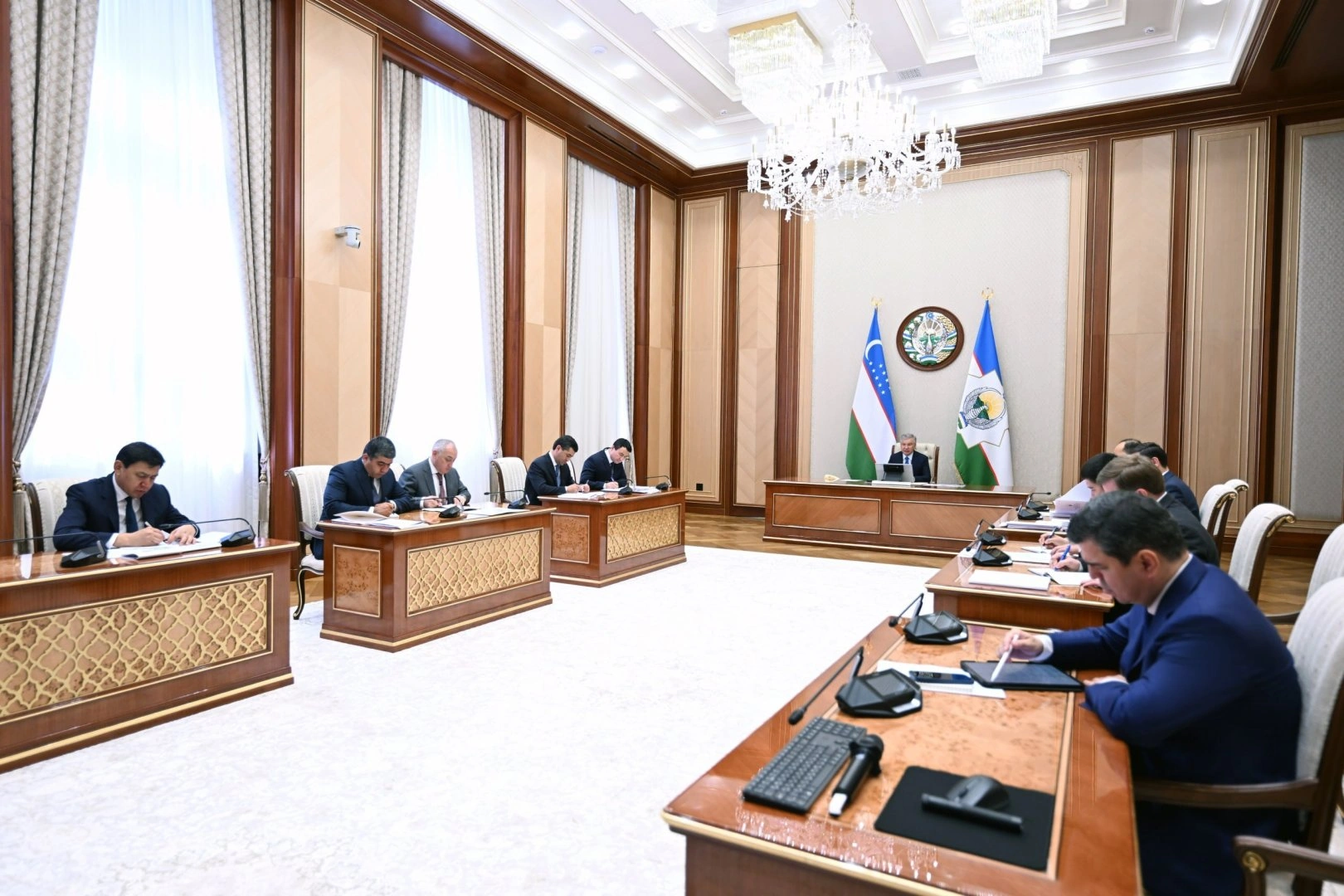
The plans were outlined during a presentation with participation
of President of Uzbekistan Shavkat Mirziyoyev, during which he has
reviewed a comprehensive plan on implementing bilateral agreements
reached during his official visit to Belarus on July 8–9.
"During the official visit of the head of our state to Belarus
on July 8-9, important agreements were reached on increasing the
volume of mutual trade to $2 billion, as well as on the
implementation of 310 joint projects and activities worth a total
of $2 billion in the fields of mechanical engineering, agriculture,
pharmaceuticals, textiles, wood processing, and healthcare," the
release of the press service says.
The high-level agreements outline the execution of 310 joint
projects and initiatives valued at $2 billion across key sectors,
including machine building, agriculture, pharmaceuticals, textiles,
wood processing, and healthcare. To accelerate these efforts,
Belarus has offered industrial sites, state-owned facilities, and
extensive agricultural lands - which comprise 40% of its territory
- to host Uzbek investment projects.
A central element of the strategy involves expanding the
successful cooperation model established between Uzbekistan's
Andijan region and the Vitebsk region of Belarus to other
territories. Consequently, the Bukhara, Kashkadarya, Navoi,
Namangan, Tashkent, Fergana, Samarkand, and Surkhandarya regions of
Uzbekistan will be paired with the Vitebsk, Mogilev, Grodno, Gomel,
and Brest regions of Belarus under dedicated "roadmaps" focusing on
industrial localization and joint venture development.
As part of this regional expansion, a package of 30 new projects
valued at over $100 million has been compiled, primarily focused on
agriculture and forestry in the Vitebsk region. Backed by the
"Andijan Invest" company, these initiatives include the
establishment of a modern dairy complex for 3,000 head of cattle,
several mid-sized livestock farms, and a deep wood-processing plant
producing fuel pellets from wood waste.
To lower cargo transit costs and streamline trade, the two
countries are also focusing on upgrading logistics infrastructure.
Uzbekistan plans to launch an intermodal logistics center at the
Orsha station in the Vitebsk region by the end of 2026, in
collaboration with Belarusian Railways, which will offer
preferential tariff rates for import-export cargo. This will be
further supported by the introduction of direct block train
services running between the two countries.
In addition to trade and industry, the bilateral framework
places high priority on structured, organized employment pathways.
Initially, 1,100 Uzbek citizens will be employed on a competitive
basis across 13 enterprises in Belarus. Starting this September,
500 residents from the Andijan region will be employed monthly in
the Vitebsk region, with a long-term target of 5,000 jobs,
supported by a new representative office of Uzbekistan’s Agency for
External Labor Migration to be opened in Vitebsk.
President Mirziyoyev instructed government officials to provide
financial support and simplified banking procedures for Uzbek
entrepreneurs looking to establish businesses in Belarus. He
emphasized that all regional projects must be strictly monitored to
ensure they translate into operational joint ventures and
high-value jobs.