BAKU, Azerbaijan, July 15. Relations between
the United States and Azerbaijan are currently at their strongest
level since the country regained independence.
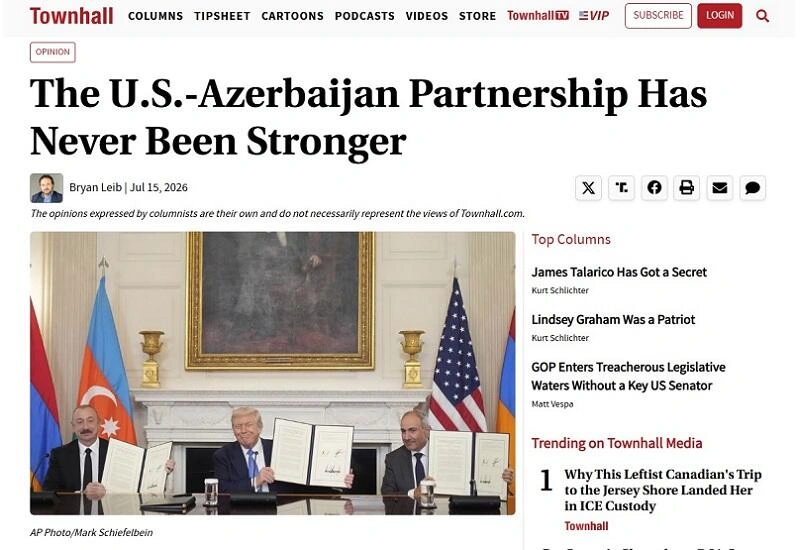
This opinion was expressed by US political analyst Bryan Leib in
an article for Townhall following his
participation in the 4th Shusha Global Media Forum.
According to the author, cooperation between Washington and Baku
today goes far beyond traditional diplomacy, covering regional
security, energy, transportation, economic development, and the
formation of a new cooperation framework in the South Caucasus.
Leib notes that US policy toward Azerbaijan has undergone
significant changes in recent years. In his view, while the
previous US administration underestimated Azerbaijan’s strategic
importance, the current approach is based on recognizing Baku’s key
role as a reliable partner in the region.
The author emphasizes that Azerbaijan holds a unique
geopolitical position as a link connecting Europe, the South
Caucasus, and Central Asia. Amid growing global competition, he
believes that countries such as Azerbaijan are becoming
increasingly important partners for the United States.
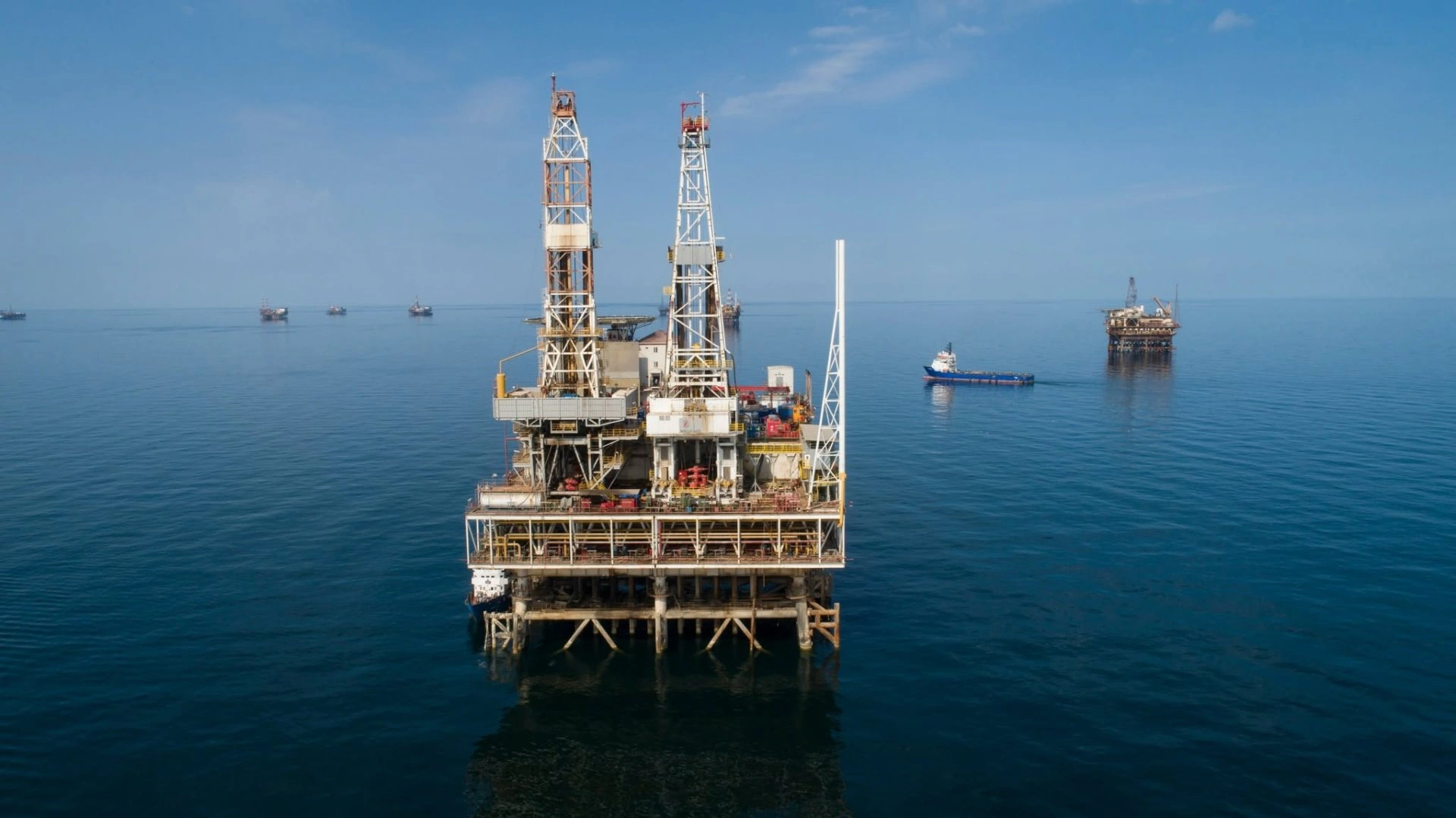
The article pays particular attention to energy cooperation.
Leib recalls that long before Europe faced an energy crisis,
Azerbaijan had invested in the development of alternative export
routes and modern energy infrastructure. Today, he notes,
Azerbaijani gas plays an important role in strengthening Europe’s
energy security and reducing dependence on unreliable
suppliers.
At the same time, the author stresses that Azerbaijan’s
importance extends far beyond energy. He recalls that Baku
supported the United States during the Afghanistan operation by
providing critical transit routes and assistance to the
international coalition.
"These actions demonstrated that Azerbaijan is not simply a
regional partner, but a truly reliable ally," the article
states.
According to Leib, Azerbaijan’s large-scale investments in
seaports, railways, road infrastructure, aviation, and logistics
are transforming the country into one of Eurasia’s key
transportation and logistics hubs. In his view, this creates
significant opportunities for American businesses in sectors
including energy, transportation, technology, infrastructure,
agriculture, and cybersecurity.
The analyst also highlights the prospects for the peace process
in the South Caucasus. He believes that a final peace agreement
between Azerbaijan and Armenia could fundamentally reshape the
region, boost trade, attract new investment, and strengthen
transport links between Europe and Asia.
The author argues that the United States should continue
supporting this process while further developing its strategic
partnership with Azerbaijan.
The article also focuses extensively on Shusha. Leib, who has
visited Azerbaijan several times, describes the city as a symbol of
the country’s reconstruction, resilience, and national renewal.
According to him, hosting the Shusha Global Media Forum
demonstrates Azerbaijan’s commitment to creating a platform for
international dialogue bringing together politicians, experts, and
representatives of global media outlets.
At the same time, the author acknowledges that allies may have
differences on certain issues. However, he argues that a mature
partnership should be based on shared strategic interests rather
than defined by individual political disagreements.
Leib believes that strengthening US-Azerbaijan relations serves
the interests of both countries. In his view, it contributes to
energy security, international trade, stability in the South
Caucasus, and expanded economic opportunities amid growing
competition among global powers.
Concluding his article, the author calls on the US Congress to
continue supporting the development of bilateral relations, expand
economic cooperation, and reconsider approaches that, in his
opinion, no longer reflect current geopolitical realities.
"The relationship between the United States and Azerbaijan has
never been stronger. Now is the time to build on that momentum,"
Bryan Leib writes.