BAKU, Azerbaijan, July 15. The International
North-South Transport Corridor (INSTC) will strengthen Iran's
position as a regional transit and freight transportation hub.
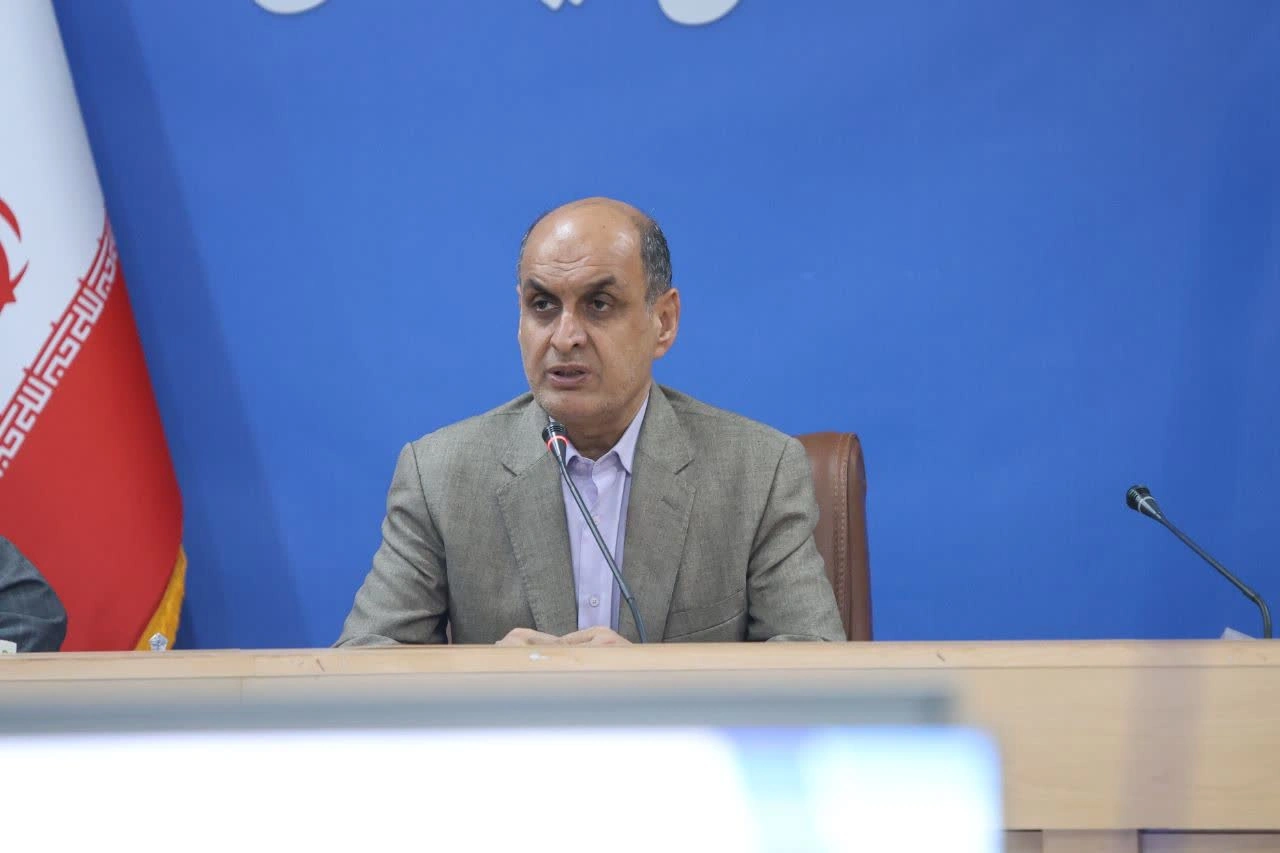
According to the Gilan provincial government, Gilan Governor
Hadi Haghshenas made the remarks during a meeting with Abbas
Khatibi, deputy CEO of Iran's Construction and Development of
Transportation Infrastructure Company.
"Once the Rasht-Astara railway becomes operational as part of
the International North-South Transport Corridor, it will create
capacity to transport 15 million metric tons of cargo annually.
This will strengthen Iran's position in freight transportation and
transit between India, Russia, the Commonwealth of Independent
States (CIS) member countries and Northern Europe," he said.
Haghshenas noted that Azerbaijan's railway network is already
connected to the Iranian city of Astara and that large volumes of
cargo are transported along the route. He said this demonstrates
the economic justification for further developing the Rasht-Astara
railway.
The governor said Gilan Province serves as Iran's trade gateway
to the Caspian littoral states. Upgrading the province's railway
network, he added, would not only boost exports and transit but
also help unlock the potential of its agriculture, tourism,
maritime economy, industry, science and engineering sectors.
"The Rasht-Astara railway, the connection of Caspian Port to the
national railway network, and the construction of the
Caspian-Anzali railway are complementary rail projects. Together,
they could turn Gilan Province into one of the country's most
important transit and trade hubs," he said.
The foundation for the International North-South Transport
Corridor was laid under an intergovernmental agreement signed by
Russia, Iran and India on Sept. 12, 2000. Since then, a number of
countries have ratified the agreement, including Azerbaijan,
Belarus, Bulgaria, India, Iran, Kazakhstan, Kyrgyzstan, Oman,
Russia, Tajikistan, Türkiye and Ukraine.
The corridor is intended to reduce cargo transit times between
India and Russia, as well as Northern and Western Europe. While
shipments currently take more than six weeks via existing routes,
transit through the North-South Corridor is expected to reduce
delivery times to about three weeks.
As part of the project, the 175-kilometer (109-mile)
Qazvin-Rasht railway was inaugurated on March 6, 2019, linking
Azerbaijan's railway network with Iran's rail system. The
Rasht-Astara railway section in Iran remains to be completed.
Within Iran, the North-South Corridor consists of three routes.
The eastern route connects through Turkmenistan and Central Asian
countries, the central route runs across the Caspian Sea to Russia
and other destinations, and the western route passes through
Azerbaijan, Georgia, Russia and Eastern European countries.