SHUSHA, Azerbaijan, July 13. At a time when
social media is rapidly gaining influence, professional journalism
remains the foundation for building public trust, countering
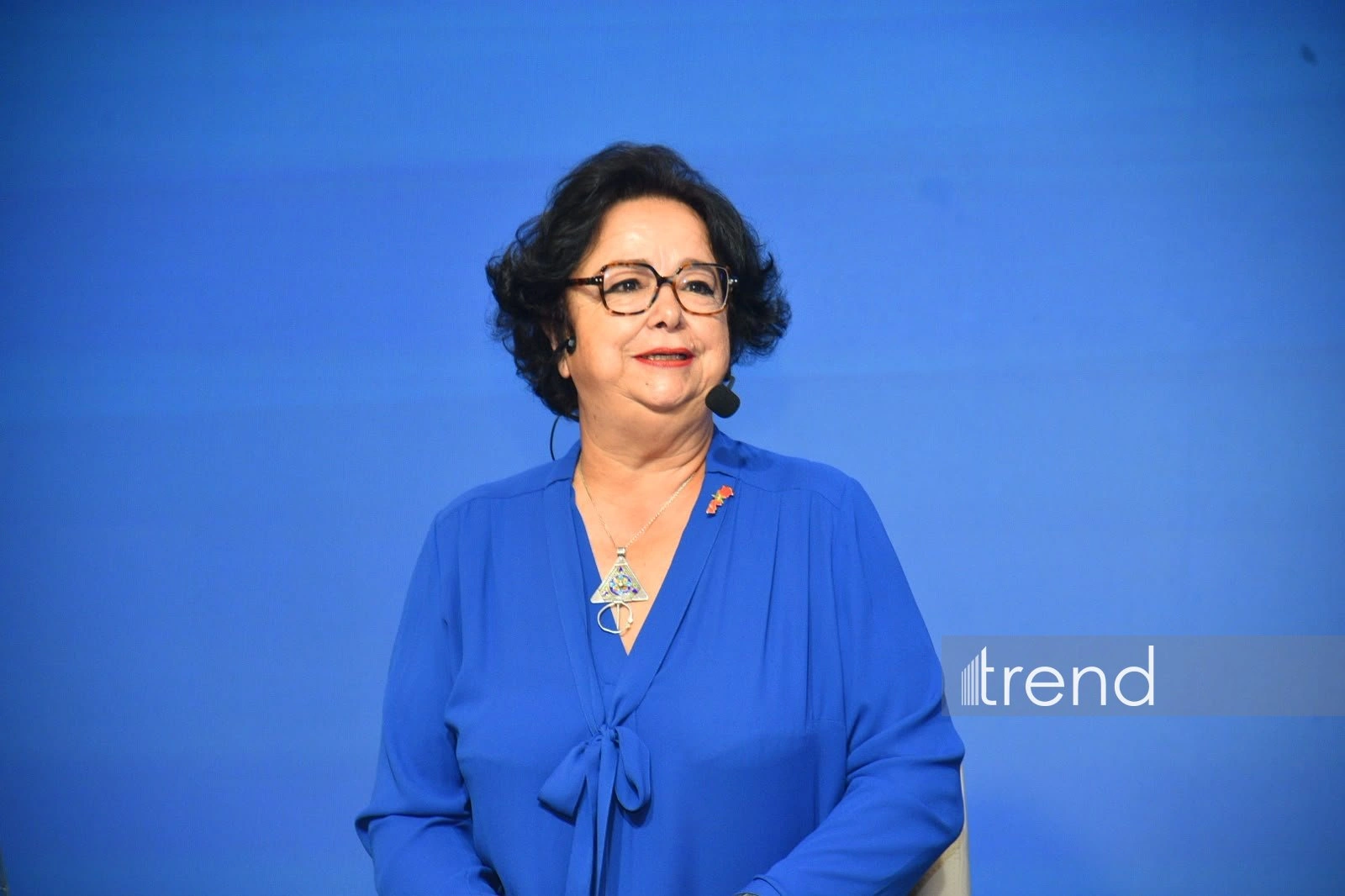
manipulation and promoting peace, Latifa Akharbach, President of
the High Authority for Audiovisual Communication of the Kingdom of
Morocco, said, Trend's special correspondent reports.
Akharbach made the remarks during a panel discussion titled
"Peacebuilding and Public Discourse Through the Lens of Media" at
the 4th Shusha Global Media Forum.
"Journalism helps people better understand what is happening. A
journalist's job is to provide context, compare and verify sources,
check the accuracy of information and set the right priorities.
Today we face a paradox: never before has so much information been
available, yet never before has trust in that information been so
low. That is why professional journalism has become an essential
tool for strengthening trust, protecting society from manipulation
and preserving peace," Akharbach said.
She noted that, according to the latest Digital News Report,
global news consumption is undergoing a historic transformation.
According to the report, 54% of users now get their news through
social media, search engines and video platforms, while the
websites of professional news organizations have, for the first
time, lost their leading position.
"This is a historic turning point. For the first time in
history, social media has become the primary source of news,
surpassing professional media. This reflects a fundamental shift in
the information landscape and in audience habits around the world,"
she said.
At the same time, Akharbach stressed that the growth in the
volume of information has not been accompanied by an increase in
public trust. According to her, the global level of trust in
information currently stands at just 37%.
"A society that no longer knows what it can believe becomes
vulnerable to all forms of manipulation. When shared points of
reference disappear, when facts can be endlessly questioned and the
truth fragments into multiple competing versions, social cohesion
erodes, divisions deepen and peace becomes more fragile," she
said.
Akharbach added that under these conditions, developing
resilient national media systems based on professional standards
and tailored to the characteristics of each country has become
especially important.
"Every country, drawing on its own history, culture and
institutions, should build a media and cultural ecosystem capable
of strengthening peace, supporting social development and
preserving trust among people. This is what the international media
community should work on together," she said.