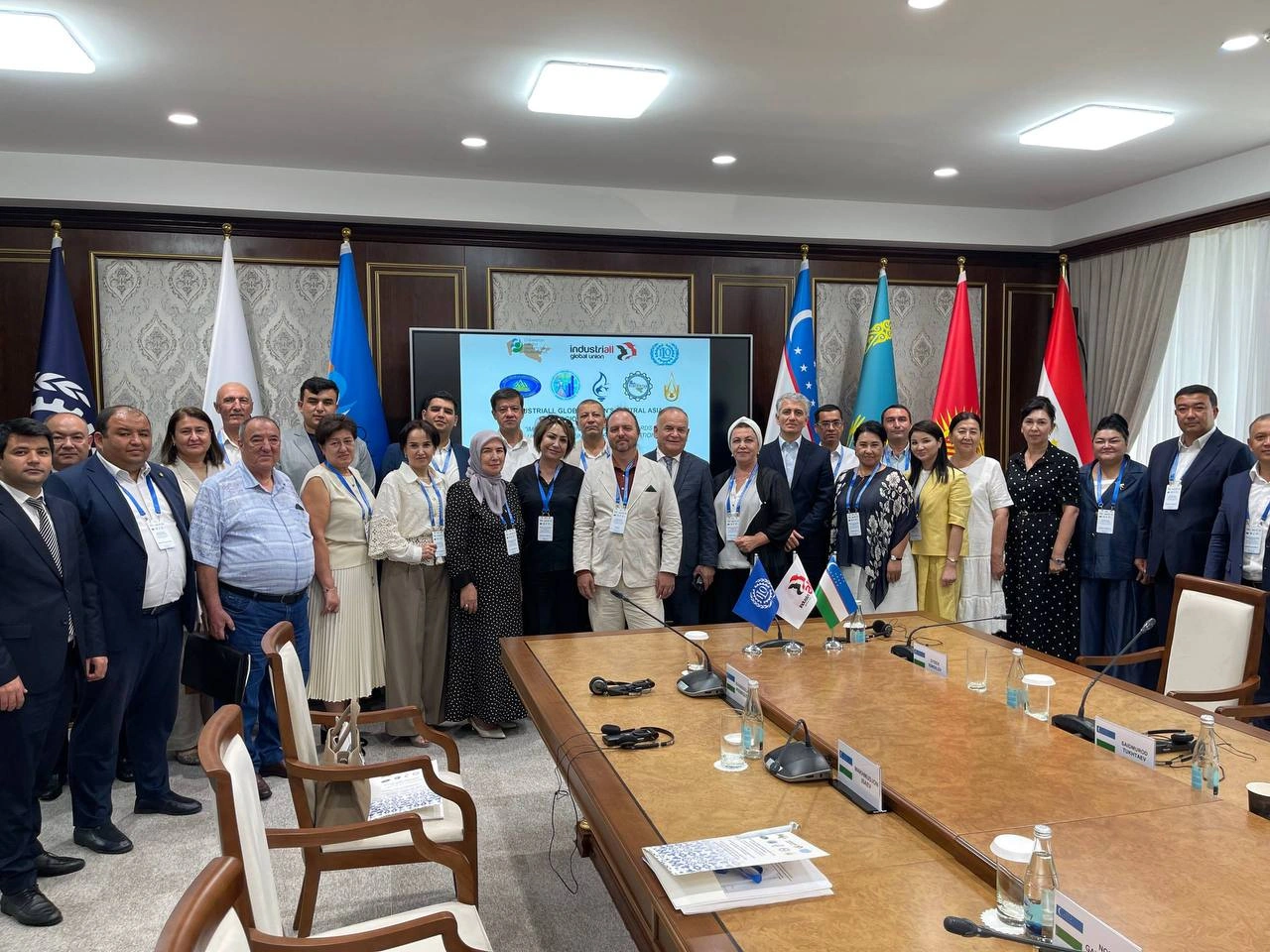
BAKU, Azerbaijan, July 11. Trade union leaders
from Uzbekistan, representatives of international labor
organizations, and industry groups gathered in Tashkent to discuss
the implementation of international standards in trade union
organization, with a focus on strengthening workers’ rights and
developing social dialogue.
This was announced in a report published by the
Uzbekneftgaz.
According to the report, the national conference, titled
"Introducing Global Standards for Trade Union Organization and
Representation in Uzbekistan," was organized by the IndustriALL
Global Union with the support of the Bureau for Workers' Activities
(ACTRAV) of the International Labour Organization (ILO).
The report indicates that the event brought together
representatives of trade unions from Uzbekistan's oil and gas,
energy, and mining industries, alongside officials from IndustriALL
Global Union, the ILO, and labor experts. Representatives of
Uzbekneftegaz's Joint Trade Union Committee also participated.
"The conference focused on improving the activities of trade
unions in Uzbekistan in line with international standards,
strengthening social partnership, expanding the implementation of
decent work principles, and protecting the labor rights and
interests of employees," the organizers said.
Participants exchanged views on the future development of the
energy, oil and gas, and mining sectors, as well as the role of
foreign investment, collective bargaining agreements, tripartite
social dialogue, and international human rights due diligence
(HRDD) requirements in promoting sustainable labor practices.
The discussions also highlighted the growing importance of
aligning industrial development with internationally recognized
labor standards as Uzbekistan continues to attract foreign
investment and integrate more closely into global supply
chains.
Representatives of Uzbekneftegaz presented ongoing reforms aimed
at developing human capital, strengthening social partnership, and
improving working conditions across the company's operations. The
presentation also outlined measures to protect employees' legal
rights, enhance occupational health and industrial safety, support
workers and their families through social programs, and promote
corporate culture and environmental, social, and governance (ESG)
principles.
"Special attention was given to initiatives being implemented
based on social partnership to protect employees' labor rights,
ensure the implementation of collective agreements, and strengthen
labor protection and industrial safety," Uzbekneftegaz said.
Conference participants praised the experience gained by
Uzbekneftegaz in advancing social partnership and introducing
international labor standards into its operations. They also
stressed the importance of expanding cooperation with international
organizations to further strengthen legal protections for workers
and promote decent work principles throughout Uzbekistan's
industrial sectors.
"The participants underscored the need to continue cooperation
aimed at enhancing the organizational capacity of trade unions,
expanding social dialogue, introducing international best
practices, and strengthening the protection of workers' rights and
interests," the organizers said.
The conference concluded with the adoption of priorities for
future cooperation, including closer engagement with international
partners, broader implementation of global labor standards, and
continued efforts to improve trade union representation and social
dialogue across Uzbekistan's industrial economy.