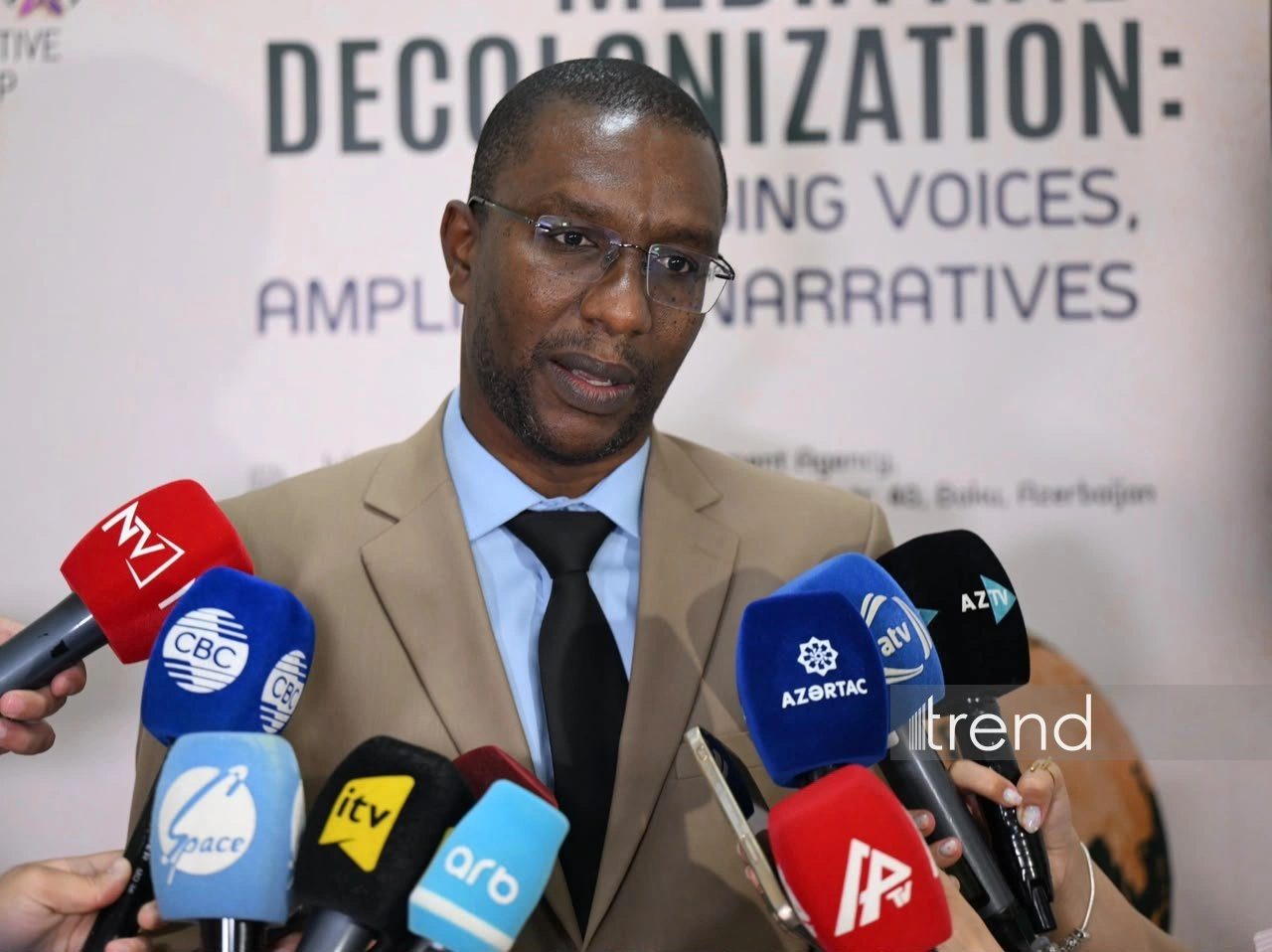
BAKU, Azerbaijan, July 11. Negative coverage of
African countries in the international media costs the continent's
economies approximately $4 billion annually by worsening investor
perceptions and increasing country risk assessments, Senegalese
journalist Barka Ba said, Trend's correspondent reports from the event.
He made the remark on the sidelines of an international
conference on “Media and Decolonization: Rising Voices, Amplifying
Narratives” in Baku.
"Countries that have long been dominated by other states must
reclaim their right to shape their own narratives and public
opinion. Until now, Africa, or at least most African countries, has
often been the target of stereotypes. When people talk about
Africa, they usually talk about conflict, poverty, and corruption.
For example, during the Kenyan elections, approximately 88% of the
coverage published by some media outlets portrayed the country in a
negative light and relied on stereotypes," he said.
According to him, unfavorable media coverage of African
countries directly impacts their ability to attract financing,
access international capital markets, and strengthen their
sovereignty.
"Such negative narratives are estimated to cost African
economies approximately $4 billion due to worsening investor
perceptions and heightened investment risk assessments. Initiatives
like the Baku Initiative Group's events are being conducted
precisely to correct such distortions and biases. They aim to
change existing perceptions, create a more objective information
picture, and help African and other countries that have long been
under external influence regain the right to tell their own stories
and shape their own narratives," Ba emphasized.
The international conference on the theme “Media and
Decolonization: Rising Voices, Amplifying Narratives” has begun in
Baku, organized by the Baku Initiative Group (BIG).
The conference is the first platform of its kind organized in
Azerbaijan with the participation of media representatives from
former colonial territories.
The conference brings together leaders and representatives of
media organizations from former and current colonial territories,
journalists, political commentators, representatives of diaspora
organizations, experts in media and communications, representatives
of civil society institutions, researchers, diplomats, government
officials, and representatives of local media.