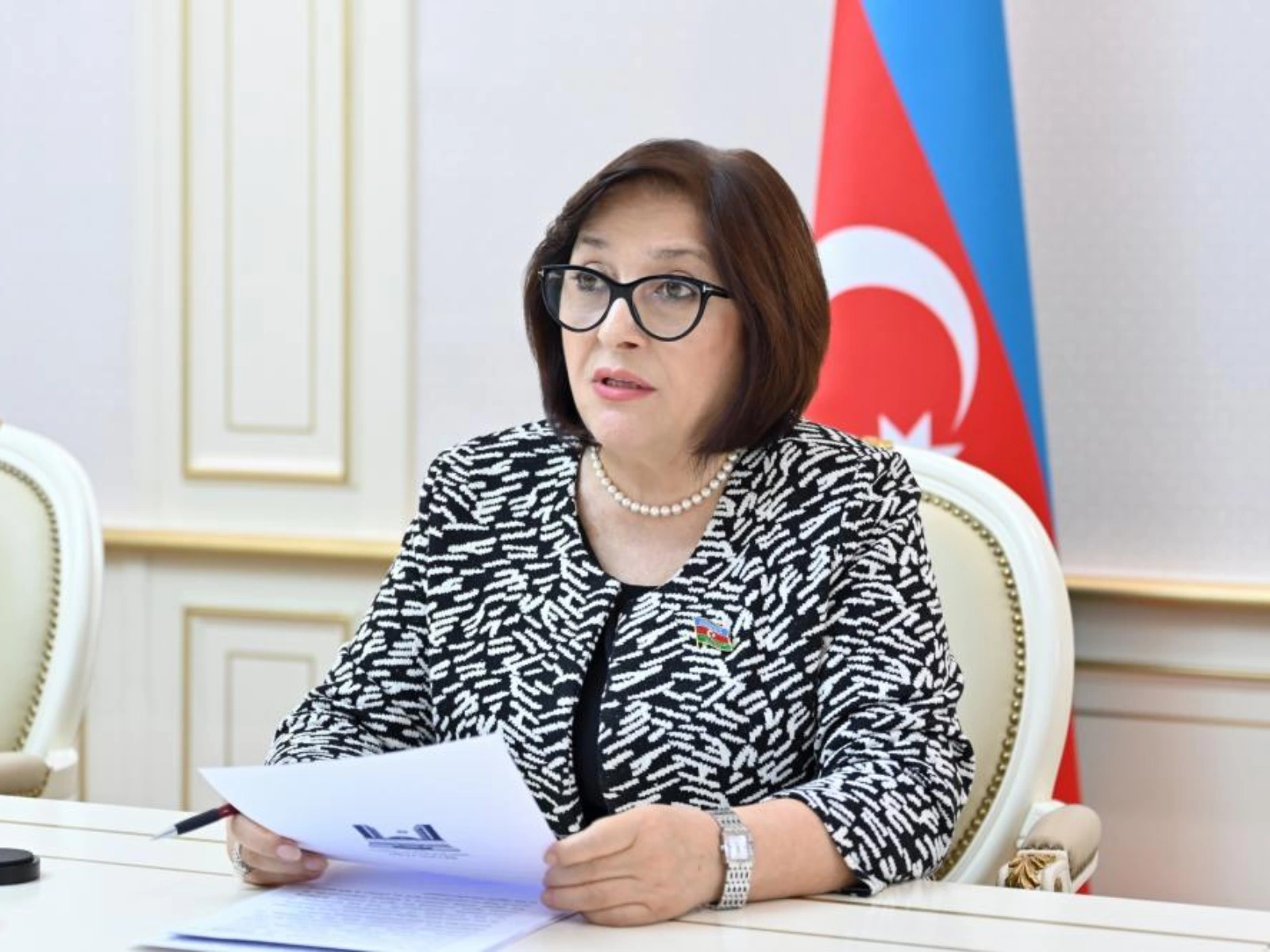
BAKU, Azerbaijan, July 10. The Azerbaijani
Parliament Speaker, Sahiba Gafarova, has participated in the
high-level dialogue of the Inter-Parliamentary Union (IPU) on the
topic of "Parliamentarians' Dialogue on Digital Governance".
This was reported by the Press and Public Relations Department
of the Milli Majlis (Parliament of Azerbaijan).
In her speech, Gafarova, who joined the event in an online
format, stated that the topic of digital governance is increasingly
gaining importance for the international community. According to
her, digital transformation is no longer just a technological
process. It has become a key element of modern governance,
sustainable development, and the provision of efficient public
services.
The speaker noted that digital governance has become one of the
main pillars of modern parliamentary institutions. By using digital
technologies, parliaments can increase transparency, improve the
efficiency of legislative activities, strengthen public
participation, and promote inclusive dialogue among all
stakeholders. She said that digital transformation also creates new
opportunities for the development of inter-parliamentary
cooperation, expanding the exchange of knowledge and best practices
beyond borders.
Emphasizing that digital governance should be based on the
principles of inclusivity, accessibility, accountability,
cybersecurity, and the protection of human rights, including the
right to privacy, Gafarova also said that bridging the digital
divide is the shared responsibility in terms of ensuring that all
parliaments and citizens benefit equally from the digital
transformation process.
She expressed an opinion that digital technologies should act as
an important tool supporting democratic governance, strengthening
public trust in state institutions, and serving the development of
an open, transparent, and citizen-responsive parliamentary
dialogue. Joint efforts to strengthen international cooperation and
build capacity will be key to ensuring that digital governance
contributes to sustainable development, strengthening democratic
stability, and the formation of effective parliamentary
institutions.
Stressing the relevant important role of parliaments, Gafarova
noted that the responsibility of parliaments is not only to adopt
legislation that keeps pace with technological changes, but also to
ensure that digital transformation is implemented based on the
principles of transparency, accountability, and the rule of
law.
Highlighting in her speech the great importance Azerbaijan
attaches to the development of digital governance, she pointed out
that as part of this approach, the Digital Development Council was
established by the decree of the President of Azerbaijan to
coordinate state policy in the fields of digitalization,
e-government, artificial intelligence, and innovation. She said
that the council is chaired by First Vice-President of the Republic
of Azerbaijan, Mehriban Aliyeva.
The event participants were informed that the Parliament of
Azerbaijan is actively working to strengthen the legal framework
for digital innovations and, at the same time, ensure legal
certainty. A significant part of the legislative activity of the
Azerbaijani parliament is dedicated to the development of digital
governance and e-government. New laws are being adopted to support
the digital transformation of Azerbaijan, and the existing
legislation is being regularly improved in accordance with
technological progress and new requirements in the field of
governance.
Noting that the current legislative reforms include concepts
such as digital technologies, innovative products, and technology
transfer in national legislation, Gafarova pointed out that the
legal status of artificial intelligence is being determined, and
long-term tax breaks are envisaged for companies operating in the
fields of digital technologies, artificial intelligence, and
cybersecurity. According to her, these reforms once again show that
digital transformation requires the formation of a coherent and
future-oriented legal framework that can respond flexibly to
rapidly developing technologies.
The speech noted that legislative reforms are only part of this
process. Parliaments should also effectively use digital solutions
in their activities. Taking this into account, Gafarova, who noted
that the Azerbaijani parliament pays special attention to the
digital transformation of its institutional activities, also
recalled that a law was recently adopted that creates a legal basis
for holding public discussions and parliamentary hearings in
electronic format, thereby further expanding the opportunities for
citizens to participate in the decision-making process.
Gafarova, speaking about the use of digital technologies in
parliamentary work, noted that digital technologies have now become
an integral part of parliamentary activities. She pointed out that
electronic document management, electronic voting systems, and
systems for monitoring the legislative process help to increase the
transparency, efficiency, and effectiveness of government
bodies.
In the Parliament of Azerbaijan, artificial intelligence is also
used for automatic transcription of speeches at committee and
plenary sessions, which increases the efficiency of parliamentary
activities and ensures the accuracy of parliamentary transcripts.
In addition, through a mobile application developed by the relevant
department of the parliament, deputies and parliamentary staff can
securely access draft laws, official correspondence, and citizen
appeals, as well as receive operational information about committee
meetings, public hearings, and other parliamentary activities.
In conclusion, Gafarova underscored that digital transformation
is not an end in itself, but a means to achieve better governance.
It strengthens democratic institutions, improves the quality of
legislation, and makes the activities of parliaments more
transparent, more efficient, and more responsive to the needs of
citizens. Cooperation, exchange of best practices, and technical
support between parliaments that are IPU members are of great
importance for advancing their common goals.