BAKU, Azerbaijan, July 10. Tajik President
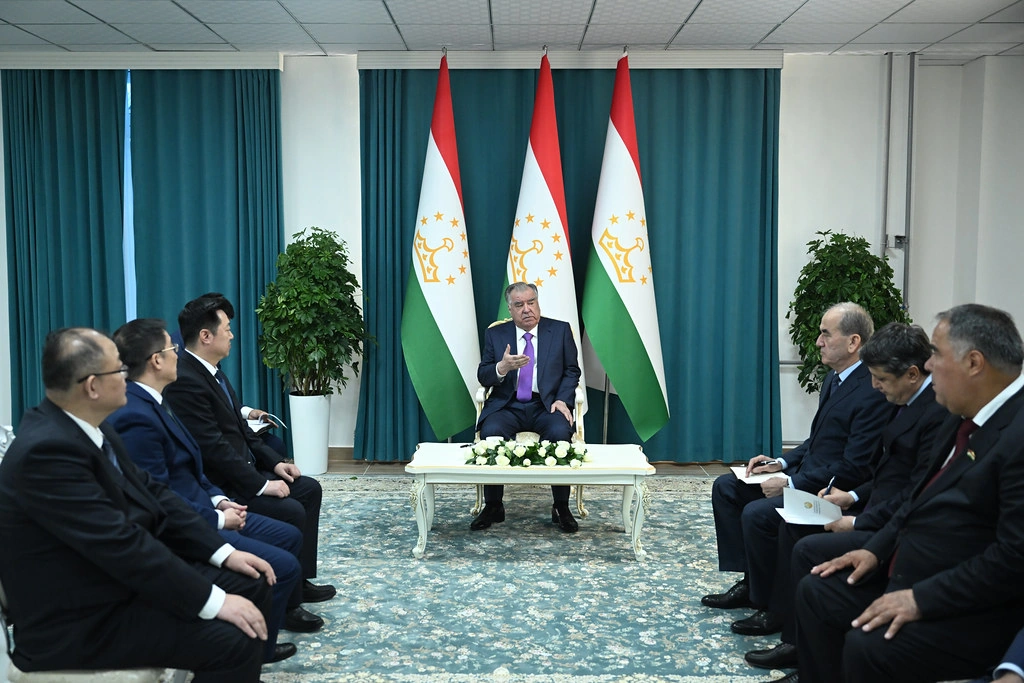
Emomali Rahmon met representatives of three major Chinese
metallurgy companies to discuss industrial cooperation.
This was reported in a statement issued by the press service of
the Tajik President following a meeting held in the Bobojon
Ghafurov district of the country’s Sughd Region.
"Cooperation with leading global companies, including MMC
Capital Engineering & Resource Inc. Corporation, creates
opportunities to develop the production of ferrous metallurgy
products, cement, lime, and glass in Tajikistan using modern
technologies," the press service said.
According to the statement, the talks focused on cooperation in
the development of the ferrous metallurgy industry, as well as the
production of cement, lime, and glass. The sides also discussed the
introduction of modern technologies into industrial production.
The press service noted that the planned cooperation is expected
to support industrial exports, create new jobs, and improve the
competitiveness of Tajikistan's manufacturing sector. Other issues
of mutual interest were also discussed during the meeting.
Meanwhile, China has become Tajikistan's largest investor,
largest trading partner, and the leading source of foreign
financing for industrial development. According to Tajik
authorities, Chinese direct investment reached $294.1 million in
2025, accounting for 57.7 of all foreign direct investment
attracted by the country that year. Bilateral trade also continued
to expand, with Chinese customs data showing turnover of about $4.3
billion in 2025, while trade exceeded $790 million in the first
quarter of 2026, more than 50% higher than a year earlier.
Industrial cooperation has become one of the fastest-growing
areas of the partnership. Chinese companies are involved in mining,
metallurgy, cement production, construction materials, transport
infrastructure, and manufacturing. In May 2026, during President
Emomali Rahmon's visit to China, Tajikistan signed new agreements
with major Chinese industrial groups aimed at introducing modern
technologies, expanding mineral processing, and increasing the
value added of the country's raw materials. Dushanbe has
increasingly prioritized attracting Chinese manufacturers capable
of establishing production facilities inside Tajikistan rather than
focusing solely on resource extraction.
The two countries have also deepened their strategic
partnership. During Rahmon's state visit to China in May 2026, the
sides signed a Treaty on Permanent Good-Neighborliness, Friendship
and Cooperation, while reaffirming plans to expand collaboration in
industry, energy, transport, and logistics under the Belt and Road
Initiative. Chinese investment has played a central role in
financing roads, tunnels, power infrastructure, and industrial
parks, making Beijing Tajikistan's most important long-term
economic partner.