In the first half of 2026, the global aviation sector operated
amid the impact of geopolitical developments, restrictions imposed
in a number of airspaces, and changes across route networks.
Despite these factors, Azerbaijani aviation maintained operational
resilience and achieved positive results in passenger traffic,
international air connectivity and air navigation services.
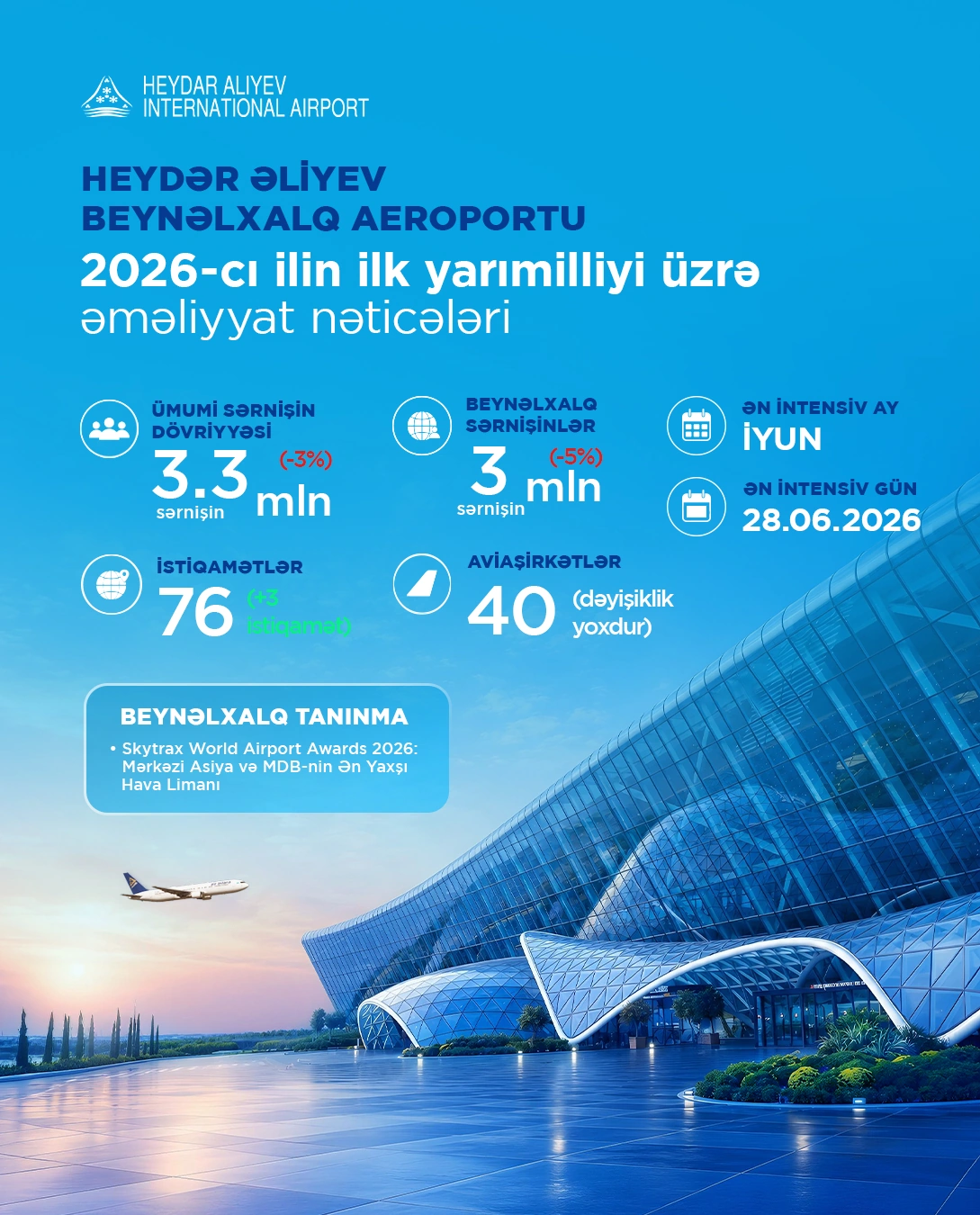
From January to June, Heydar Aliyev International Airport served
3.334 million passengers and handled 26,781 flights. Of these,
nearly 2.960 million passengers travelled on international
routes.
One of the key highlights of the first half of the year was the
increase in the number of transfer passengers. During this period,
more than 275,000 transfer passengers were carried through the
airport, representing an increase of over 40% compared to the same
period last year.
Heydar Aliyev International Airport’s route network also
continued to expand. Currently, a total of 40 airlines operating
under full-service, low-cost and hybrid business models serve the
airport, providing passengers with a wide range of travel options.
The launch of operations by Air Serbia and FlyOne Asia has further
contributed to the expansion of the route network. Regular flights
are currently operated from the airport to 76 destinations.
The most in-demand international destinations were Istanbul,
Moscow, Tbilisi, Ankara and Dubai. In terms of the number of
flights, the leading foreign air carriers included Turkish
Airlines, Israir, AJet, Aeroflot and flydubai.
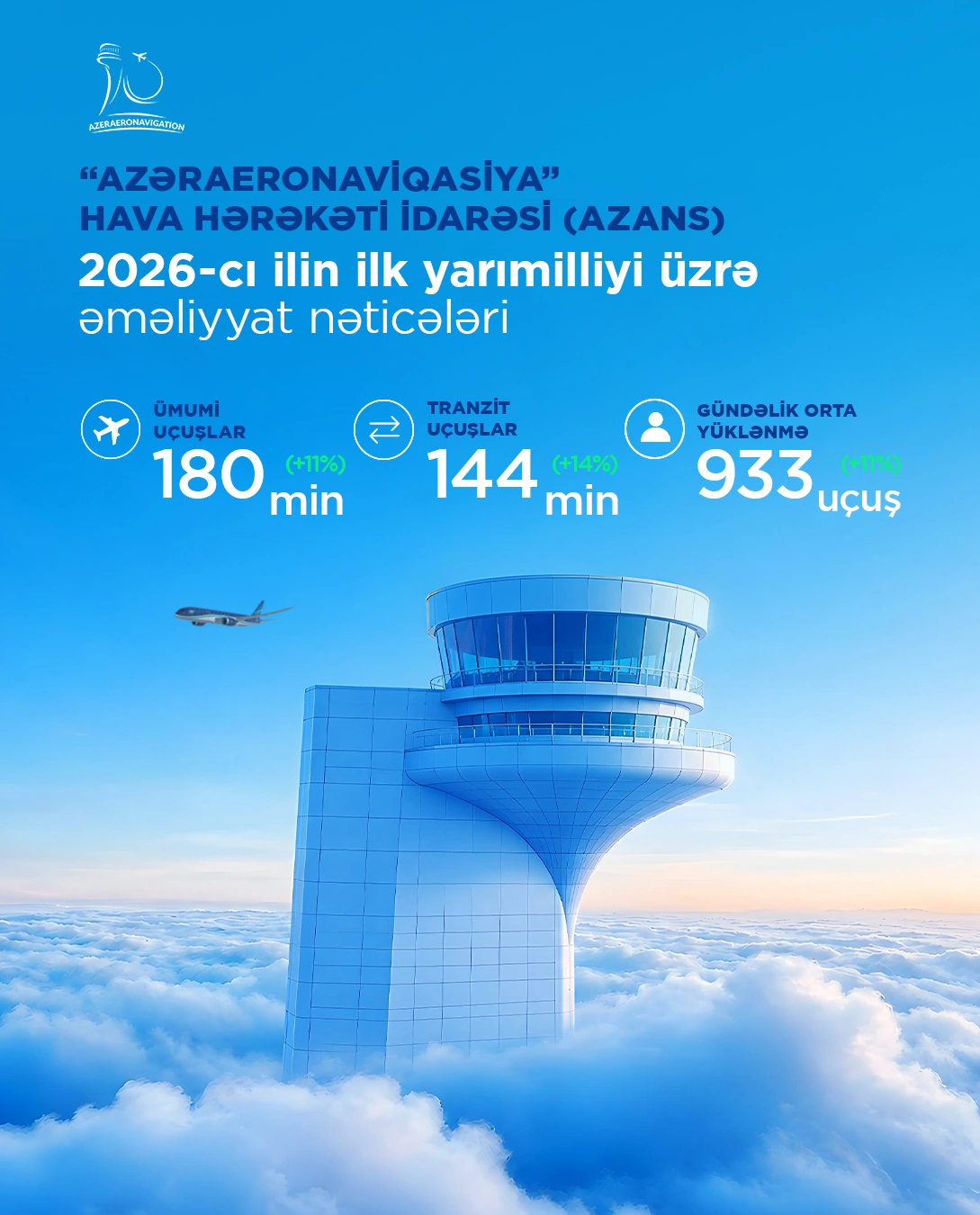
Alongside passenger transportation, flight intensity in
Azerbaijan’s airspace also increased. In the first six months of
the year, Azerbaijan Air Navigation Services, AZANS, provided air
navigation services to more than 180,000 flights in the country’s
airspace, which is 11.1% higher than in the same period last year.
The number of transit flights increased by 14.4%, exceeding
143,000. The highest daily figure for the period was recorded on
May 9, when 1,271 aircraft were served in Azerbaijan’s
airspace.
The predominance of leading global airlines such as Turkish
Airlines, Singapore Airlines, Lufthansa, Cathay Pacific, British
Airways, Thai Airways, Air France, KLM, Korean Air and AeroLogic
among transit flights demonstrates growing international confidence
in Azerbaijan’s airspace and the air navigation services
provided.
The results of the first half of the year show that Azerbaijani
aviation continues to develop while adapting flexibly to changing
global conditions. The increase in transfer passenger traffic, the
expansion of the route network, the entry of new air carriers into
the market and the growing intensity of airspace use further
strengthen the country’s role as a regional aviation and air
navigation hub.