BAKU, Azerbaijan, July 9. The World Bank is
continuing its work on developing the Middle Corridor and is also
preparing to launch two new projects in Azerbaijan - in the fields
of agriculture and irrigation, as well as environmental
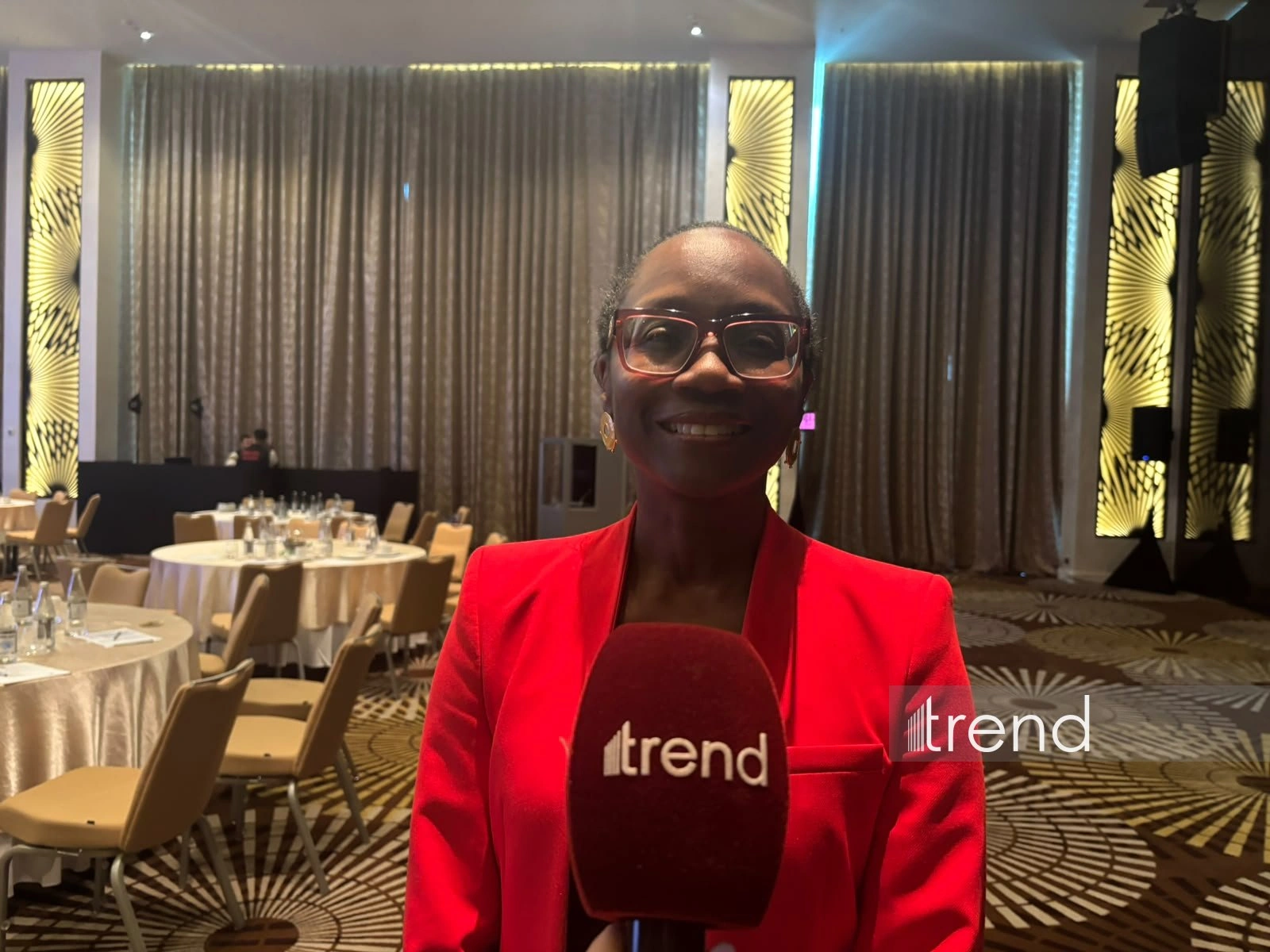
rehabilitation in Baku, World Bank’s Regional Director for the
South Caucasus, Rolande Pryce said in an exclusive interview with
Trend.
She made the remark on the sidelines of the event ''Unlocking
Tourism's Potential to Drive Economic Growth and
Diversification
Pryce noted that the areas of cooperation are determined by the
country’s government’s requests.
“We are currently actively preparing two projects. The first
concerns agriculture and irrigation. We are working with the
Ministry of Agriculture on a program that will help implement the
new state program for the sector’s development. The project is
expected to be submitted to the World Bank’s Board of Directors for
consideration in mid-2027. The World Bank is preparing the Livable
Baku project, which involves cleaning up lakes and reclaiming
contaminated areas associated with past oil production activities.
Project preparation is ongoing. “We expect to complete it and
submit the project to the Board of Directors for consideration in
the first half of 2027, tentatively in March or April,” Pryce
pointed out.
Speaking about the World Bank’s role in the development of the
Middle Corridor, she noted that the Bank’s work in this area began
with analytical studies.
"In October 2023, we prepared our first report on the
development of the Middle Corridor, in which we identified
Azerbaijan, Georgia, and Kazakhstan as the three key hubs along the
route. We identified the main ‘bottlenecks’ that are hindering the
corridor’s development, and since then we have been working with
the governments of these countries to address them. The World Bank
is engaged in an ongoing dialogue with the government of Azerbaijan
regarding the expansion of the Baku International Sea Trade Port.
The Baku port was not identified as a ‘bottleneck’ because it was
effectively managing its existing capacity. However, the government
anticipates significant growth in cargo traffic and is preparing in
advance to increase its throughput capacity. “We are pleased to be
part of this effort,” Pryce emphasized.
According to her, the World Bank is also implementing projects
in other countries along the Middle Corridor, particularly in
Georgia, where investments are being made in the development of
rail and road infrastructure.
“The next stage in the development of the Middle Corridor should
be closer coordination among the participating countries.
One of the main challenges remains border crossings and intermodal
connections, for example, between maritime transport and rail. This
is precisely where delays occur. We hope to facilitate the creation
of a platform that will ensure the seamless movement of cargo along
the entire route,” she said.
In response to a question about the possibility of expanding
funding for tourism projects, the World Bank’s regional director
stated that the Azerbaijani government has not yet submitted a
request to that effect.
“We always work based on requests from the government. At
present, there is no such request for funding for investments in
the tourism sector. Usually, cooperation begins with analytical
work and discussions with the government on possible areas for
reform. Once we jointly determine that World Bank support is
needed, we develop a joint project, which then, as a rule, receives
World Bank financing. The World Bank also strives to ensure that
its projects attract not only the organization’s own funding but
also private-sector investment.
“Tourism is one of the most suitable sectors for this. If the right
tourism ecosystem is created, it will attract funds from private
investors—the hotel industry, tour operators, transportation
companies, and other market participants,” Pryce added.