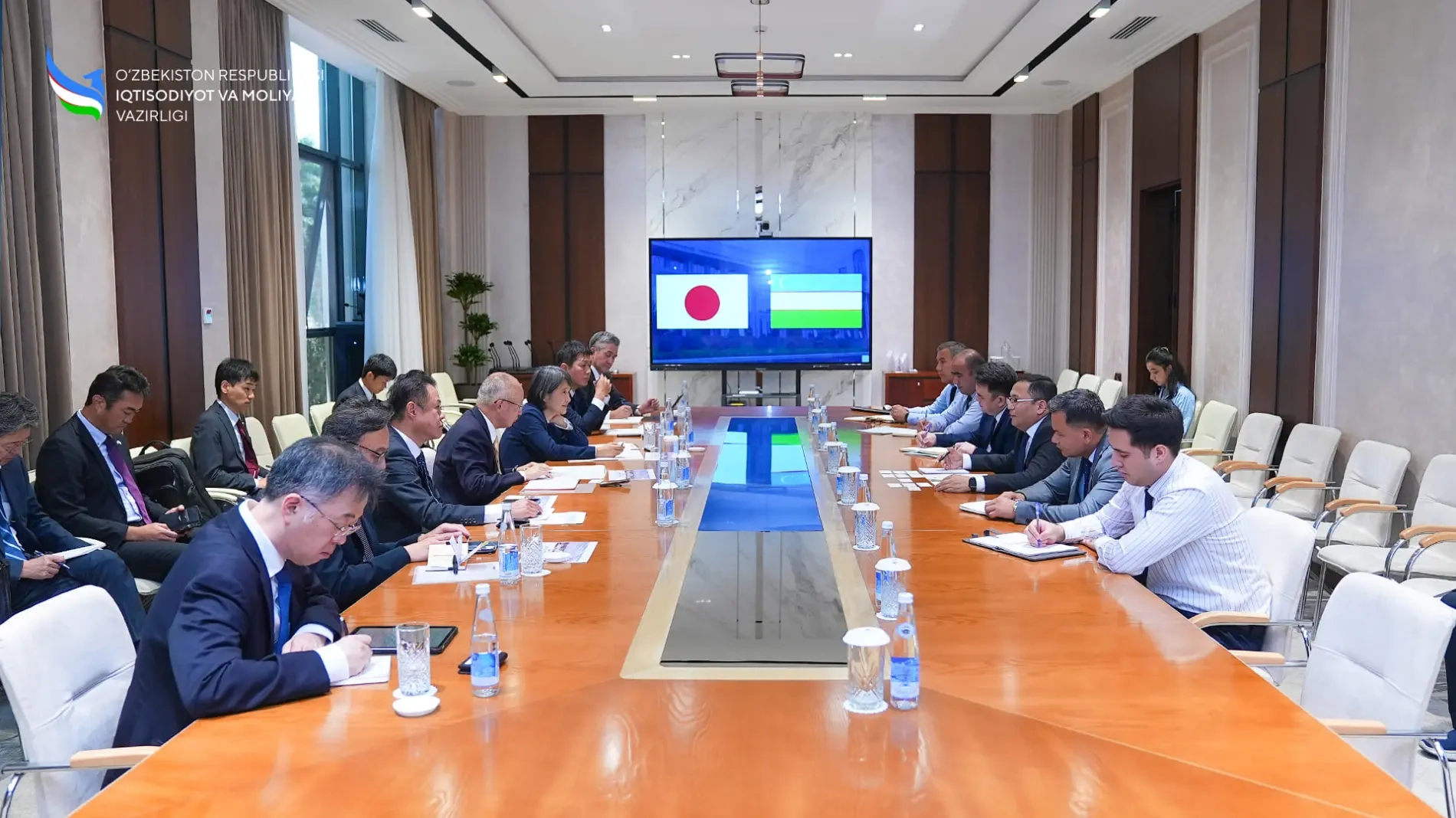
BAKU, Azerbaijan, July 9. Uzbekistan and Japan
have discussed expanding economic cooperation in green
technologies, infrastructure, tourism and digitalization.
This was reflected in the statement by the Uzbek Ministry of
Economy and Finance following the talks between a Japanese
delegation led by Takeshi Hashimoto, Chairman of the Japan-CIS
Business Cooperation Committee, and Jasur Karshibayev, adviser to
Uzbekistan's minister of economy and finance.
According to the information, representatives of Shimizu
Corporation, All Nippon Airways (ANA), Sojitz Corporation, Toyota
Tsusho Corporation, MUFG Bank and Toyo Engineering Corporation also
attended the meeting.
The sides reviewed opportunities to deepen trade and economic
ties, attract investment and expand cooperation in infrastructure
and innovation. Tourism emerged as a key area of discussion, with
the parties considering ways to tap Uzbekistan's tourism potential
and attract additional investment to the sector.
The Japanese delegation said sustainable development should be
based on "three key pillars" — promoting a green economy,
strengthening resilience to global challenges and investing in
human capital.
"Further strengthening the partnership with Uzbekistan is
important," the Japanese side said, expressing interest in advanced
technologies, transport and social infrastructure, digital and
information services and humanitarian cooperation.
Uzbek side outlined reforms focused on human capital
development, the digital transformation of the economy and public
administration, and the adoption of artificial intelligence and
modern digital solutions.
The Uzbek side also pointed to investment opportunities in
tourism and emphasized the need to strengthen energy security
through modern energy-efficient technologies.
The Japanese delegation said it was "ready to further enhance
cooperation" in green technologies, renewable energy and projects
designed to reduce greenhouse gas emissions.
The talks also covered Uzbekistan's participation in
international climate finance mechanisms, including the Joint
Crediting Mechanism, or JCM, established between Uzbekistan and
Japan. The mechanism could support joint projects aimed at cutting
emissions and advancing environmentally sustainable
development.
Infrastructure financing was another focus of the meeting. The
sides discussed increasing the participation of Japanese companies
in transport and social infrastructure projects, as well as
potential financing mechanisms involving Japanese export credit
agencies and financial institutions.
Cooperation on workforce development was also addressed,
including opportunities to expand employment in Japan for young
Uzbek professionals.
The Japanese side praised the potential of Uzbekistan's youth
and expressed interest in closer cooperation in education,
vocational training and professional exchange programs.
The parties reaffirmed their commitment to advancing joint
initiatives in tourism, investment, infrastructure, green energy,
digitalization and human capital development.