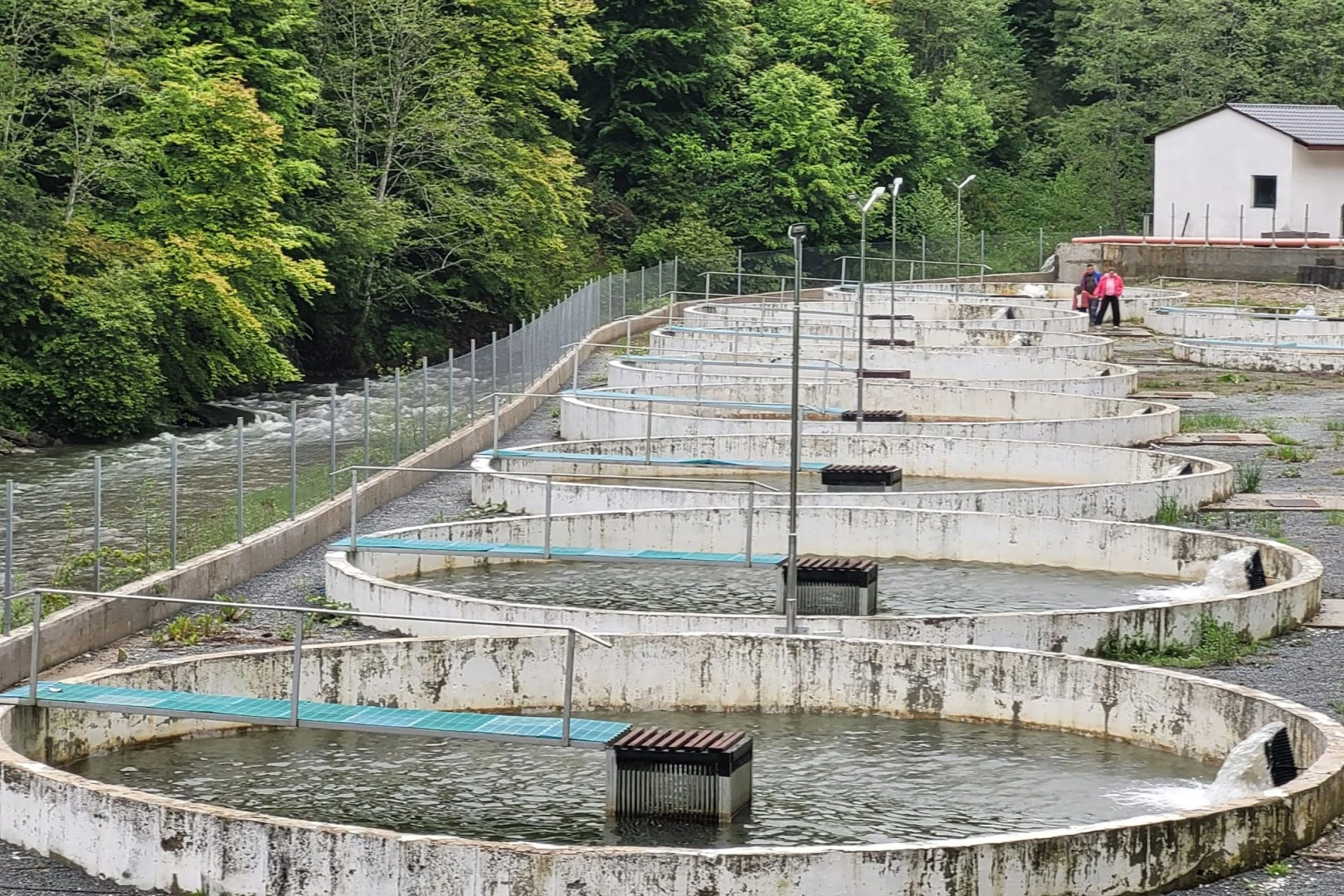
BAKU, Azerbaijan, July 8. Tajikistan has
commissioned a new trout farm with an annual capacity to raise
5,000 fish in its Sughd region.
This was reflected in a press release published by the press
office of the Tajik president following his working visit to the
country’s Shahristan district.
"Emomali Rahmon inaugurated the fish farming facility of
Tekhnologiyai Sokhtmon LLC," the presidential press service
said.
According to the press release, the facility is located in the
village of Chilhudza and is designed to breed up to 5,000
trout.
The press release also outlined, that the project has created
more than 10 jobs for local residents.
Meanwhile, agriculture remains a cornerstone of Tajikistan's
economy, accounting for about 23% of GDP, 25% of exports and more
than 60% of total employment in 2024. Potato is one of the
country's key food crops, with production exceeding 1.26 million
tons last year, up 10.4% year-on-year.
Expanding irrigation infrastructure has become a government
priority as most of Tajikistan's crop production depends on
irrigated land. More than 90% of agricultural output comes from
irrigated farmland, but aging canals, pumping stations and drainage
systems continue to constrain productivity and increase water
losses. The government, supported by international partners
including the World Bank and the European Union, is implementing
large-scale reforms to modernize irrigation networks and improve
water management. In 2023, the World Bank and the EU launched the
$47.7 million Strengthening Water and Irrigation Management (SWIM)
project, which supports the preparation of Tajikistan's national
irrigation strategy and the rehabilitation of irrigation
infrastructure.
According to the UN Food and Agriculture Organization,
Tajikistan has about 1.6 million hectares of potentially irrigable
land, although only around half of that area is currently irrigated
due to geographical and infrastructure constraints. Expanding
irrigation is viewed by the government as a key tool for increasing
agricultural output, strengthening food security and raising
exports of fruit, vegetables and other high-value crops.