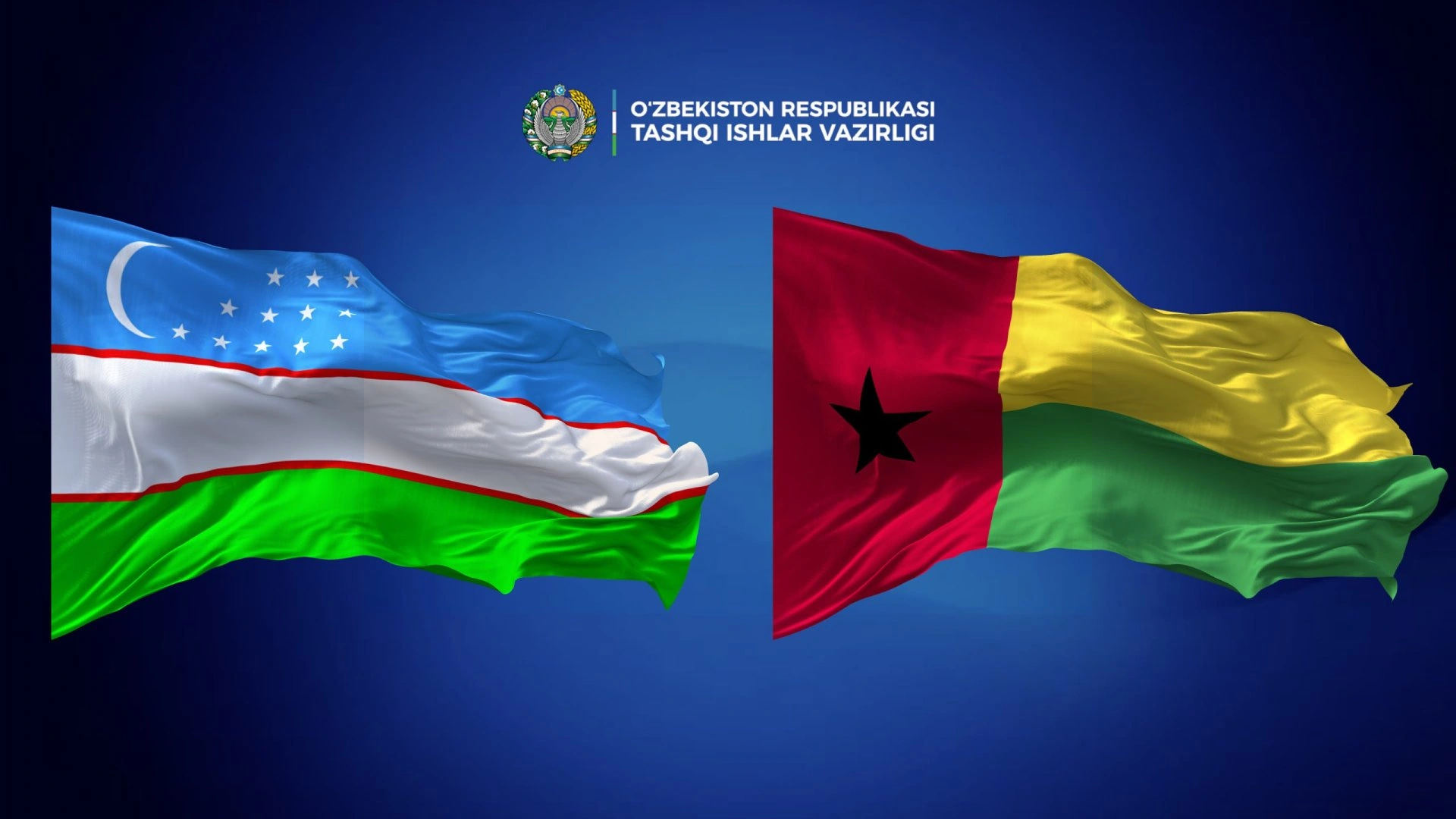
BAKU, Azerbaijan, July 8. Uzbekistan and
Guinea-Bissau have discussed prospects for strengthening bilateral
relations and expanding cooperation during a phone call.
This was reflected in the statement published by the Uzbek
Foreign Minister Bakhtiyor Saidov on his official telegram channel
following the phone conversation with Guinea-Bissau's Minister of
Foreign Affairs, International Cooperation and Communities,
Fatumata Jau.
The ministers reviewed ways to advance political dialogue
between the two countries, including the establishment of a
mechanism for regular political consultations between their foreign
ministries and the expansion of the bilateral legal framework.
"We discussed the prospects for advancing bilateral relations
between Uzbekistan and Guinea-Bissau. Particular attention was
given to establishing political dialogue, creating a mechanism for
regular political consultations between our foreign ministries, and
expanding the bilateral legal framework," Saidov said in a post on
social media.
The two sides also exchanged views on strengthening cooperation
within the United Nations and the Non-Aligned Movement.
"We agreed to maintain close dialogue to further deepen the
friendly relations between our countries and expand mutually
beneficial cooperation," Saidov added.
United Nations (UN) was founded in 1945 after World War II to
promote international peace, security, and cooperation. It has 193
member states and works through bodies like the General Assembly,
Security Council, and various agencies (WHO, UNICEF, UNESCO, etc.).
Its headquarters is in New York City.
Non-Aligned Movement (NAM) was formed in 1961 during the Cold
War, largely by countries that didn't want to formally align with
either the US-led Western bloc or the Soviet-led Eastern bloc. Key
founding figures included Jawaharlal Nehru (India), Josip Broz Tito
(Yugoslavia), Gamal Abdel Nasser (Egypt), Sukarno (Indonesia), and
Kwame Nkrumah (Ghana). It emerged partly from the 1955 Bandung
Conference and emphasized sovereignty, anti-colonialism, and
independent foreign policy for developing nations. Today it has
well over 100 member states, though its relevance and cohesion have
often been debated since the Cold War ended.