BAKU, Azerbaijan, July 6. Uzbekistan's Fergana
region and South Korea's Korea Institute of Climate Change (KICC)
discussed plans to build a combined heat and power plant fueled by
agricultural waste in the Furkat district.
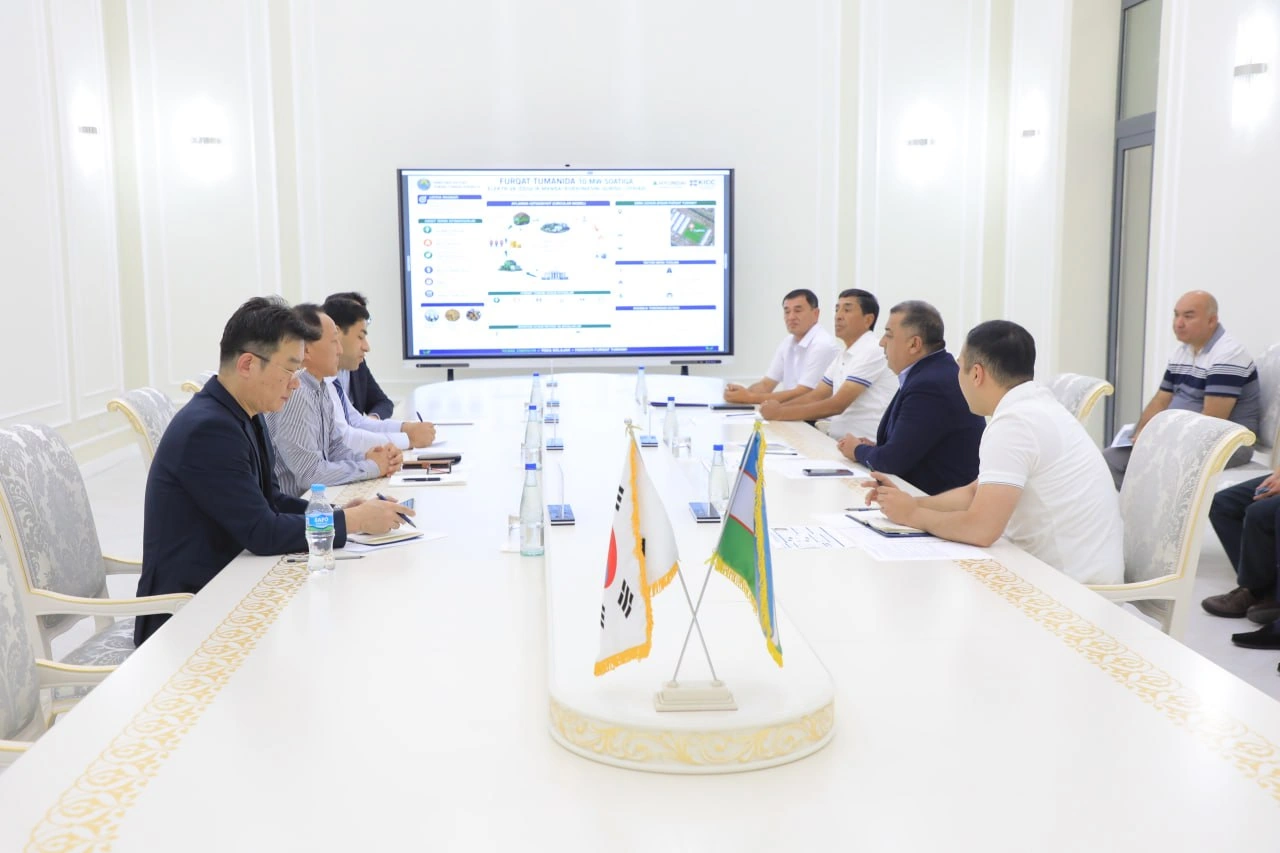
This was reflected in the statement published by the Fergana
Regional Administration following a meeting between First Deputy
Governor of the Fergana region Mirzohid Ubaydullayev and a South
Korean delegation led by KICC President Yong Won Shin.
According to the regional administration, the planned facility
will convert agricultural waste into electricity and heat, helping
provide the district with a stable energy supply while promoting
the efficient use of biomass resources.
"The planned project will utilize agricultural waste to generate
electricity and heat, ensuring a stable energy supply while
promoting the efficient use of biomass resources," the regional
administration said.
The project is also expected to contribute to environmental
sustainability by reducing agricultural waste, strengthening
environmental protection efforts, creating new jobs and supporting
local economic development.
The sides also discussed establishing cooperation with higher
education institutions in the Fergana region, including initiatives
to train highly qualified specialists for Uzbekistan's healthcare
sector.
In addition, the participants exchanged views on implementing
KICC's advanced technologies in the region and advancing a number
of proposed investment projects.
The meeting concluded with both sides agreeing to continue
practical cooperation on mutually beneficial initiatives.