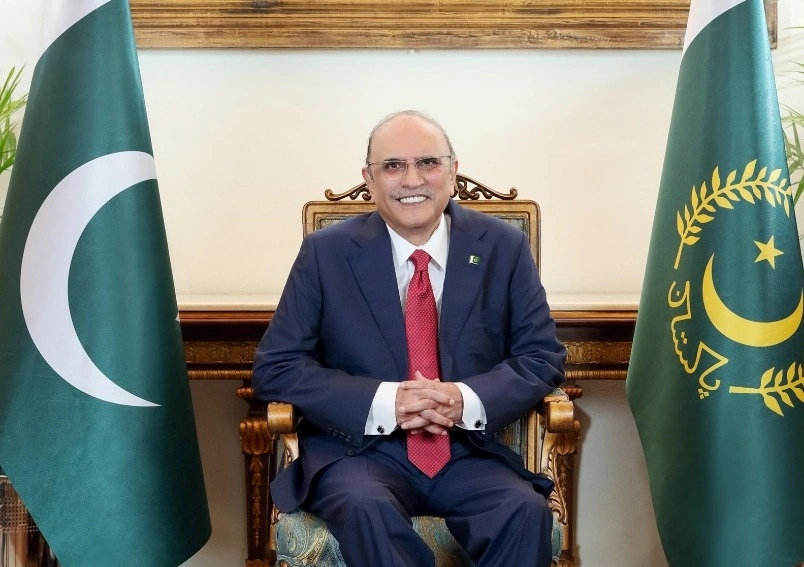
BAKU, Azerbaijan, July 6. Pakistani President
Asif Ali Zardari to pay an official visit to Kyrgyzstan on July
6-9.
This was announced in a press release published by the Kyrgyz
presidential administration on June 6.
"During the visit, high-level talks in an expanded format will
be held in Cholpon-Ata to discuss key issues of bilateral
cooperation, as well as interaction within the UN, SCO, OIC and
ECO," the press release said.
According to the presidential administration, the visit will
take place at the invitation of Kyrgyz President Sadyr Japarov.
The administration noted that the visit is expected to
contribute to the further development of bilateral partnership and
friendly relations between Kyrgyzstan and Pakistan.
Meanwhile, Kyrgyzstan and Pakistan have maintained diplomatic
relations since 1992 and have gradually expanded cooperation
through bilateral mechanisms and regional organizations, including
the United Nations, Shanghai Cooperation Organisation (SCO),
Organization of Islamic Cooperation (OIC) and the Economic
Cooperation Organization (ECO). In recent years, both countries
have placed increasing emphasis on transport connectivity, trade
and investment, viewing closer links between Central and South Asia
as a shared strategic priority.
Connectivity has become one of the main drivers of bilateral
ties. During Kyrgyz President Sadyr Japarov's visit to Pakistan in
late 2025, the two sides signed a broad package of agreements
covering trade, agriculture, energy, education, customs cooperation
and the use of Pakistani ports, while reaffirming their intention
to expand economic cooperation.
Economic cooperation remains below its potential but continues
to gain momentum. In 2025, the two countries agreed to work toward
increasing bilateral trade to $100 million, alongside reviving the
Joint Business Council, organizing business forums and
strengthening private-sector cooperation. Officials from both sides
have also identified transport, logistics, agriculture, energy and
education among the priority areas for future partnership.