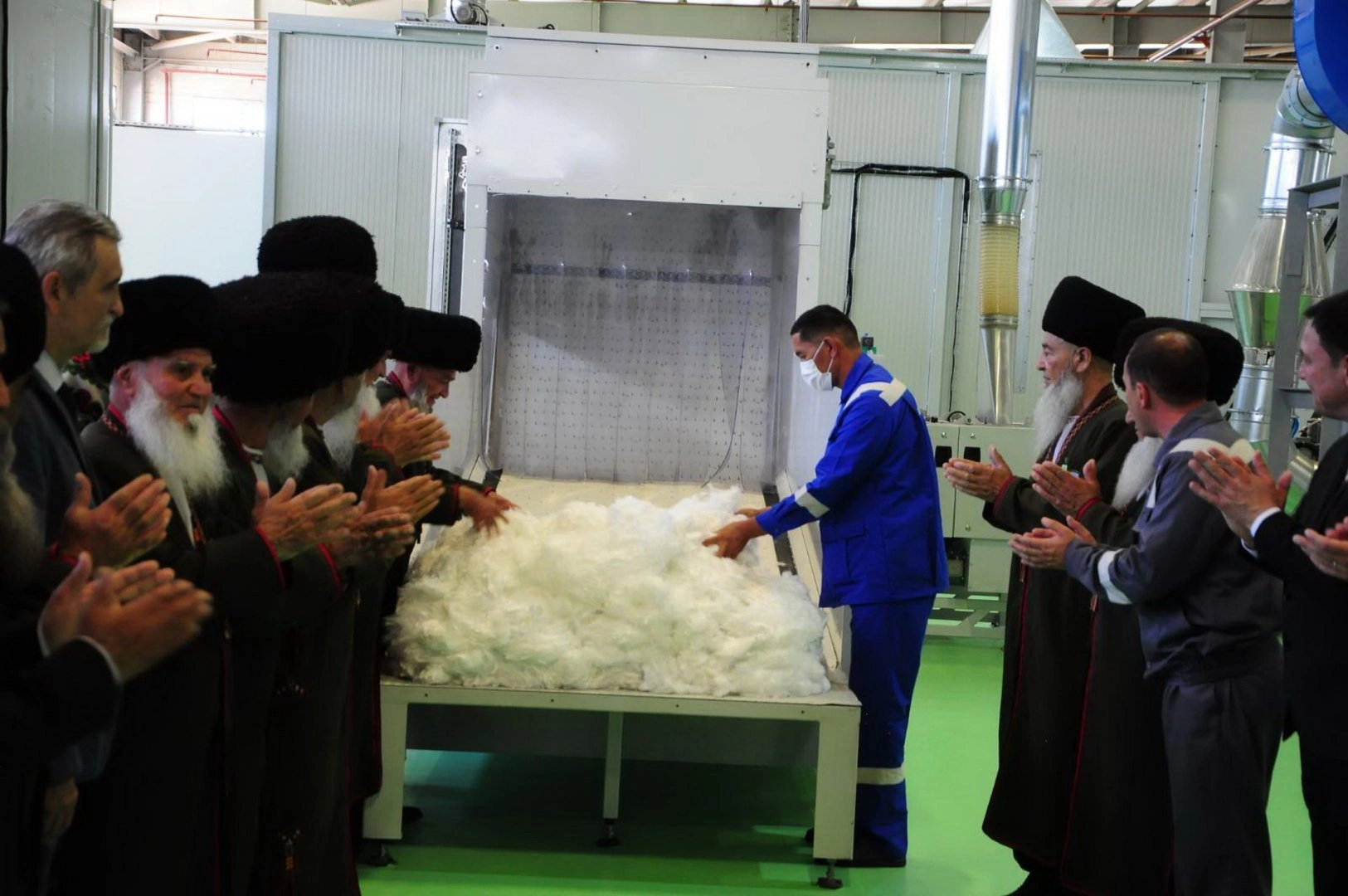
BAKU, Azerbaijan, July 6. Turkmenistan has
commissioned a new facility for processing textile and agricultural
waste at the Dashoguz cotton spinning mill.
This was reflected in a press release published by the press
resvice of the Turkmen government.
"The enterprise is designed to process cotton waste, wool, reeds
and cotton stalks into materials used in furniture manufacturing
and construction," the press release said.
According to the government, the facility has an annual
production capacity of 7,200 tons and is expected to manufacture
materials for the domestic furniture and construction
industries.
The plant is equipped with modern production equipment and
applies waste-processing technologies aimed at utilizing
by-products from the textile and agricultural sectors, the press
release said.
According to the government, the project has created 60 new
jobs.
The government added that Turkmenistan's textile industry
currently comprises 59 enterprises, employing around 24,000 people,
as the country continues expanding domestic processing capacity for
textile raw materials.
Meanwhile, the textile industry is one of the key non-oil
manufacturing sectors of Turkmenistan and is overseen by the
Ministry of Textile Industry. The sector is based on domestically
produced cotton and includes a vertically integrated production
chain covering ginning, spinning, weaving, dyeing and garment
manufacturing.
State enterprises operate across all five regions of the
country, including major cotton-spinning and textile complexes in
Dashoguz, Mary, Lebap, Balkan and Ahal velayats. Among them are
facilities such as the Halach Cotton Spinning Factory, Dashoguz
“Serdar” enterprise, Bayramaly Textile Complex named after
Saparmurat Turkmenbashy, and the Balkan Cotton Spinning Factory
“Balkandokma”, all producing cotton yarn and fabrics for domestic
use and export.
A significant share of output consists of cotton yarn, with
production counts typically ranging from Nm 14/1 to Nm 34/1, which
is supplied both to domestic weaving and garment enterprises and
exported through the State Commodity and Raw Materials Exchange of
Turkmenistan (SCRMET) to markets including Türkiye, Russia, and
Central Asia.