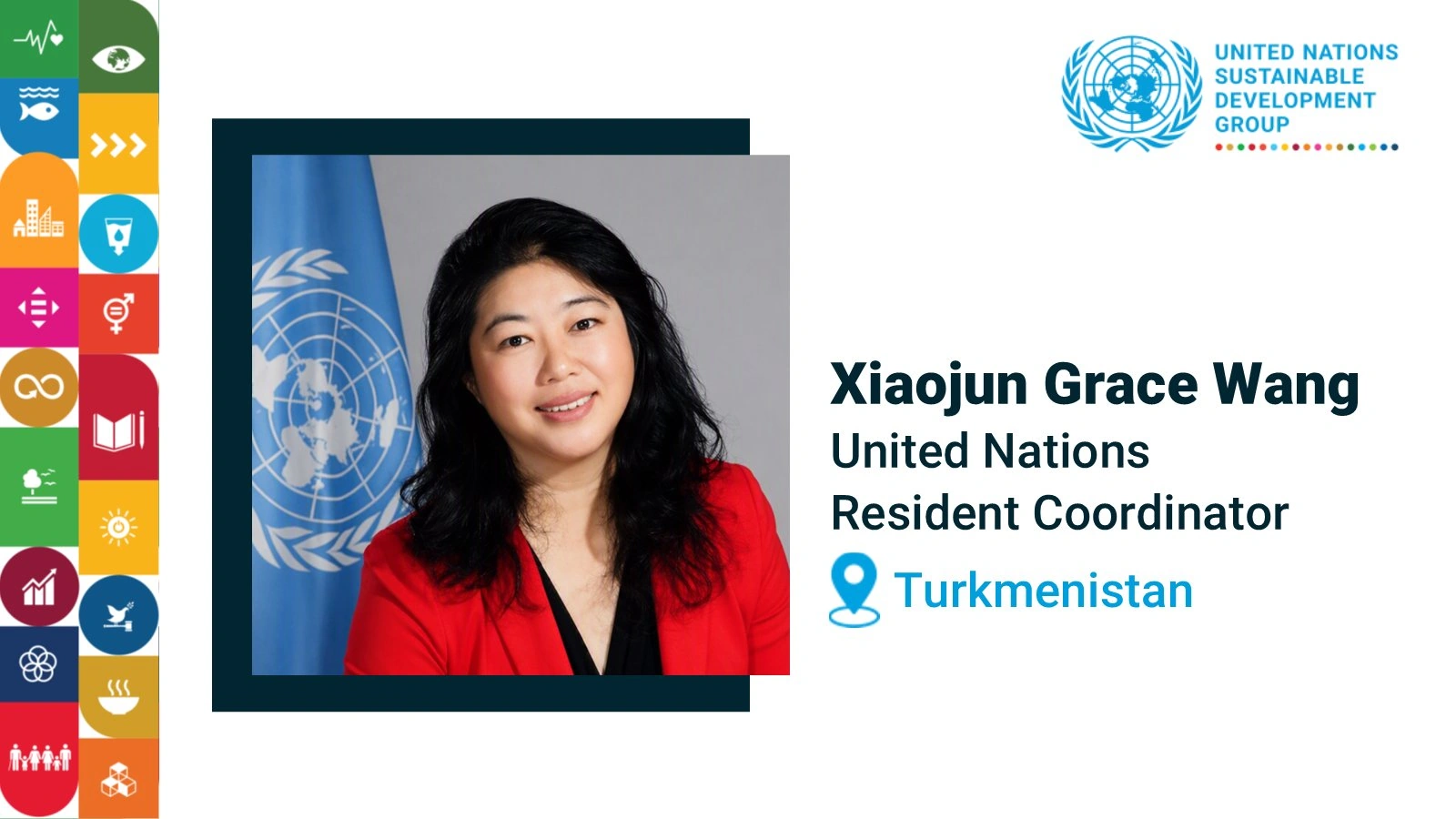
BAKU, Azerbaijan, July 3. UN Secretary-General
António Guterres has appointed Xiaojun Grace Wang as the United
Nations Resident Coordinator in Turkmenistan.
This was reflected in a press release published by the
Government of Turkmenistan on July 2.
"Xiaojun Grace Wang assumed her new duties on 1 July," the press
release said.
According to the government, Wang succeeds Dmitry Shlapachenko,
who had served as the UN Resident Coordinator in Turkmenistan since
2021.
The press release noted that Wang brings 28 years of experience
in international development, having held senior positions focused
on sustainable development, multilateral partnerships, and resource
mobilization for global initiatives.
Moreover, the information says that, before her appointment to
Turkmenistan, Wang headed a trust fund at the United Nations Office
for South-South Cooperation, where she oversaw activities
supporting sustainable development.
The government added that Wang has also worked in research
institutions, foundations, and media organizations across Asia and
Europe, expressing confidence that her experience will contribute
to strengthening cooperation between the UN and Turkmenistan in
advancing the sustainable development agenda.
Meanwhile, the United Nations in Turkmenistan serves as a
development partner, endorsing national priorities aligned with the
Sustainable Development Goals through the UN Sustainable
Development Cooperation Framework (2021-2025/2026-2030). The
Country Team, led by the UN Resident Coordinator, collaborates with
the government on health, education, economic, and social reforms.
Key focuses include people-centered governance, inclusive economic
growth, and quality services. Major UN agencies involved are UNDP,
WHO, UNICEF, and UNODC.
Additionally, the UN Regional Centre for Preventive Diplomacy
for Central Asia addresses regional security. Key projects
encompass legal aid strengthening, violence protection for women
and children, trade improvement, water resource management, and
pandemic preparedness, supported by significant government
financial contributions.