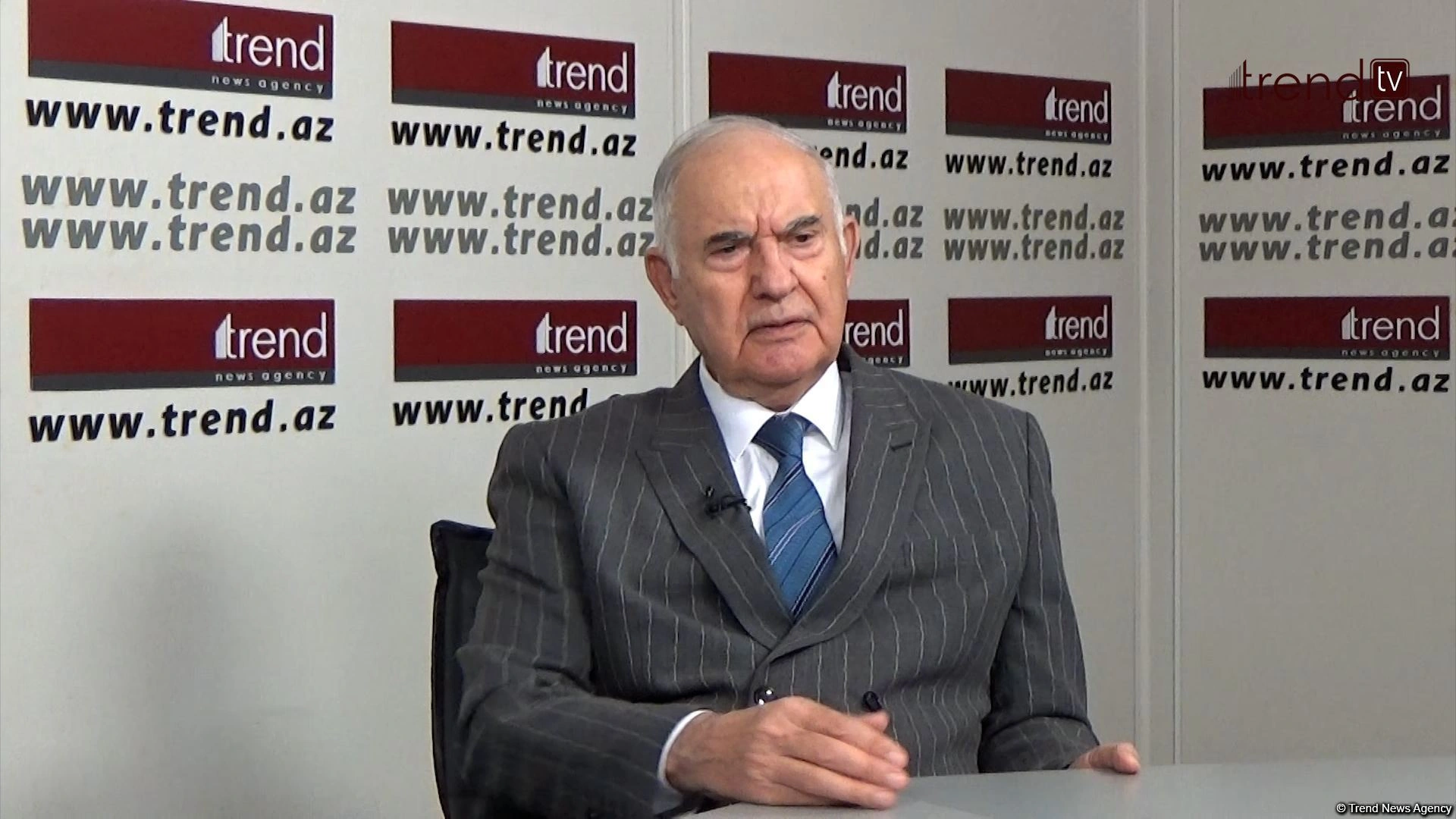
BAKU, Azerbaijan, July 2. Baku and Brussels
expand cooperation agenda, political analyst Azer Garayev told
Trend.
"The visit of European Commission President Ursula von der Leyen
to Baku on July 1 can be seen as the beginning of a new phase in
Azerbaijan-European Union relations. Baku and Brussels once again
demonstrated their intention to enrich the strategic partnership
with new content by expanding the agenda of cooperation," he
explained.
According to him, although energy cooperation between the
parties has remained the main direction in recent years, today the
relationship is already turning into a multifaceted strategic
partnership model, encompassing transport, regional connections,
"green energy", digital transformation, trade, and the peace agenda
in the South Caucasus.
"The meetings held and statements made during the visit showed
that the dialogue between Baku and Brussels is aimed not only at
continuing existing projects, but also at forming cooperation
mechanisms in line with new geopolitical realities. As President
Ilham Aliyev emphasized, the successive visits of high-level
representatives of the European Union to Azerbaijan in recent
months show that the dynamics observed in relations are not
accidental. In this context, the visit of the President of the
European Commission to Baku demonstrated that political dialogue is
being continued at the highest level. The parties did not limit
themselves to assessing existing cooperation, but also determined
strategic directions for the coming decades," he noted.
Garayev noted that the importance of Azerbaijan for the European
Union is primarily related to energy security.
"The Strategic Partnership Memorandum signed in 2022 became an
important turning point in terms of diversifying Europe's energy
sources. The increase in the share of Azerbaijani gas in the
European market over the past four years has revealed the practical
result of this cooperation. Currently, Azerbaijani gas is exported
to ten member states of the European Union, and there is potential
for further expansion of this geography. President Ilham Aliyev has
drawn special attention to this issue in his speech.
"Energy security for every country is today a very important
factor of national security, and Azerbaijan has invested a lot of
its political efforts, diplomatic activity, and also financial
investments in building infrastructure for the transportation of
our oil and gas," the head of state said. This statement shows that
Azerbaijan's energy policy is not only economic, but also
geopolitical in nature. Baku has strengthened its status as a
reliable partner in Europe's energy security through the large
infrastructure projects it has implemented over the years, in
particular the Southern Gas Corridor. Against the backdrop of new
challenges emerging in the European energy market, the importance
of this cooperation is increasing," Garayev noted.
The analyst pointed out that one of the striking aspects of the
visit is that the energy agenda is no longer limited to natural
gas.
"Azerbaijan is rapidly expanding the production of green energy.
As President Ilham Aliyev announced, the contracts already signed
will allow the country to produce 8 gigawatts of solar and wind
energy in the next five to six years. This shows that Azerbaijan
can play an important role in the European market in the future not
only as a gas exporter, but also as a renewable energy exporter.
Cooperation in the field of transport and logistics is also
entering a new stage. Azerbaijan has been one of the main
participants in the East-West and North-South international
transport corridors for many years. The growing importance of the
Central Corridor in the new geopolitical context has also drawn the
attention of the European Union to the South Caucasus. The Baku
port, railway infrastructure, and regional logistics capabilities
play an important role in the development of alternative trade
routes between Europe and Central Asia.
It's in this context that the new initiatives announced by
Ursula von der Leyen during her visit are noteworthy. The European
Union has announced that it will allocate up to 200 million euro in
grants for transport, energy, and digital connectivity projects in
the South Caucasus under the Global Gateway program, which has the
potential to attract up to 2 billion euro in additional public and
private investment. The President of the European Commission
expressed this in his speech: "We want to strengthen peace through
connectivity."
This approach shows that Brussels associates ensuring stability
in the region not only with political negotiations, but also with
increasing economic integration and interdependence. The
development of transport, energy, and digital infrastructure can
both expand economic opportunities and create additional grounds
for long-term peace," Garayev said.
According to him, another important topic discussed during the
visit was the normalization of Azerbaijani-Armenian relations.
"President Ilham Aliyev said that we have taken many unilateral
steps to demonstrate that peace is not only on paper, but also in
everyday life. The removal of transit restrictions towards Armenia,
the start of fuel supplies, and the formation of economic ties
serve to create a new model of cooperation in the region. President
Ilham Aliyev expressed this point as follows: "So now peace is a
reality, but we must work hard in order to strengthen it, to make
it long-lasting, to make it eternal."
This idea reflects the essence of Azerbaijan's approach to the
peace agenda. For official Baku, peace is not just a political
document, but a process of economic cooperation, regional
integration, and the formation of mutual trust. The fact that the
European Union also declared its readiness to provide support in
this direction demonstrates that the views of the parties coincide
on many issues," the analyst said.
Garayev noted that trade relations also remain one of the
important pillars of cooperation.
"The European Union is Azerbaijan's main trade partner, and
Azerbaijan is considered the EU's largest economic partner in the
South Caucasus. The prospect of resuming negotiations on a new
comprehensive agreement indicates that economic relations will
further expand. This is of great importance in terms of increasing
investments, expanding access to markets, and developing the
business environment.
"In general, Ursula von der Leyen's visit to Baku showed that
relations between Azerbaijan and the European Union are no longer
limited to energy cooperation. The parties are further
strengthening the foundations of a long-term strategic partnership
in the areas of regional transport routes, green energy, digital
connections, economic integration, and ensuring sustainable peace
in the South Caucasus. In the current geopolitical conditions,
Azerbaijan's role as both an energy supplier and an important
logistics hub connecting Europe and Asia increasingly grows. The
messages voiced in Baku on July 1 showed that the agenda of this
partnership will be broader and more comprehensive in the coming
years," the analyst added.