BAKU, Azerbaijan, July 2. Azerbaijan-EU
relations have entered a new stage of strategic partnership.
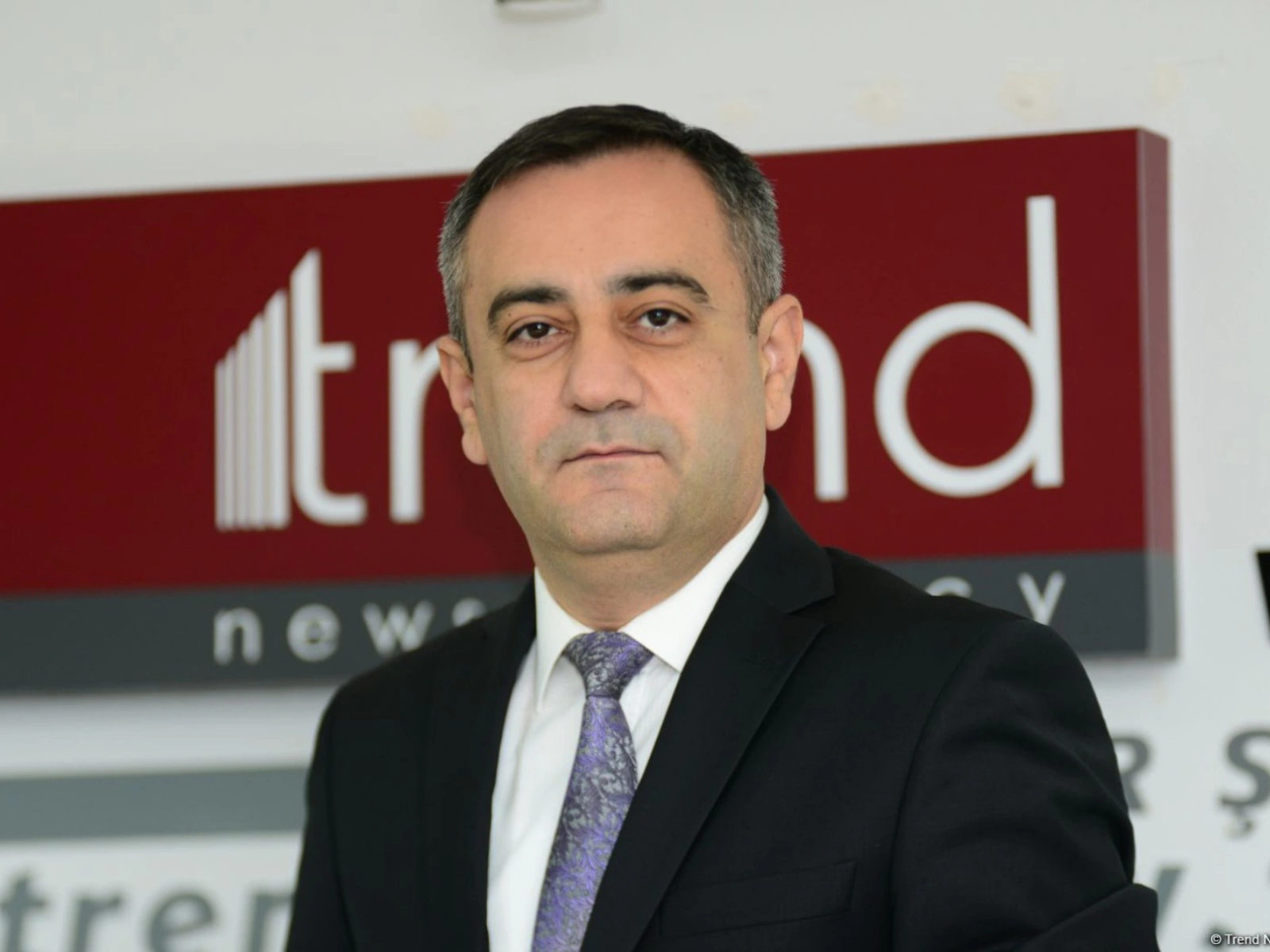
This was announced by Trend News Agency's Deputy Director,
political analyst Sahil Karimli.
"The successive visits of the top leadership of the European
Union to Azerbaijan in a short period of time are not only a
diplomatic protocol event, but also an indicator of the new
geopolitical reality taking shape in Brussels' South Caucasus
policy. The arrival of the President of the European Commission,
Ursula von der Leyen, in Baku after the visit of the President of
the European Council, Antonio Costa, demonstrates that
Azerbaijan-EU relations have entered a qualitatively new stage. The
main feature of this stage is that relations are now assessed at
the level of strategic partnership," he said.
According to him, it's not a coincidence that Ursula von der
Leyen openly calls Azerbaijan a strategic partner, and evaluates
the country as a leading actor in the region and the main initiator
of the peace agenda.
"This is an expression of the international acceptance of the
consistent foreign policy implemented by Azerbaijan in recent
years, the role it plays in ensuring regional security, and the
pragmatic diplomatic course formulated by President Ilham Aliyev.
The European Union now evaluates Azerbaijan not only as an energy
supplier, but also as a reliable partner that ensures stability in
a complex geopolitical space, combines its favorable geographical
position with modern infrastructure capabilities, and strengthens
regional ties," he noted.
Karimli pointed out that energy cooperation more clearly
demonstrates the strategic essence of these relations.
"When Europe faced a serious test in terms of energy security in
2022, it turned to Azerbaijan, and Baku has since demonstrated its
commitment to its partnership commitments with practical steps,
increasing gas exports to the European Union by 65%. At the same
time, the fact that Azerbaijan accounts for about 70% of the total
trade turnover of the European Union with the countries of the
South Caucasus once again confirms the economic weight of our
country and its status as the main economic center of the region,"
he emphasized.
According to the analyst, the partnership agenda now goes beyond
the traditional energy framework.
"Cooperation in the field of green energy, new corridors aimed
at bringing the renewable energy potential of the Caspian Basin and
Central Asia to the European market, as well as the initiative of
the partnership platform on energy connectivity put forward by
Ursula von der Leyen, are shaping the model of economic and
geopolitical cooperation of the future. This approach shows that
Azerbaijan's long-term strategic vision coincides with the
priorities of the European Union," he said.
Karimli noted that another noteworthy point is the observed
change in Brussels' approach to the Azerbaijan-Armenia
normalization process.
"The 20 million euro aid package for the border areas and
initiatives aimed at promoting the economic dividends of peace
between the two communities show that the European Union
understands that sustainable stability in the region is possible
precisely on the basis of the peace agenda put forward by
Azerbaijan," he explained.
The analyst highlighted that Azerbaijan's simultaneous
establishment of a strategic partnership with the U.S., a
comprehensive partnership with China, and strategic relations with
the European Union demonstrates the success of the country's
balanced and national interests-based foreign policy course.
"Today, Azerbaijan is not an object of geopolitical competition
in the system of international relations, but acts as an important
strategic partner capable of uniting various power centers on the
basis of mutual interests. Precisely this reality is the main
political factor that brings Azerbaijan-EU relations to a new stage
of development," Karimli concluded.