BAKU, Azerbaijan, July 2. Kazakhstan and the
Islamic Development Bank (IsDB) have discussed expanding
cooperation on infrastructure projects and a new long-term
partnership strategy.
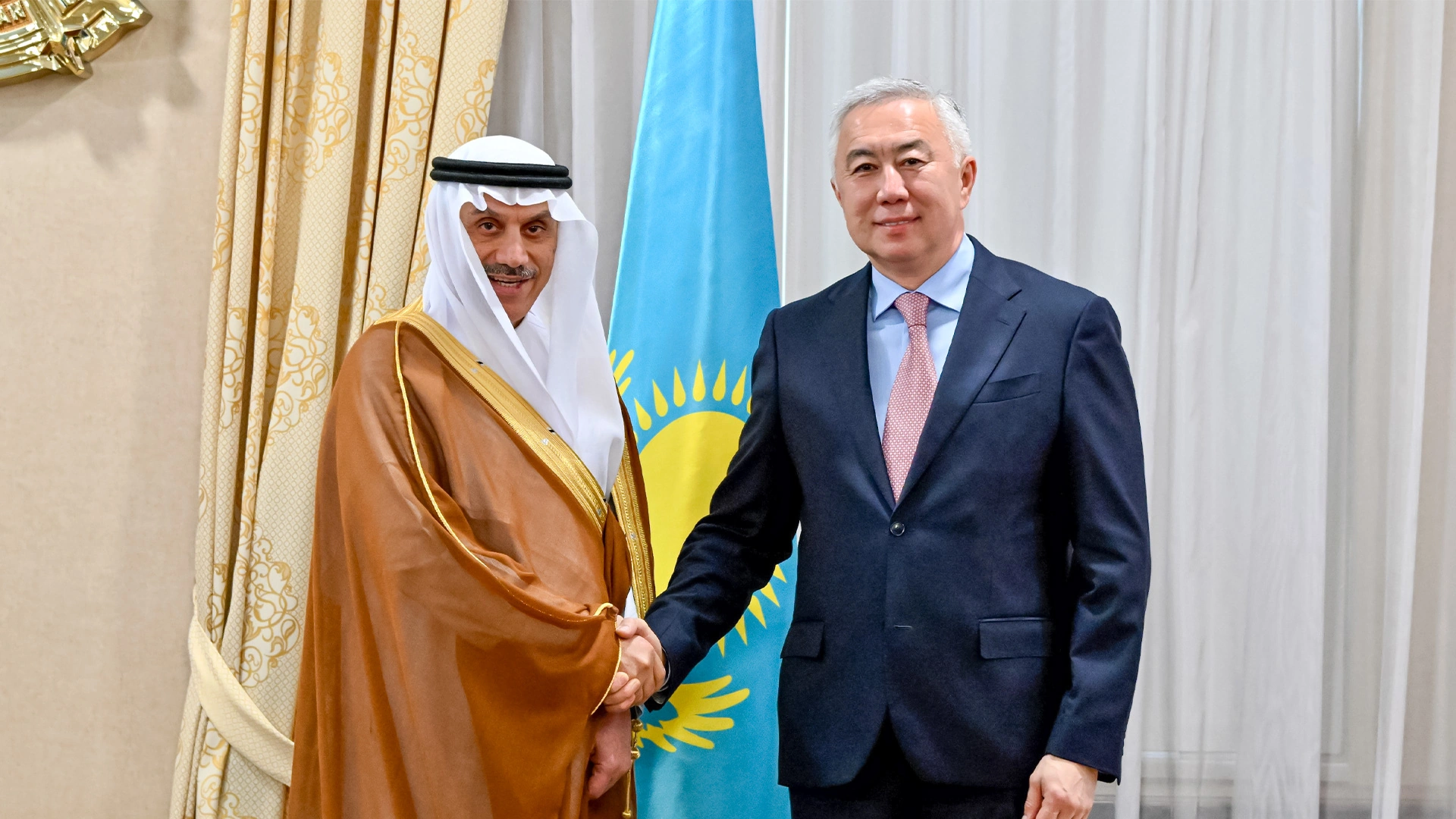
This was announced by Kazakhstan's Ministry of National Economy
in a press release following a meeting between Deputy Prime
Minister and Minister of National Economy Serik Zhumangarin and
IsDB President Muhammad Al Jasser.
"At present, Kazakhstan and the Islamic Development Bank are
jointly developing a new Partnership Strategy for 2027-2032, which
will define the priority areas of future cooperation," the ministry
said.
According to Zhumangarin, financial cooperation between
Kazakhstan and the IsDB has reached a new level over the past three
years. He noted that a $1.1 billion program to build and modernize
water infrastructure began in 2024, while implementation of a $1.3
billion framework agreement for the development of special economic
and industrial zones started earlier this year.
The sides also discussed potential financing for the
Kyzylorda-Saksaulsk road and the Kyzylorda bypass project, the
report says.
During the meeting, Zhumangarin proposed opening an additional
IsDB office in Astana to support the further expansion of bilateral
cooperation, including in Islamic finance.
The deputy prime minister also expressed Kazakhstan's interest
in further cooperation on infrastructure, food security, water
resource management, and green technologies.
Following the meeting, the parties exchanged signed copies of a
forward lease agreement for infrastructure development in
Kazakhstan's special economic and industrial zones, the report
says.
Meanwhile, Kazakhstan has been a member of the Islamic
Development Bank since 1995, with the bank's regional hub in Almaty
serving operations across Eastern Europe, the CIS, Mongolia, and
China. Since the start of cooperation, the IsDB has provided more
than $4.2 billion in financing and technical assistance for
projects in Kazakhstan.
The partnership currently focuses on infrastructure development,
including water, transport, and industrial projects. The two sides
are also preparing a new cooperation strategy for 2027-2032, which
is expected to guide future investment and development
priorities.