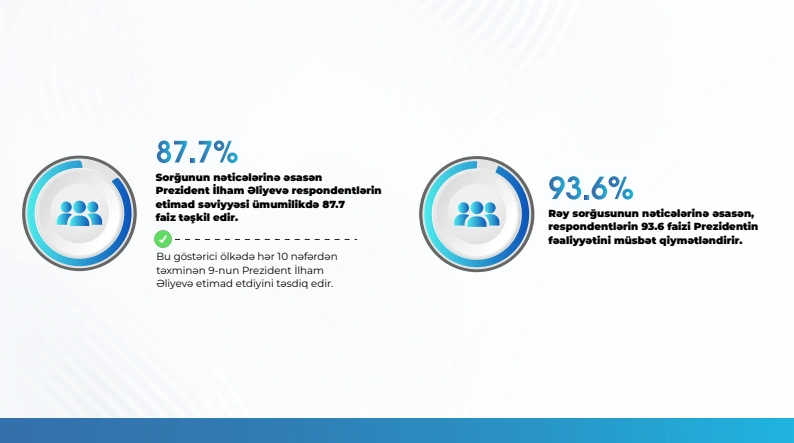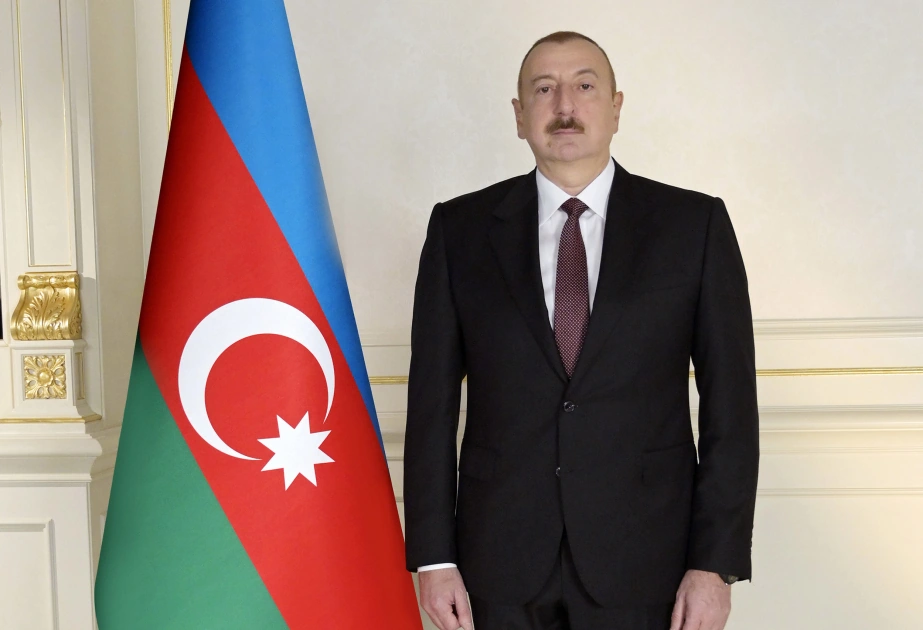
BAKU, Azerbaijan, July 1. A total of 93.6% of
respondents positively evaluate the activities of the President of
Azerbaijan Ilham Aliyev.
This was reported by the press service of the Media Development
Agency (MEDIA) following a public opinion poll held by the agency
to survey the attitude of the country's citizens to the activities
of President Ilham Aliyev in the first half of 2026 and analyze the
dynamics and trends in this area.
"The results of the survey showed a high level of public support
for the political leadership and strategic activities of President
Ilham Aliyev.
According to the results of the survey, the level of trust of
respondents in President Ilham Aliyev is 87.7% overall. This
indicator confirms that approximately 9 out of 10 people in the
country trust President Ilham Aliyev.
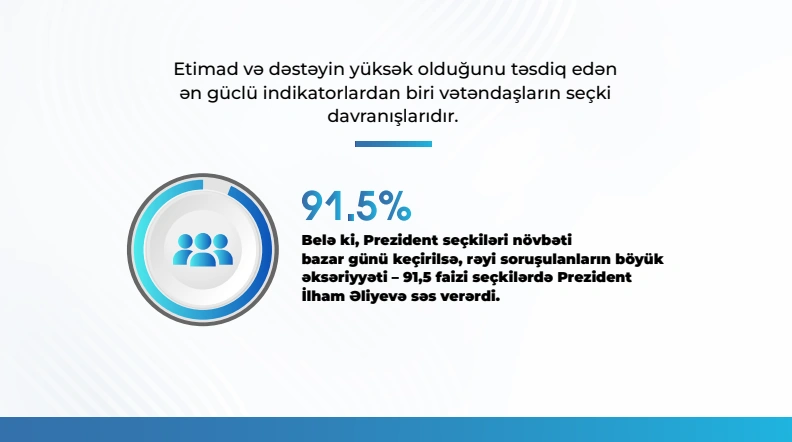
One of the strongest indicators confirming the high level of
trust and support is the electoral behavior of citizens. Thus, if
the presidential election was held next Sunday, the vast majority
of those surveyed - 91.5 percent - would vote for President Ilham
Aliyev in the elections," the report noted.
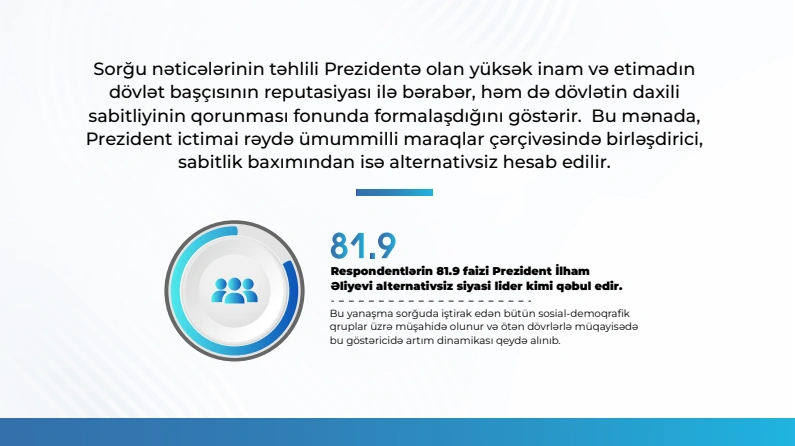
As the report also pointed out, the analysis of the survey
results shows that high trust and confidence in the President is
formed against the background of the reputation of the head of
state, as well as the protection of the internal stability of the
state.
"In this regard, the President is considered unifying in public
opinion within the framework of national interests, and without
alternative in terms of stability - 81.9% of respondents perceive
President Ilham Aliyev as an alternative political leader. This
approach is observed across all socio-demographic groups
participating in the survey, and compared to previous periods, an
increase in this indicator was recorded.
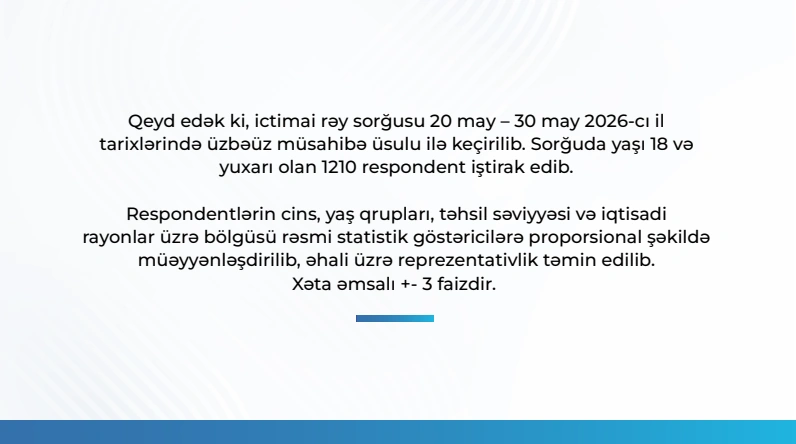
The public opinion poll was conducted from May 20 to May 30,
2026, using face-to-face interviews. As many as 1,210 respondents
aged 18 and over participated in the survey.
The distribution of respondents by gender, age group, education
level, and economic region was determined proportionally to
official statistical indicators, ensuring representativeness across
the population. The error margin is +- 3%," added the report.